Leading Companies of the Year 2026
A-Gas Turns Refrigerant Recovery into a Circular Economy, Preventing Emissions One Reclaimed Cylinder at a Time
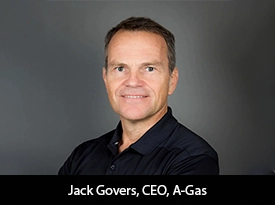
Refrigerants are the invisible infrastructure of modern life. They keep food cold in supermarkets, maintain habitable temperatures in office towers, and protect aircraft cabins through halon fire suppression. They also carry global warming potential thousands of times greater than carbon dioxide, and when equipment reaches end-of-life, the greatest risk of atmospheric release arrives precisely when no one is watching. A-Gas was built to intercept that moment. For more than 30 years, the Bristol-headquartered company has recovered, reclaimed and repurposed refrigerant gases for reuse or safe destruction, operating across 15 countries and six continents. The company’s model rests on a single organizing principle: Lifecycle Refrigerant Management (LRM). Rather than treating refrigerant as a consumable, A-Gas recovers used gas from decommissioned systems and stockpiled cylinders, processes it to AHRI 700 purity standards equivalent to virgin product, and returns it to the market. Where reclamation is no longer viable, the company destroys eligible gases using UN-approved technologies, including its proprietary PyroPlas plasma arc system, which achieves a 99.9999% Destruction Rate Efficiency.
The results are measurable. A-Gas reports preventing 10.3 million tonnes of CO₂ equivalent emissions in 2025 alone, and its recovery activity in 2024 equated to 2,298,464 cars removed from the road. Jack Govers serves as Chief Executive Officer, leading a business that has become the only global company positioned at the center of the refrigerant lifecycle.
The Economics of a Circular Refrigerant Model
A-Gas generates revenue through two reinforcing streams. The first is supply: selling refrigerants, including lower-GWP alternatives such as HFOs, HFO blends and CO₂-based products, to original equipment manufacturers, contractors, supermarkets and industrial users. The second is recovery and reclamation: charging for the collection, processing and certification of used gases, then reselling reclaimed product back into a market where regulatory phase-downs are tightening supply.
That second stream becomes more valuable as regulation accelerates. The EU’s F-Gas quota system mandates a 50% reduction in CO₂e emissions from F-Gases, and because more than half of Europe’s installed base relies on HFCs or HFC/HFO blends, demand for scalable low-GWP solutions that work in existing systems is rising. Reclaimed refrigerant addresses that demand without requiring equipment replacement.
Where Strategy Became Sector-Specific
A-Gas’s 2025 sustainability report describes a deliberate shift in commercial strategy: moving from broad ambitions to targeted, sector-specific LRM initiatives. Three markets received concentrated investment: data centres, food retail and carbon credit solutions.
The data centre logic is straightforward. AI and cloud demand are driving cooling requirements upward, and refrigerant volumes scale with them. Food retail offers the highest-volume recovery opportunity through supermarket refrigeration systems, where A-Gas’s Rapid Recovery on-site service supports store maintenance and retrofit projects without extended downtime. Carbon credits complete the loop: revenue from credit sales funds recovery programs and incentive payments for recovered gases.
Partnerships as Market Access
A-Gas does not pursue circularity alone. A June 2026 agreement with Solstice Advanced Materials combines A-Gas’s reclaimed HFCs with Solstice’s HFOs to produce low-GWP blends for existing refrigeration systems, targeting supermarket cases, cold-storage warehouses and refrigerated transport. In Singapore, a partnership with commercial refrigeration leader Epta processes recovered refrigerants from supermarkets, supported by A-Gas’s licensed status as a Toxic Industrial Waste Collector.
Each partnership extends recovery volume without requiring A-Gas to own the customer relationship at the equipment level. The company supplies the processing capability; partners supply the installed base.
The Net-Zero Arithmetic
A-Gas has pledged net-zero by 2035, with a 50% reduction in process emissions by 2028 against a 2020 baseline. The company’s own operations generate Scope 1 emissions primarily through refrigerant processing and leaks, which is why Process Emission Reduction Projects target evacuation, filling and sampling activities. Independent verification of Scope 1 and 2 data provides the evidentiary base.
The commercial and environmental agendas converge here. Every kilogram recovered is a kilogram not produced virgin, and every kilogram destroyed is a kilogram not released. For a business operating in a regulated market where compliance costs rise and virgin supply contracts, circularity is not a sustainability side project. It is the growth engine.
Why Infrastructure Beats Advocacy
Refrigerant emissions are a policy problem that has been discussed for decades. The Montreal Protocol’s Kigali Amendment created the framework; what remained missing was the physical infrastructure to capture gas at end-of-life. A-Gas’s contribution is unglamorous and essential: cylinders, recovery fleets, reclamation facilities, laboratories, destruction technology and the logistics to move material across borders. Advocacy changes intentions. Infrastructure changes outcomes. With 900-plus employees, operations across 15 countries, and a model that pays for itself through the value of recovered gas, A-Gas has built the latter and the emissions numbers suggest it is working.
"The A-Gas purpose, 'building a sustainable future', inspires me daily, as I look upon the huge opportunities A-Gas has to contribute to the transition to a lower carbon HVAC industry."
Search Magazine
Latest Listings