>>
Industry>>
Media and entertainment>>
Behind the Scenes with Ace Yua...Behind the Scenes with Ace Yuan Yue: Producing Stories for a New Era of Global Digital Entertainment

When audiences watch a film or a series, they rarely think about the thousands of decisions that quietly shape every scene. They see the actors, the story, the final image on the screen. What they do not see is the long chain of collaboration, planning, negotiation, and problem-solving that made that moment possible.
In the world of cinema, the spotlight almost inevitably finds the director’s chair or the lead actor’s face. Yet, the true heartbeat of any production, the force that transforms a fragile creative spark into a tangible reality, thrums behind the camera. That invisible force is what we call a producer.
For Ace Yuan Yue, producing is not about standing in the spotlight. It is about building the conditions that allow a story to exist in the first place. The role of a producer is not merely a title; it is a relentless pursuit of "making things happen". In an industry often characterized by grand ideas and shifting landscapes, Yue has built a reputation on the grounded reality of execution, credibility, and an unwavering commitment to the story.
Based in Los Angeles and working with international collaborators, Yue has developed a career that bridges traditional filmmaking with the rapidly evolving digital storytelling landscape.
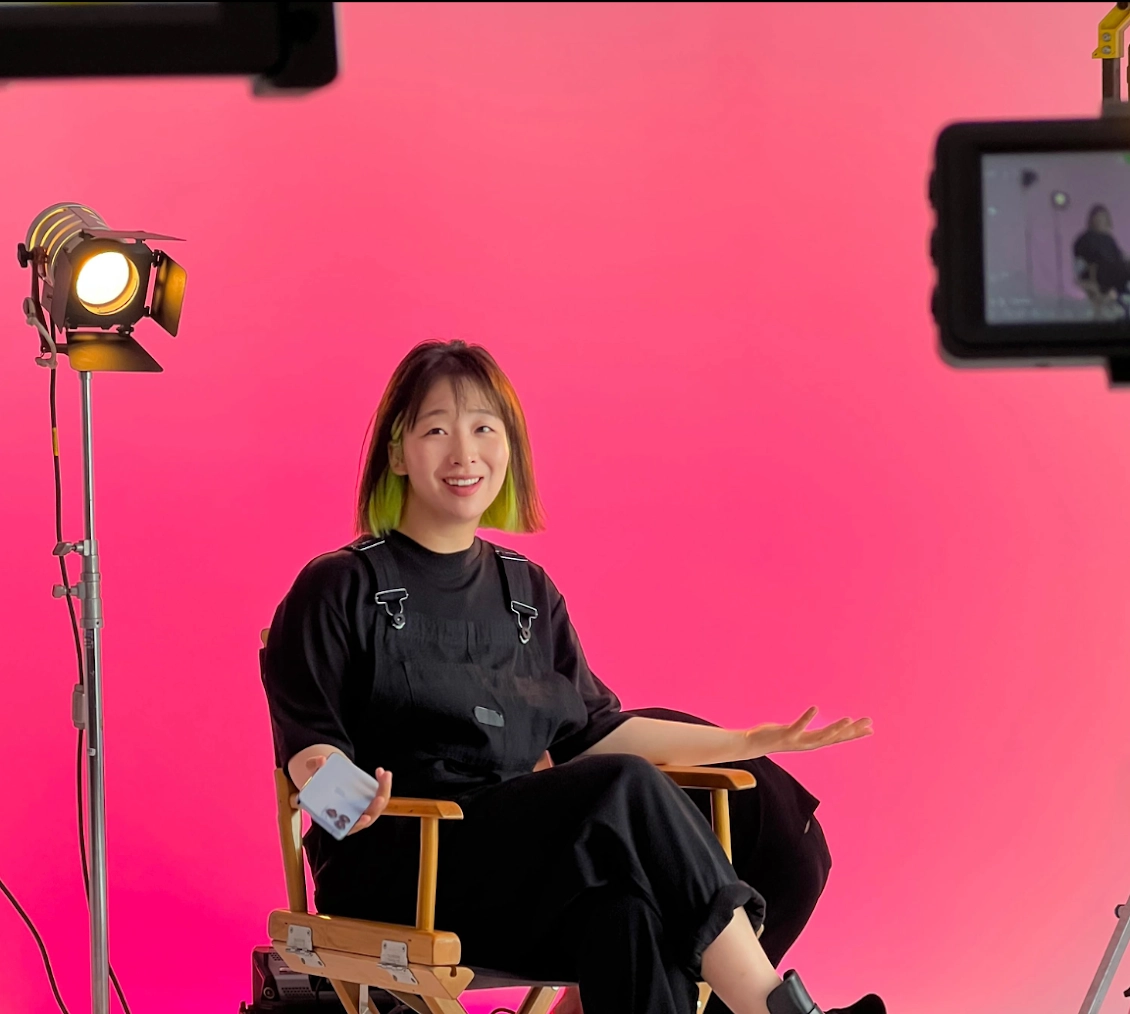
Among her narrative projects, Yue served as the lead producer of the short film La Pieta, which received the Best Drama Short Film Award at the Five Continents International Film Festival and was nominated for Best Short Film at the Chandler International Film Festival. The project helped establish her reputation as a producer capable of guiding emotionally driven stories through international festival circuits.
Her commercial work has operated at an equally demanding scale. Yue served as Lead Producer representing the commissioning client on a large-scale international advertising campaign for Chinese liquor brand Chishuihe, featuring global football icon Lionel Messi. With principal photography conducted in Miami, Florida, the production brought together a Chinese brand client, U.S.-based production company IMC Film Production, and production service company Smuggler, along with a local American crew. Yue acted as the primary point of coordination between the client and the U.S.-based production teams, holding approval authority over scheduling, production approach, and on-site execution. The finished campaign aired on CCTV-1 during the Chinese New Year season, reaching hundreds of millions of viewers nationwide, and was further distributed across highway billboards, major railway stations, and high-traffic transportation hubs across China. She has since brought that same role and scope to further commercial projects, managing the full scope of China-side production and client representation with U.S. teams on the ground.
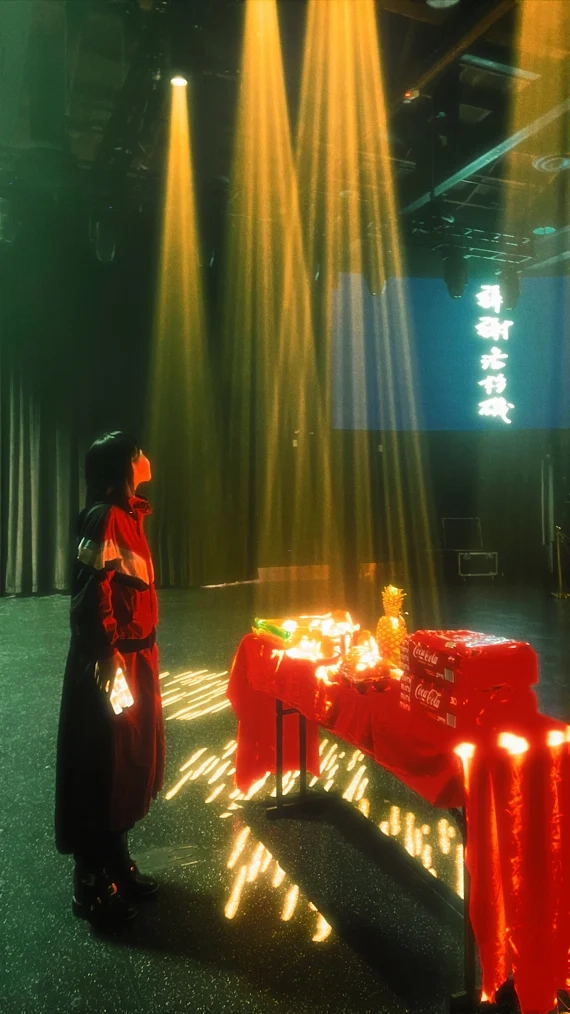
Her journey offers insight into what it truly takes to bring a production to life in today's global entertainment environment.
The Moment a Story Begins to Matter
Long before she was working on professional productions, Yue encountered the kind of story that stays with you.
As a child, she watched The Lion King for the first time. Like many viewers, she was drawn into the emotional arc of the film, the sense of responsibility, growth, and transformation carried by its characters.
But what lingered afterward was not just the story itself. It was the realization that a group of people somewhere had imagined it, built it, and brought it to life.
At some point, curiosity replaced simple admiration.
How does something like that get made?
Who decides what the story becomes?
Who keeps everything moving when hundreds of moving parts have to align?
The answer kept pointing to the same role.
The producer.
Unlike directing or acting, producing operates across the entire project. It requires understanding the story, the creative process, the financial structure, and the logistical reality of turning an idea into something watchable.
For Yue, that complexity became the attraction.
Producing meant being part of the story at every stage, not just one piece of it.
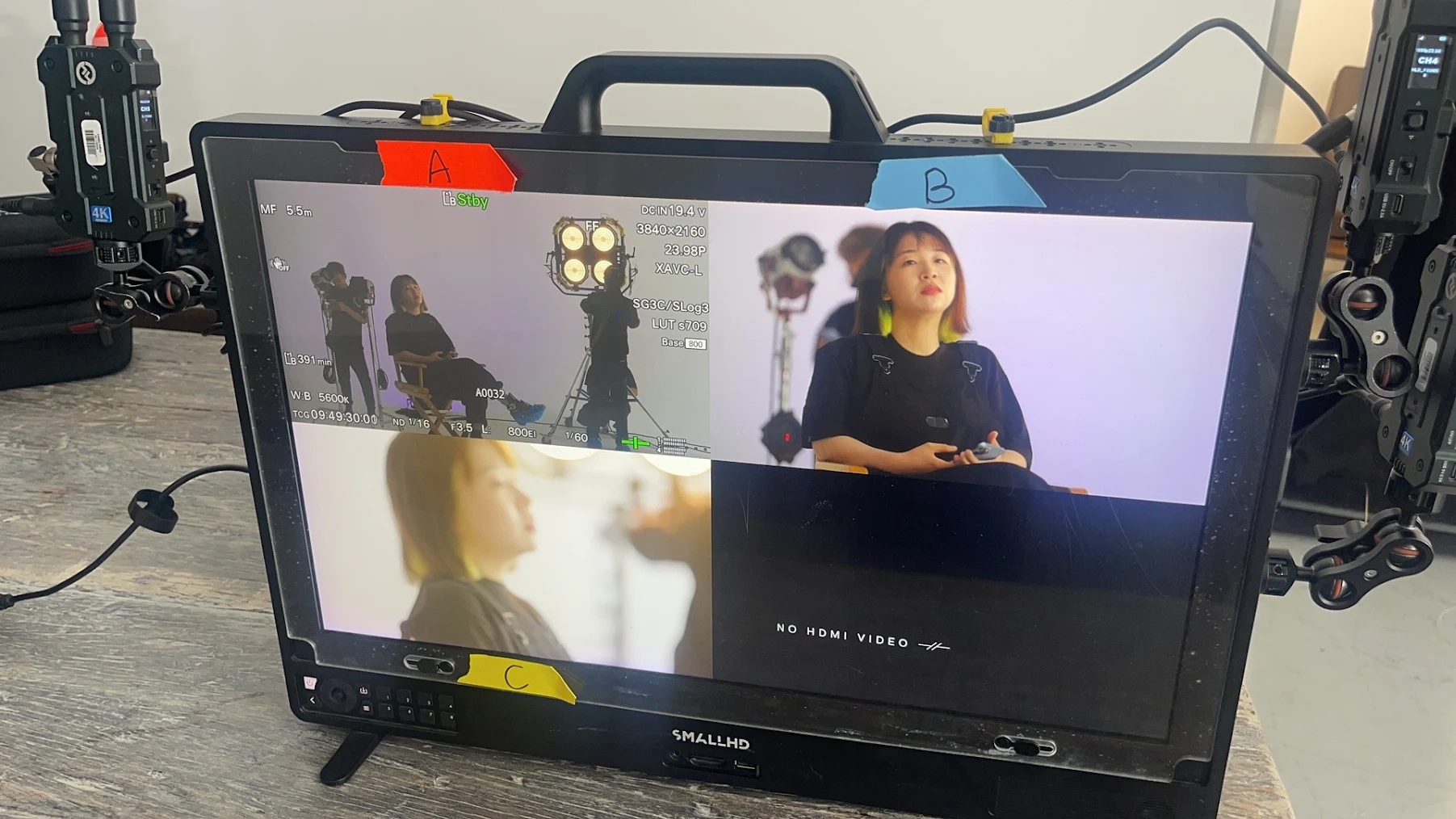
The Work That Happens Before the Camera Rolls
The public version of filmmaking often begins when the camera turns on. In reality, the most critical decisions happen long before that moment.
Scripts are refined. Teams are assembled. Budgets are negotiated. Locations are secured. Schedules are built, adjusted, and rebuilt.
The producer sits in the middle of all of it.
For Yue, this phase is where a project’s real identity begins to take shape. The people involved, the tone of the collaboration, and the clarity of the vision determine how smoothly production will unfold later.
Working between Los Angeles and international collaborators adds another layer to that process. Time zones stretch communication. Cultural perspectives influence creative decisions. Production pipelines operate differently depending on the region.
Instead of treating these differences as obstacles, Yue approaches them as part of the creative environment.
Every project brings together people who see the story from slightly different angles. When those perspectives align, the production becomes stronger than it would have been within a single creative circle.
Producing, in that sense, is as much about listening as it is about leading.
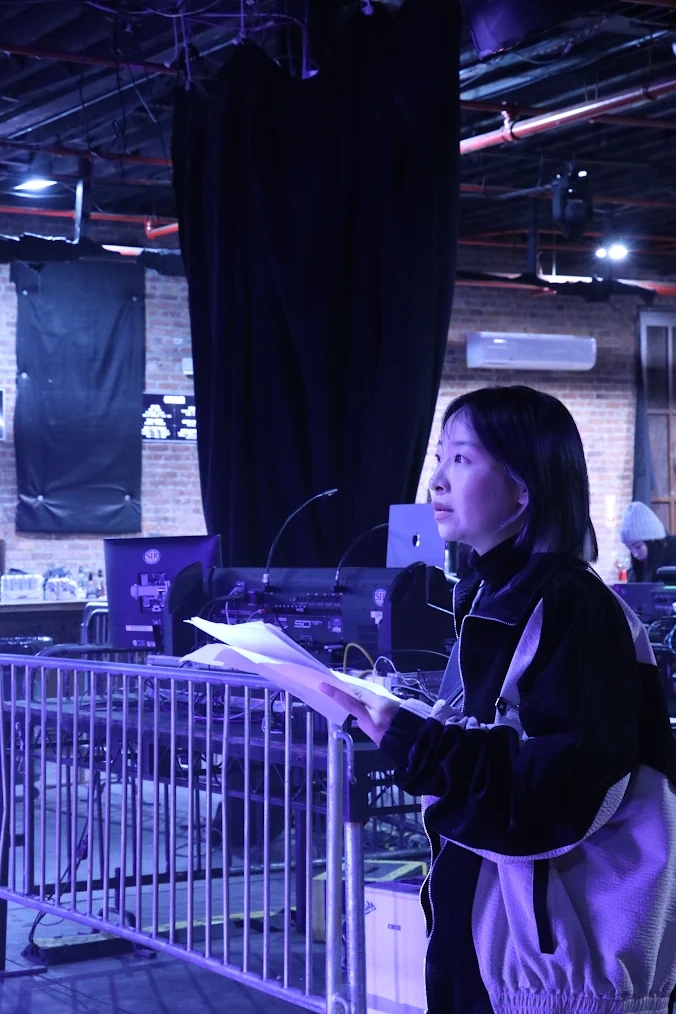
Producing at the Speed of Mobile Audiences
In recent times, the rise of vertical drama has not only altered how stories are viewed, but has also redefined what producing requires. Unlike traditional long-form development cycles, vertical series operate on compressed timelines, where concept, production, and release move in rapid succession. Platform-specific requirements shape everything from pacing to visual framing, while real-time audience feedback influences narrative direction almost immediately. In this environment, producing becomes a continuous process of adjustment rather than a fixed execution plan.
For Ace Yuan Yue, this shift is not a constraint but a framework she has learned to operate within precisely.
Since entering the space in 2023, her work across ReelShort, GoodShort, iDrama, and DramaBox reflects an understanding that each platform demands a slightly different rhythm of storytelling. Episodes must open with immediacy, sustain momentum within minutes, and close on a hook strong enough to retain attention in a highly competitive mobile environment. The process leaves little room for excess. Every creative decision, from shot composition to narrative beats, must justify its place within a limited frame and runtime.
These structural limitations have effectively created a new visual language.
The narrow screen, accelerated pacing, and episodic hooks do not simplify storytelling, they intensify it. Yue’s approach treats these elements as tools for precision, where emotional beats are delivered with clarity and narrative arcs are engineered for continuity across fragmented viewing habits. Her productions are not condensed versions of traditional formats but purpose-built for mobile consumption.
This approach has also revealed an audience segment that long-form film and television have historically struggled to capture. With Love on the Sideline surpassing 60 million views globally, Yue’s work demonstrates how mobile-first storytelling can scale rapidly when aligned with audience behavior. The number is not incidental. It reflects an understanding that accessibility, speed, and narrative immediacy can expand reach beyond conventional viewing patterns.
In this context, Yue is not simply adapting to a growing format. She is operating within a production model that demands faster decisions, sharper storytelling, and closer alignment with audience response.
The result is a body of work through which Yue demonstrates how content is now created, distributed, and refined in real time.
The Producer as the Project’s Centre of Gravity
Every production reaches a moment where something goes wrong, it always happens.
A location falls through. Weather disrupts a schedule. Equipment fails. A scene needs to be rewritten hours before filming begins. These moments rarely appear in behind-the-scenes documentaries, but they are part of daily life in production.
For a producer, problem-solving becomes second nature.
Yue often describes the role as being the project’s center of gravity. When uncertainty appears, the producer helps the team stay focused on the bigger picture.
That responsibility requires balancing two very different perspectives at the same time.
On one side is the creative vision. Writers, directors, and performers need the freedom to shape the story. On the other side are the practical realities of time, budget, and logistics.
The producer stands between those forces, ensuring neither one collapses the other.
When the balance works, the project moves forward with clarity.
When it does not, the story suffers.
Collaboration as the Real Engine of Production
Despite the popular image of filmmaking as a director-driven art form, the reality is much more collective. Every production is built by a network of specialists: writers, cinematographers, editors, production designers, sound teams, visual effects artists, and countless crew members whose work rarely appears on screen.
For Yue, producing means building the environment where those people can do their best work, which requires trust.
Teams need to feel that their ideas matter and that the project’s vision belongs to everyone involved. When that happens, collaboration becomes more than coordination. It becomes creative momentum.
Some of the most meaningful moments in production, Yue says, are not premieres or releases. They are the moments when a group of people realizes the project is working, when the story suddenly feels real.
Those moments are quiet, but they are unforgettable.
Looking Ahead at the Future of Storytelling
The technology surrounding entertainment will continue to change. New platforms will emerge. Formats will evolve. Viewing habits will shift again.
For producers, the challenge is not predicting every change. It is remaining flexible enough to adapt when those changes arrive.
Yue’s career reflects this adaptability. From international commercial productions to mobile-first storytelling formats, her work reflects the broader evolution of how stories are produced and distributed in today’s entertainment industry.
From commercial campaigns to emerging mobile storytelling formats, her work moves across different corners of the industry while staying rooted in a simple idea.
Stories still matter.
No matter how people watch them, audiences respond to narratives that feel honest, emotionally grounded, and human.
The producer’s responsibility is to protect that connection while navigating the complex machinery required to deliver it
A Career Built Behind the Camera
Most viewers will never know the names of the producers behind the stories they watch. That anonymity is part of the job.
Yet without producers, those stories would never move beyond the idea stage.
Ace Yuan Yue’s career offers a glimpse into that often unseen layer of filmmaking where creativity meets structure and collaboration turns imagination into reality. As the entertainment industry continues to evolve across platforms and formats, producers capable of navigating both traditional production and emerging digital storytelling will play an increasingly important role.
For those who feel drawn to storytelling but are unsure where they belong in the process, producing offers a different kind of creative path.
It is not about standing in front of the camera.
It is about standing behind the story and making sure it reaches the screen.
About the Author
Sashindra Suresh is an experienced writer specializing in artificial intelligence, software development, and emerging technologies. With a strong ability to translate complex technical concepts into clear, engaging insights, she has contributed to a wide range of publications and platforms. Her work focuses on making cutting-edge innovations accessible to both industry professionals and curious readers alike.