>>
Industry>>
Healthcare>>
From Legacy Systems to AI-Powe...From Legacy Systems to AI-Powered Tools: Groundbreaking Innovations in Healthcare Engineering
- Sashindra Suresh
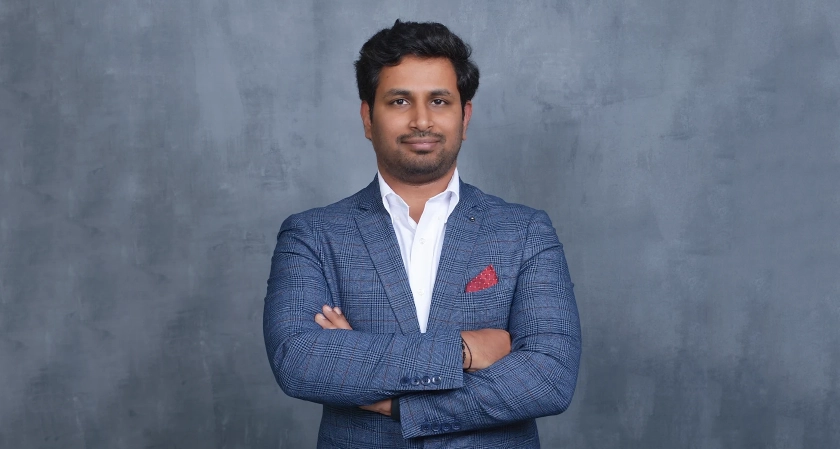
Anil Kumar Kandalam has gained a reputation in healthcare engineering for modernizing legacy infrastructure and developing it into efficient, flexible AI-powered platforms.
He delivers significant improvements in system performance and efficiency, lower operating costs, and greater data accuracy.
As Anil puts it: "Much of what I have done has been about adding something to what we already have; you don't have to change everything. Adding to your existing systems allows you to save lots of time and money without disrupting your processes."
He has gained experience working with different types of complicated healthcare platforms and improving them in many ways – increasing their speed, reliability and effectiveness.
Over the past 14 years, he has been working with many fields like insurance and aviation. But eventually found his passion in healthcare engineering and became a Lead Platform Engineer at PSL Group. There, his groundbreaking work is transforming healthcare platforms to deliver faster, more accurate data to professionals worldwide.
Guru Prasath Sethumadhavan is Associate Director of QA in Development and Automation on cloud platforms. He has been working there since 2017 and remembers well how Anil impressed colleagues with his skills.
As he recalls: "Anil led the team of developers successfully in the most exceptional way, having high-level technical and domain knowledge in cloud technology. He is a quick learner of cloud technology who can master it within a few months."
One of the things Anil was particularly successful at was upgrading legacy infrastructure to AI-powered healthcare platforms. Legacy systems, while reliable, are often inefficient and slow, and lack the flexibility to handle the demands of modern healthcare.
Anil saw this as an opportunity to innovate.
He says: "In healthcare, there's this sense of duty in healthcare technology that you wouldn't experience in other industries. If you work in healthcare, what you do changes people's lives. When we make improvements, when we save seconds, those seconds can make the difference between life and death for patients."
Anil took up this challenge and began developing ways to update these old systems by adding AI to accelerate data flow and increase reliability, without requiring costly, disruptive changes to the existing infrastructure.
This has yielded significant cost reductions and process optimization for healthcare organizations, allowing them to allocate additional funding to patient care.
Anil shares: "Many healthcare organizations are dependent on their old legacy systems, which they believe would be expensive and difficult to change. What I seek is to make these legacy systems work better by integrating AI and making sure they work even better without requiring a complete rearchitecture."
Krishna Chaitanya Chimakurthi, Director of Digital Solution Architecture at NTT Data, met Anil while he was working at TIBCO Technologies. As a colleague and friend of 10 years, Chimakurthi speaks to Anil's contributions to a prestigious project while working with TIBCO.
"He was a key member of a prestigious Jetblue project when I joined at that time," Chimakurthi says. "Anil's technical skills, solutions, and problem-solving were commendable. He also brought a great discipline and process to the project."
One of Anil's main contributions is designing a specialized suite of GPT tools that provide AI-based access to clinically relevant information vetted from the most trusted sources.
Unlike general AI, this platform is specifically designed for clinical use. It takes into account the need to provide only clinically relevant, verified information, as inaccurate data could have devastating implications in such a scenario. It proved very helpful to doctors, researchers, and administrative staff.
Anil says: "High-stakes clinical settings need accuracy in data. With these specialized GPT tools, we engineered the system to pull exclusively from verified sources. Our main goal is to provide information to professionals to ensure that they act on it"
During the pandemic, it became clear how useful it was in clinical practice. It allowed the company to quickly organize a newsletter about coronavirus cases that provided reliable data in a timely manner.
Reflecting upon that time, Anil admits: "We clearly knew what our job was—to ensure that credible advice would be available to healthcare professionals sooner than anyone could imagine. We stood up that newsletter as an immediate solution and, at the same time, worked tirelessly to architect the specialized GPT tools for a full launch. The aim was to create a permanent, scalable platform that could handle that kind of information velocity on a daily basis."
Besides integrating advanced artificial intelligence into healthcare practices, another critical aspect of Anil's modernization strategy is shifting legacy medical systems to the cloud. By doing so, considerable savings in operational costs and enhanced efficiency are assured.
Drawing on a proven cloud framework he honed during tenures at Allstate Insurance and JetBlue Airways, Anil has routinely achieved up to a 30% reduction in maintenance overhead.
In an industry where financial resources are perpetually constrained, these are not just technical wins; they are a direct financial lifeline that allows organizations to channel more funds toward patient-centered initiatives.
Anil explains: "My focus has always been on providing my clients with value. The move to cloud computing not only results in saving expenses but also in making operations much faster, better, and more efficient."
The ability to be adaptive and understand the complexities associated with healthcare processes is why Anil stands apart from other professionals. He does not merely introduce innovative solutions and technologies; he integrates them into existing systems.
It’s a feature that's vital in the healthcare sector, where disruptions can have serious implications for patients. This explains why organizations come to Anil whenever they seek to update their infrastructure without reducing the quality of services provided.
As Anil puts it: "Integrating technology solutions is not difficult. Integrating them into a running healthcare infrastructure without breaking anything—now that is a real challenge, and it becomes the essence of my work. You can't afford to gamble with system integrity or patient data. My entire approach is geared toward non-disruptive enhancement: fortifying and accelerating the existing infrastructure rather than causing the operational shocks that come with a full replacement."
Anil's work has not gone unnoticed.
Among his certifications in Databricks, he holds qualifications in Generative AI fundamentals, AWS (AI Practitioner, Certified Developer, Certified Solutions Architect, and Cloud Practitioner), and TIBCO BusinessWorks 5.x.
Siva Dutta, a Senior Integration Developer who has worked with Anil since 2014, praises both his professional rigor and his personal warmth: "He is a person who always has professionalism but not at the expense of humanity. That combination of professionalism and integrity makes him a unique person. Technically, what always stands out is his gift for crafting solutions that solve today's immediate problems without ever boxing you in for tomorrow. A perfect illustration was his work on a sophisticated API response caching mechanism. It was an elegant, custom fix that slashed backend calls and boosted performance dramatically, all while maintaining absolute data accuracy. He is someone who gives us the best of both worlds. That is, he provides significant gains in addition to adhering to the limitations of the system we use."
Siva also emphasizes the following points: "His constant involvement in keeping himself updated in the rapidly evolving environment, especially with regard to AI and upcoming technologies, has greatly helped me in shaping up my career by making me aware of upcoming market scenarios and technologies."
While maintaining his passion for coding, Anil also takes an interest in other aspects that contribute to his success.
Not only within his organization, but Anil is also well recognized among his colleagues in the industry for the high quality and innovative nature of his software engineering work in healthcare.
Anil is very excited about the possibilities in Artificial Intelligence and Cloud-based applications in the Healthcare sector.
He adds: "As much as AI is promising, we still have not realized its full potential. It can completely change the face of Healthcare. I want to create more and more platforms that make information available to healthcare professionals in the quickest way possible to make their decision-making easier."
This methodological approach—focusing on disruptive-free, AI-enhanced modernization—produces instant benefits through efficiency, effectiveness, and cost efficiency. But more importantly, it ensures the creation of a sustainable future for an industry whose seconds and dollars directly translate into the quality of patient care.
As he further refines his strategy and utilizes such tools, he is setting the standards for the coming wave of healthcare innovation.
About the Author
Sashindra Suresh is an experienced writer specializing in artificial intelligence, software development, and emerging technologies. With a strong ability to translate complex technical concepts into clear, engaging insights, she has contributed to a wide range of publications and platforms. Her work focuses on making cutting-edge innovations accessible to both industry professionals and curious readers alike.