>>
Industry>>
Legal>>
DOJ Moves to Revoke U.S. Citiz...DOJ Moves to Revoke U.S. Citizenship for 40 Foreign-Born Americans, Largest Denaturalization Push in Decades
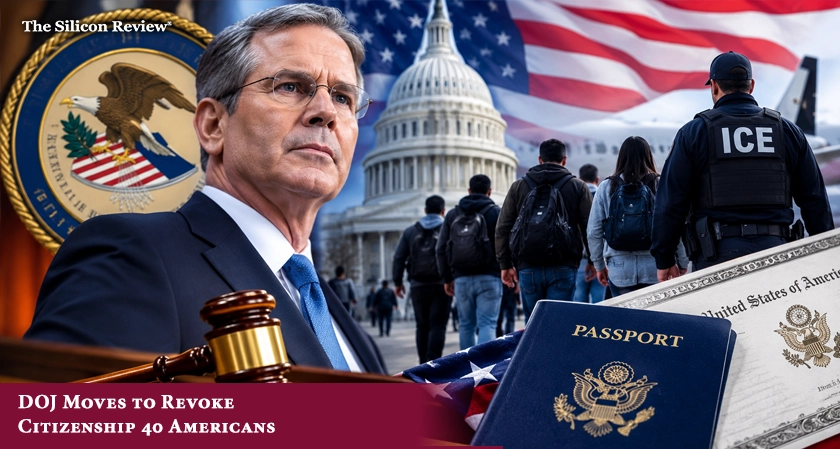
The Justice Department has moved to revoke the citizenship of 40 foreign-born Americans, marking one of the largest denaturalization efforts in decades and raising alarm among civil rights groups over due process and politicization.
News source: Google / https://www.nbcnews.com/
The Department of Justice has initiated proceedings to revoke the US citizenship of 40 foreign-born Americans, according to documents reviewed by The New York Times. The move represents one of the largest coordinated denaturalization efforts in decades and signals an escalating crackdown on naturalized citizens under the Trump administration.
The cases span multiple states and involve individuals accused of offences ranging from fraudulently obtaining citizenship to concealing past criminal records. According to the DOJ, each case involves evidence that the individual lied or withheld material information during the naturalization process. Under US law, citizenship can be revoked if it was obtained through fraud, misrepresentation, or concealment of a material fact.
"Citizenship is a privilege that must be earned and honoured. When it is obtained through fraud or deception, the Department has a responsibility to act," a DOJ spokesperson said.
A Significant Escalation
The move marks a departure from the historical norm. Denaturalization cases have traditionally been rare, with only a handful pursued each year. The DOJ has pursued more than a dozen cases annually in recent years, but the current push represents a significant escalation.
Civil rights groups have raised concerns about the timing and scale of the effort. "This is a political campaign targeting naturalized citizens, not a good-faith effort to protect the integrity of the immigration system. The message is clear: if you weren't born here, your citizenship can be taken away," said a spokesperson for the American Civil Liberties Union.
Denaturalization: The Legal Standard
To revoke citizenship, the government must prove in federal court that the individual obtained naturalization illegally or through concealment of a material fact. This is a high legal bar. Cases can take years to resolve, and defendants have the right to appeal. The 40 cases currently being pursued represent a small fraction of the millions of naturalized citizens in the United States. However, advocates warn that the effort could have a chilling effect on immigrant communities, discouraging eligible green card holders from applying for citizenship.
The Broader Crackdown
The denaturalization push is part of a broader immigration enforcement campaign by the Trump administration. The administration has extended H-1B visa restrictions, proposed a $100,000 fee for new H-1B petitions, moved to revoke visas of asylum seekers, and increased deportations. Immigration has been a central pillar of Trump's political identity since his first campaign in 2015.
"We are witnessing the most aggressive assault on immigrant communities in modern American history. Denaturalization is the latest front in that assault," an immigration attorney said.
What Happens Next
The 40 cases will proceed through federal courts, where the government will have to meet the burden of proof. Some cases are expected to be resolved through settlement or voluntary renunciation of citizenship. Others will go to trial. The outcomes could set important precedents for how aggressively the government can pursue denaturalization in the future.
Here is the question The Silicon Review raises. The Justice Department is moving to revoke the citizenship of 40 foreign-born Americans, the largest denaturalization push in decades. When a government begins targeting naturalized citizens, many of whom have lived in the country for decades and whose children are American-born, what does it say about the security of citizenship itself?
FAQ:
Q: What is denaturalization?
A: Denaturalization is the process by which a court revokes a person's naturalized US citizenship, typically because it was obtained through fraud, misrepresentation, or concealment of a material fact.
Q: How many denaturalization cases is the DOJ pursuing?
A: The DOJ is pursuing 40 cases to revoke US citizenship.
Q: Why is the DOJ targeting these individuals?
A: The DOJ alleges that each individual obtained citizenship through fraud or by withholding material information during the naturalization process.
Q: Is denaturalization common in the US?
A: No, denaturalization is rare. Historically, only a handful of cases have been pursued each year. The current push represents a significant escalation.
Q: What do civil rights groups say about the denaturalization push?
A: The ACLU and others say the effort is a political campaign targeting naturalized citizens and is intended to intimidate immigrant communities.













Comments