>>
Technology>>
Artificial intelligence>>
From Zero to Global Leader: Ho...From Zero to Global Leader: How Huang Zhongpin Built NXAI into an AI-Powered Cloud Communications Powerhouse Serving 6 Billion Interactions Annually
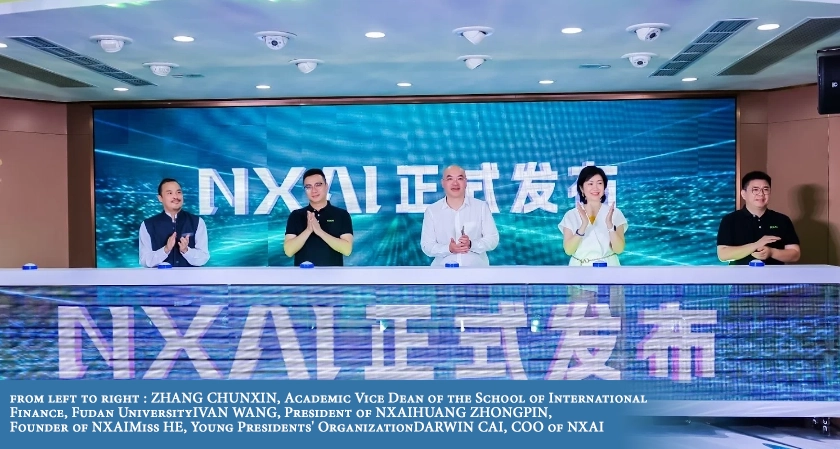
- Sashindra Suresh
The global expansion was a gradual process, akin to running an obstacle course of different telecom infrastructures, regulatory frameworks, and varying customer experiences. For companies seeking to serve users across continents, even a simple message delivery could become a technical and legal minefield.
The challenge wasn’t ambition; it was infrastructure.
By the time Huang Zhongpin entered space, he had already concluded that the problem wasn’t a lack of tools—it was the absence of a unifying system.
As he puts it: “I believe technology should make the world smaller and create more opportunities for everyone. What gets me is knowing that our work helps a family-run business in China sell their products to Europe or helps a social app connect friends across different continents. It's about building bridges, not walls.”
That philosophy would shape the creation of NXAI Group, one of the fastest-growing cloud communications platforms in the Asia-Pacific region—and a company now responsible for processing 6 billion interactions annually.
From Market Intuition to Global Systems Thinking
Huang’s trajectory did not begin in cloud computing. It began in the field, where customer behavior and market realities are less theoretical and more immediate.
In 1999, as Regional Marketing Manager at Youngor Group, Huang worked tirelessly on brand positioning and engagement. It was during this period that he developed a keen sense of market differentiation and lead generation, skills he would apply when positioning the technology company he would eventually lead in the competitive landscape of the global market.
In Huang’s second tenure with China Unicom, he started to transition from working on smaller projects to the broader landscape of telecom industries. Huang worked diligently to build up the Zhejiang operation from scratch, achieving a turnover of over 10 million RMB and securing lucrative contracts in eight provinces, including China Mobile, from 2003 to 2009 in his position as Regional Sales Vice President.
These were not small victories, as Huang had had to navigate the intricacies of the government, the business, and the operational landscape.
While reflecting on the journey thus far, Huang says: “I love three aspects of my profession most: Making a real impact by helping Chinese companies succeed internationally through the technology foundation they need. Solving big, complex problems that even companies like Meta and Alibaba face when operating globally. Continuously innovating by bringing the latest AI into our cloud services so clients can deliver smarter products.”
In the telecommunications infrastructure, Huang had realized the fundamental flaw of the industry: it was simply not enough to have the infrastructure. What businesses needed was the ability to orchestrate the disparate forms of communication, unifying the channels across the regions.
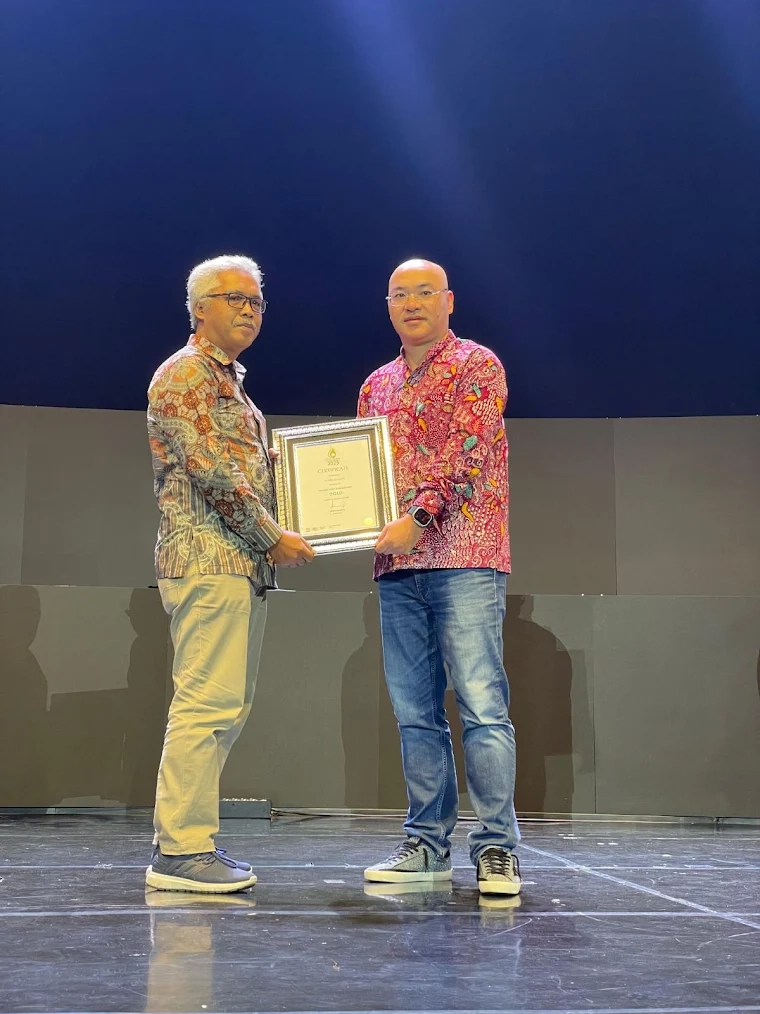
NXAI Founder & Chairman, (Huang Zhongpin) Hunk Huang, had the honor of presenting the BEST COST MANAGEMENT award on stage with Andi Anugrah, Chairman of ICCA
Expanding Horizons: From Hong Kong to the United States
In Huang’s role as CEO of Glory Technology (H.K.) from 2009 until 2015, he had the opportunity to expand the horizons of the telecommunications industry. He had worked on the strategic planning and execution of the operations of the company across the Greater China landscape.
But his move to the United States in 2015, as President of Spider Network Inc., proved to be a turning point. There, he faced a different set of expectations.
The enterprise buyers were more mature, and so were the regulations. Moreover, the competition was dominated by global leaders. Huang managed to adapt to these circumstances quickly. He built KPI-based operating systems and developed key client relationships. What is more significant is that he proved his capabilities to operate outside China.
This experience would eventually play a major role in one of his most significant achievements in the industry. Huang was able to prove his capabilities in building up telecom infrastructure, and this was something he could replicate in other industries and countries.
He says: "My approach is practical, globally-oriented, and execution-focused. Having worked with top-tier tech companies, I've learned that true success is not just about brilliant ideas, but about building reliable and practical systems that can serve everyone from a startup in Shenzhen to Meta in California."
Founding NXCLOUD: Timing, Precision, and Resolve
Huang founded NXCLOUD ASIA PTE LTD in late 2019. The timing was both bold and opportune. The pandemic was looming, and it was ready to speed up the digital transformation of industries while exposing the limitations of current communication systems.
Huang entered a crowded space with a clear vision. He wanted to build a cloud-based communication platform that could handle massive scale and simplify integration for enterprises.
The initial period was characterized by limited capital, a competitive environment, and a technical challenge. Huang never wavered in his vision. Huang decided to focus on investing in basic infrastructures and not mere features.
This was a transformational decision, and it proved to be so, especially during a time when businesses had to keep their communication with customers alive during a pandemic, and omnichannel communication was in high demand, and Huang’s vision was fulfilled with ease.
For Huang, the technical complexity is part of the appeal.
He explains: "One of the most interesting challenges I enjoy is building cloud systems that perform reliably everywhere while complying with each country's unique data and technology regulations. I take pride in designing fast, secure architectures that work seamlessly in the US, Europe, or Asia---especially for major clients like Google or Alibaba."
By 2023, the company had reached $72 million in revenue, placing it among the top four multinational CPaaS and CCaaS providers in Asia-Pacific.
Engineering a Platform That Powers Global Digital Trade
What distinguishes NXAI is not just its scale, but its structural role in global commerce.
Huang describes it with characteristic clarity: “In essence, we've made it significantly easier and safer for Chinese companies to deliver online services worldwide. Our platform serves as the core cloud engine powering a substantial portion of China's digital exports today.”
This is not a marginal contribution—it is foundational. NXAI’s infrastructure supports over 1,500 enterprise clients, including Meta, Google, Alibaba, Tencent, Xiaomi, JD.com, and SeaMoney. Such partnerships are not symbolic; they are operational, addressing mission-critical communication needs for some of the world’s largest companies.
Huang points out that this trust is based on more than technology: "Clients describe working with us as having an expert guide for their global technology journey. They value our ability to deliver clear strategic direction while also executing the details flawlessly. We communicate effectively with both C-level decision-makers and hands-on engineering teams."
The extent and nature of NXAI’s activities are further emphasized by Cunkiong HEW, Assurance Leader at Ernst & Young Hua Ming LLP Chengdu Branch: “Mr. Huang's strategic partnerships with enterprises like Meta, Alibaba, Tencent, and Xiaomi validate his capacity to deliver high-impact, enterprise-grade solutions. These strategic partnerships address mission-critical operational issues, validating that Mr. Huang's leadership is trusted by some of the world's most demanding clients.”
NXAI’s geographical footprint is just as impressive as its client list. With operations in mainland China, Hong Kong, Singapore, Vietnam, Saudi Arabia, and the Netherlands, NXAI has managed to create a truly global organization, with all of its revenues coming from external markets.
The AI Pivot: From Connectivity to Intelligence
If NXCLOUD established the foundation, the transition to NXAI defined the company’s future.
Huang recognized early that connectivity would eventually commoditize. The real value lies in intelligence—using AI to optimize, personalize, and automate communication at scale.
He has led the charge on integrating AI directly into the system, which has resulted in the development of NXLINK, an intelligent contact system based on LLM. NXLINK, which has achieved ISO 27001, ISO 27701, and ISO 9001 certification, marks a move from reactive communication towards predictive engagement.
The benefits of the system are quantifiable. Enterprises have achieved savings of more than 30% on contact costs, as well as increases of more than 20% in customer satisfaction.
Huang talks about the transformation: “I'm particularly proud of the work we've done at the company, shifting from NXCLOUD to NXAI. We've integrated AI into our cloud platform, increasing adoption rates dramatically—almost 200% growth in one year alone.”
At the heart of the system are a number of proprietary technologies, including five patented algorithms used in intelligent routing and dispatching. These systems analyze the profile of the customer in real-time, ensuring the most appropriate channel is used.
The scale of 6 billion interactions annually is transformative for such optimizations.
Marcin Michalak, Chief Technology Officer of AgentX, says: "Mr. Huang’s technical ingenuity and strategic foresight are evidenced by his leadership in developing a WhatsApp-based intelligent chatbot platform that achieved Meta’s Premier Business Solution Provider accreditation—a distinction reserved for a select few global enterprises—within just two years of development."
Redefining Industry Practices: The “Recipe” for Global Expansion
Perhaps Huang’s most significant contribution lies not in any single product, but in a methodology—a systematic approach to global cloud deployment.
Traditionally, entering new markets has meant developing special solutions for each country, which has been time-consuming and expensive. Huang replaced that model with what he calls a standardized framework.
He explains: “I helped create a 'recipe' for global cloud expansion. What used to be slow, bespoke projects for each new market has become a standardized, switch-like framework—secure, compliant, and fast. The shift has accelerated growth for large enterprises and made international expansion affordable and realistic for smaller companies. Our approach is quickly becoming the industry standard.”
This framework is operationalized through what Huang calls the "Compliance Built-In" process—a methodology that integrates data privacy and regulatory requirements at the design stage rather than as an afterthought.
He adds: "Whenever a client targets a new country, we embed the required data privacy and regulatory measures from the very first stage of system design. This saves enormous time and prevents costly legal issues downstream."
The impact is not just felt in efficiency gains, as it has changed the way companies approach new markets, transforming what was once a high-risk strategy into a predictable, scalable approach.
Leveling the Playing Field
While Huang was able to make a name for himself in larger businesses, he was also able to make a name for himself in ensuring that smaller businesses had access to advanced technology.
He summarizes this wider impact: “Our work shows that companies can scale globally while fully respecting diverse national regulations. In effect, by giving smaller businesses access to the same advanced cloud and AI technologies that we've developed for giants like Google, we've helped create a level playing field.”
This democratization is not theoretical. It is reflected in real-world use cases—from small e-commerce operators reaching international customers to mobile applications launching simultaneously across continents.
Huang shares: "Friends and family often ask how Chinese shopping apps deliver fast updates even when they're traveling abroad, or how new mobile games launch smoothly across the US and Asia simultaneously without crashing. These everyday examples let me explain the invisible global infrastructure we build. Like a worldwide highway for applications, games, and e-commerce."
Leadership, Discipline, and Organizational Design
Huang’s achievements are not solely technological—they are organizational.
Internally, he has demonstrated a rigorous approach to performance management, reforming systems in ways that increased per-capita productivity by 65%. The efficiency gains are reflected in the company’s financials, with a gross profit margin in excess of 25% for FY2024.
The leadership philosophy is based on the concepts of accountability and precision.
He expresses his role with a sense of understated intensity: ‘‘My biggest ongoing responsibility—and what keeps me most focused—is ensuring our global cloud network remains 100% reliable 24/7. When major companies depend on our infrastructure, even a brief outage or compliance issue can seriously impact their operations. I carry that weight every day.”
His leadership style is one of a strategic and meticulous leader who inspires others to think big.
External Validation and Industry Standing
NXAI’s expansion and achievements have earned it several accolades, such as the Most Popular Brand Award (2021), Industry Leader Award, and Best Digital Service Provider Award in Asia Pacific. Huang is also a Distinguished Graduate of the Cheung Kong Graduate School of Business, where he is still a student in the Executive MBA program.
Industry observers point to his governance standards as a defining strength.
Few speak with more authority than Cunkiong HEW, Assurance Leader at Ernst & Young Hua Ming LLP Chengdu Branch, who remarks: “Mr. Huang's ability to devise and execute global expansion strategies with precision and scalability is exceptional. Achieving 100% revenue from overseas markets with a presence across six countries in under a decade is a rare accomplishment, even among seasoned multinational corporations.”
He Min, Secretary of the Cheung Kong Graduate School of Business Alumni Association (Singapore), adds: "Mr. Huang is recognized as a benchmark figure in the field of AI-powered communication technologies, distinguished by his ability to translate complex technological trends into actionable business strategies—a capability that has positioned him as a thought leader within Asia’s most selective executive leadership programs."
Such validations place Huang among a select group of entrepreneurs who have not only built successful companies, but have also reshaped the frameworks within which those companies operate.
Beyond Business: Responsibility and Community
In spite of the enormity of the task he has undertaken, Huang has a broader sense of responsibility. He is a member of the Zhejiang Entrepreneurs Association. He supports the environment, as exemplified by the “One Million Trees” movement of Singapore.
His affiliation with Sian Chay Volunteers shows a caring attitude towards the community, which, like his work, is based on the philosophy of building a system where others can succeed.
A Platform, Not Just a Company
NXAI’s story is often framed as a rapid ascent—from a 2019 startup to a $72 million enterprise handling billions of interactions. However, such an approach may overlook the larger picture.
What Huang has created is not simply another company; it is an infrastructure that is the foundation of digital interaction. It is what allows businesses to operate across the world as easily as they operate locally.
His personal mission remains clear: “Your dream of global growth matters. The path there should be clear and stress-free. We handle the complex infrastructure and compliance issues—so you can focus on your customers and your vision.”
This promise is imperative in an increasingly interconnected world. But for Huang, it is far from complete.
About the Author
Sashindra Suresh is an experienced writer specializing in artificial intelligence, software development, and emerging technologies. With a strong ability to translate complex technical concepts into clear, engaging insights, she has contributed to a wide range of publications and platforms. Her work focuses on making cutting-edge innovations accessible to both industry professionals and curious readers alike.