Balto Replaces Scripts with Live Guidance, Then Sends an AI Agent to Handle the Calls Nobody Should Be Making
Contact centers have spent two decades accumulating technology that reports on conversations after they end. Quality assurance sampled a few calls, dashboards displayed handle times, and coaching happened weeks later with a screenshot. The work itself the moment when an agent is on a call and does not know what to say next remained largely unsupported. Balto was built around that gap, and the company's framing is precise: a unified system where humans and AI collaborate on quality, efficiency and revenue.
The St. Louis-based platform combines four capabilities that most vendors sell separately. Agent Assist listens to calls in real time and surfaces answers from the customer's own knowledge base. Insights analyze every interaction to identify patterns at scale. QA/QM auto-scores 100% of interactions rather than a sample. And Togo, the platform's voice agent, handles high-volume repeatable calls scheduling, order status, account verification with up to 70% containment.
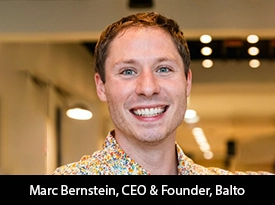
The results published are unusually specific for the category: a 35% to 43% conversion rate improvement at an insurance company between 2024 and 2025, $231,000 in additional revenue at a home improvement company, a 56% win rate on price objections when a Balto-suggested rebuttal is used, and onboarding time cut in half at One Mnet Health. Balto reports 300-plus customers, a 4.8 rating across 600-plus reviews, and SOC 2 Type II, HIPAA, PCI DSS and GDPR certification. Marc Bernstein serves as CEO & Founder.
Where the Revenue Actually Forms
Balto's commercial case rests on four measurable channels. The first is conversion: guidance at the moment of objection changes outcomes. The second is ramp time; where reduced onboarding from six months to one month at one customer compresses the period during which new agents generate cost without revenue.
The third is QA leverage. AmTrust reportedly operates without dedicated QA analysts after adopting the platform, and Empire Today estimated it would need six additional QA analysts to cover what Balto handles. The fourth is containment through Togo, which reduces the volume of repeatable calls reaching human agents.
Each channel maps to a different buyer sales leadership, training, quality, operations which is why the platform's breadth functions as an account expansion strategy rather than a feature list.
The QA Decision That Changes the Sample
Sampling has been the accepted compromise in contact center quality for decades: listen to a fraction, extrapolate, coach. Balto's position is that auto-scoring 100% of interactions replaces extrapolation with a census.
That shift matters commercially because compliance exposure is determined by the calls nobody reviewed. In financial services and healthcare, where a single mishandled call can produce regulatory consequence, complete scoring is a risk instrument rather than an efficiency tool.
Togo and the Boundary between Human and Machine
The voice agent is the platform's newest and most consequential addition. Togo is trained on top-performer conversations and handles natural, dynamic interactions rather than rigid IVR menus. It executes high-volume repeatable calls with consistency and routes everything else to humans.
The strategic logic is deflection without degradation. A contact center that automates scheduling and account verification frees capacity for the conversations where judgment and relationship matter which is where the human agent's value is actually concentrated.
Why the St. Louis Commitment Is a Signal
Balto states its intention to do for St. Louis what Dell did for Austin, and describes a moral obligation to fuel community growth alongside its own. For a company in a competitive AI category, that commitment functions as a retention argument: engineers and operators who want to build in one place, rather than cycle through coastal job changes.
The company's values start with gratitude, always be growing, leadership is ownership are culture language, but the third is operational. Owning the result is what distinguishes a platform that reports from one that intervenes.
What Agentic AI Requires Beyond the Demo
The category now claims agentic capability widely. Balto's differentiation is that its agentic functions operate on live conversations with verified integrations across NICE, Genesys, RingCentral, 8x8 and Convoso, and its results are attributed to named customers with specific figures.
For buyers in regulated industries, those combination security certifications, prebuilt integrations, published outcomes and a stated 30-day implementation timeline answers the questions procurement actually asks. Whether Balto holds its position depends on Togo's containment rates proving durable at scale. The evidence so far suggests the platform has moved past demonstration into deployment, which is where contact center AI has historically stalled.
Marc Bernstein, CEO & Founder
"The human is always the one in charge. Our technology scouts ahead in a conversation, finding the right words, catching the right moment, so the person on the call can do their best work."
Search Magazine
Latest Listings












