Most Admired Companies of the Year 2026
Black Tomato Sells Feeling Instead of Destination, Then Measures Whether the Emotion Actually Landed
Luxury travel has a measurement problem. Operators can report nights sold, destinations covered and revenue booked, but none of those figures describe whether the journey was worth taking. Black Tomato, founded in London in 2005 by Tom Marchant, James Merrett and Matt Smith, built its practice around a different question: not where a client wants to go, but how they want to feel. That inversion has produced a business that serves roughly 5,000 travelers annually, reports a 50% repeat client rate, and posted £3.09 million in operating profit in 2024, triple the prior year.
The company's origin is deliberately unglamorous for a luxury brand. Traveling through Eastern Europe, the founders encountered the black tomato on a menu and were told never to pass up a chance to enjoy something rare and remarkable. They returned to London intending to become the black tomato of travel a positioning that has since earned recognition on Travel + Leisure's A-List and Condé Nast Traveler's Top Travel Specialists for 2026.
The service range spans bespoke itineraries, family travel (now more than half the business), and Blink, a service that builds temporary luxury camps in remote locations and dismantles them after departure. Tom Marchant serves as Co-Founder.
The Feelings Engine and the Decision to Codify Emotion
In February 2025, Black Tomato launched The Pursuit of Feeling; a platform built around five emotional pillars Revitalised, Freedom, Distraction, Challenged and Contentment. Its central component, The Feelings Engine, uses retrieval-augmented generation trained on two decades of proprietary itineraries to recommend journeys based on how a traveler wants to feel rather than where they want to go.
The commercial logic is worth stating plainly. An operator that asks about feelings gathers psychographic data that a destination search never surfaces. That data supports higher-value recommendations, reduces the risk of a mismatched itinerary, and creates a defensible record of client preferences that compounds across repeat bookings.
Blink and the Economics of Controlled Scarcity
Blink is the company's most distinctive product and its clearest revenue signal. Clients receive a destination with limited notice, and Black Tomato constructs temporary luxury camp tents closer to collapsible hotel suites, private chefs, mobile spas in locations including the Bolivian salt flats, the Grand Canyon's North Rim and Iceland's Þjórsárdalur Valley.
The operational complexity is substantial: site construction, staffing, dismantling, and logistics in remote terrain. The pricing reflects it. Blink functions as a premium tier that commands higher margins than conventional itineraries while generating the kind of press coverage that a conventional marketing budget cannot buy.
Family Travel as the Volume Engine
While Blink captures attention, family travel now represents more than half of Black Tomato's business. That shift matters commercially because family bookings are larger in value, more complex to plan, and more likely to recur as children age into different travel capabilities. A family that books one multi-generational trip is a multi-year relationship rather than a single transaction.
The 50% repeat rate supports that reading. An operator retaining half its clients annually is not selling trips; it is selling a continuing advisory relationship.
Employee Ownership as a Succession Decision
In 2026, the founders sold 75% of the business into an Employee Ownership Trust while retaining 25% through a new share class and keeping decision-making authority. The structure is unusual for a company of Black Tomato's scale and profitability, and it was explicitly not a distressed sale.
The strategic consequence is that the founders secured succession without selling to private equity, preserving the culture and independence that underpin a brand built on judgment rather than volume. For a business whose product is taste, that continuity is a commercial asset.
What Emotional Travel Actually Requires
The luxury travel category has largely converged on a vocabulary of access private guides, exclusive openings, sold-out suites. Black Tomato's argument is that access is now commoditized and the scarce resource is interpretation: knowing which experience will produce a specific feeling for a specific person. The Feelings Engine, Blink and the family practice are three expressions of that thesis. Whether the company can scale interpretation without diluting it is the question the next several years will answer, and the employee ownership structure suggests the founders intend to find out without external pressure.
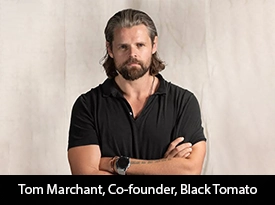
Tom Marchant, Co-Founder
"Travel should at its heart be about feeling; about pursuing our emotional needs in the world, with humility, curiosity and a sense of wonder."
Search Magazine
Latest Listings