Most Admired Companies of the Year 2026
Centage Sells the Build and the Run Together, Closing the Gap between Buying FP&A Software and Actually Using It
Mid-market finance teams occupy an awkward position in the FP&A software market. Excel plugins wrap the existing spreadsheet in workflow but leave the spreadsheet intact. Enterprise platforms from Anaplan, OneStream and Workday Adaptive deliver capability at the cost of six-to-twelve-month implementations, dedicated IT staff and six-figure annual spend before services begin. Centage was built for the space between those options, and it has occupied that space since 2001, when it launched as Budget Maestro before becoming Planning Maestro and, in 2023, Centage.
The company's differentiating claim is structural rather than promotional. Centage ships with a team to build the platform for the client's specific business and a team to run the cycle alongside the finance function afterward. Implementation typically completes in four to six weeks, led by an onshore FP&A specialist paired with engineering, product and QA, with finance owning the model rather than IT.
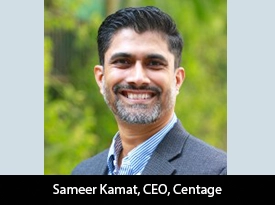
The platform covers budgeting, forecasting, workforce planning, multi-entity consolidation and board-ready reporting, with native connectors to more than 20 ERP, HRIS and CRM systems and an open path for everything else. Centage reports more than 500 finance teams running on the platform, with budget cycles accelerated by 60–70% and multi-entity close compressed from 30 days to one. Sameer Kamat serves as Chief Executive Officer.
The Two-Team Decision and What It Changes
Most FP&A vendors sell software and leave configuration to the buyer or to a systems integrator. Centage's position is that mid-market finance teams lack the bandwidth for that work, and that the implementation bottleneck is not the platform but the manual mapping of data into it.
Its response is twofold. AI reads the ERP structure and pre-maps the chart of accounts into meaningful financial categories on day one, compressing work that previously consumed weeks. Then the onshore team wires the remaining systems, matches the approval chain and builds the dashboards the CFO opens first. The result is a finance-owned implementation that does not require IT to configure integrations.
Where the Revenue Model Sits
Centage sells a software subscription bundled with finance-fluent onboarding, and then offers two escalating service tiers. Standard support includes a named US-based customer success manager with an FP&A background and a named support engineer.
Advisory Hours provide reserved time with a financial advisor for budget-season lifts or board-pack pushes. Managed FP&A assigns a dedicated advisor who builds the budget model over 90 days, delivers the monthly board pack, runs the quarterly reforecast and remains on the account effectively FP&A as a service.
Each tier increases revenue per account while addressing a different capacity constraint, from a finance team that needs occasional modeling help to one that needs an entire function.
Workforce Planning as Core, Not Add-On
Personnel typically represent 60 - 70% of operating expenses, and Centage ships its Personnel Module as first-class functionality rather than a paid extension. Budgeting by position incorporates pay grades, steps, benefit loads, payroll-tax rules by geography and bonus tiers.
The distinction matters because enterprise competitors charge separately for workforce planning, and Excel-based approaches frequently miss the fully loaded cost of a hire across state lines. A model that knows a grade-12 hire in California costs more than the same role in Ohio produces a materially different budget.
AI With Guardrails
Centage runs three finance-native agents: a Business Insights agent that flags variances and their likely causes, an FP&A chat agent that suggests forecast adjustments from actuals patterns, and a Variance & Guardrails agent that audits every write. Every suggestion cites its actuals rows, and every change requires human approval.
That architecture reflects a considered position: finance cannot adopt AI that alters the model silently, so the guardrail is the feature rather than an afterthought.
Why the Middle Holds
The FP&A category has consolidated toward two poles cheap Excel tooling and expensive enterprise platforms. Centage's bet is that the mid-market is not a transitional state but a durable segment with distinct requirements: enterprise-grade consolidation without the IT dependency, and services without the consulting markup. Twenty-five years in that position, with clients including AccuWeather, Pella, Westinghouse, Goodwill and Habitat for Humanity, suggests the argument holds.
Sameer Kamat, Chief Executive Officer
"Getting there means giving mid-market finance teams’ enterprise capability without the enterprise cost, timeline, or IT burden."
Search Magazine
Latest Listings