From Global Marketing to People-First Leadership: Cheryl Rodness’ Lessons for Building the Next Generation of Leaders
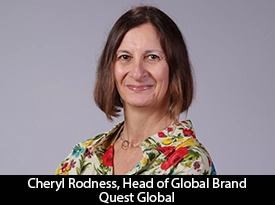
How do you build a company designed to outlive the very leaders who run it? It is a question that goes beyond balance sheets and business strategies. To nurture its people, understand customers and have a global approach requires planning and a long term view. These are the foundations that define lasting success, and Quest Global sits at the heart of that. The hardest problems are rarely solved by technology alone. They are solved by people who understand the industry, customer needs, and business conditions well enough to turn complexity into solutions. Quest Global works with companies across the globe, working side-by-side with clients, to develop products and processes that solve engineering problems. Yet the company’s ambition extends beyond individual projects.
For Cheryl Rodness, Head of Global Brand at Quest Global, that philosophy is closely connected to the way she has approached her own career. With approximately 25 years in technology marketing, Cheryl has spent much of her professional life at the intersection of technology, marketing, and global business. She was drawn to marketing because of her interest in understanding what shapes decisions to purchase, while technology appealed to her because of its constant movement and demand for continuous learning. Global work added another dimension, giving her the opportunity to understand how people and organizations operate differently across cultures. Her previous experience includes marketing responsibilities across more than 25 countries, an understanding that has become particularly relevant at Quest Global, where teams, customers, and markets span geographies with very different business traditions and communication styles.
A Global Company Requires Cultural Intelligence
Cheryl believes that operating globally means that you understand the business practices and culture of each country you are operating in. Her career has led her to overseas assignments in the Netherlands and Japan. Along with working across teams in over 25 countries, today her team at Quest Global is located in India and Japan, coupled with extensive personal travel; she is constantly seeking to understand how people communicate, make decisions, and build relationships. That experience has reinforced one of her central leadership lessons: understand the culture of the country you are working in and you’ll better understand the people and working dynamics. Communication styles that are considered natural in one market may be interpreted very differently somewhere else. She points, for example, to Japan as a high-context culture in which communication can depend heavily on implication and context, compared with the more direct communication styles she has encountered in the Nordics, the Netherlands and North America.
For Quest Global, cultural awareness is not simply a soft skill. Engineering services depend on collaboration across borders, functions, and organizations, often involving customers with different expectations about decision-making, communication, and accountability. Technical expertise may provide the foundation for a project, but successful collaboration requires people who can recognize the human context surrounding the technology.
Leadership Measured by the People Who Follow
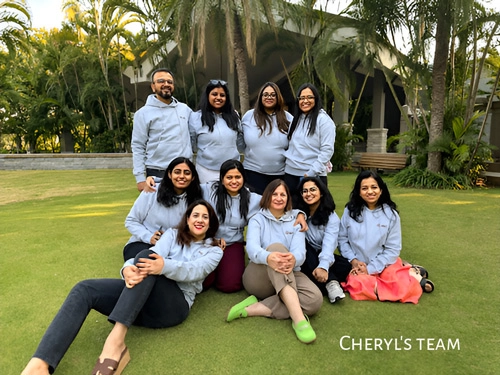
Although Cheryl’s formal responsibility is to build Quest Global’s brand, she also considers developing marketers as one of her responsibilities - a commitment she has lived and breathed for the past several years through her dedicated mentoring with internal team members, working with the Marketing Academy, building robust intern programs, and creating real opportunities for young talent to grow and flourish.
Her philosophy is rooted in a lesson she received early in her career. At the time, Cheryl was balancing a demanding career with raising two young children, and her executive leader did something that proved more valuable than simply offering encouragement: she understood the stage of life she was navigating and gave her the space and comfort to grow, manage responsibilities, and evolve accordingly. Cheryl could put her foot on the accelerator when circumstances allowed and ease off when family required more attention, without being treated as less ambitious or less capable. That experience shaped her own approach to leadership and managing teams. When she takes on a new role, she seeks to understand what her team members want out of their careers. What are they striving to learn? Where do they want to grow, and what is happening in their lives. Then she works with them to determine when they need greater responsibility and when they need room to focus elsewhere. People do not develop in identical circumstances or on identical timelines. For Cheryl, supporting the changes is not a concession to employees; it is part of building a stronger leadership pipeline.
Putting People First Beyond the Corporate Narrative
Quest Global’s people-first philosophy manifests itself in programs designed build a compassionate workplace, and to address issues employees may otherwise feel unable to discuss openly. One example is Break the Silence, a global initiative to provide support and resources around pregnancy loss. The initiative emerged after the company researched the impact pregnancy loss can have on women and the organizations they work for, and recognized that the subject is often discussed behind closed doors. Employees may return to work quickly without disclosing what has happened, never properly healing, and leaving colleagues and managers unknowingly able to support and respond. In launching the initiative it helps strengthen the relationships and culture that allow people and organizations to flourish, and works toward ensuring no one carries their hardest moments alone.
Learning AI at Quest Global: A Journey
For Cheryl, the same belief that guides how she develops people also shapes how she views technology: AI should expand what her teams are capable of, not stand in for the human judgment, creativity and trust that give a brand its humanity.
Artificial intelligence is inevitably changing the skills required across the technology and engineering ecosystem, and marketing is no exception. For Cheryl, a key area of focus is understanding the role of AI in marketing and branding.
AI may automate portions of knowledge work, but organizations still need people who can frame problems, make decisions, build trust, and bring different perspectives together. For an engineering services company dealing with technologies, the ability to combine advanced tools with human judgment and creativity remains an important consideration.
Building a Company That Can Outlast Its Leaders
Quest Global’s ambition is perhaps best understood through Cheryl’s description of the company as an organization focused on building lasting impact. Approaching its 30th anniversary with the desire to become a centenary company, Quest Global reflects on the principles that have guided its growth so far. That has involved building institutional knowledge, develo ping leaders, and maintaining a culture that supports its people, creating an organization whose values remain meaningful as generations of employees come and go.
Cheryl believes leaders should give their teams the opportunities they themselves received. Her advice to professionals is equally straightforward: identify where your team members need to grow, offer them the opportunities and let them rise to their capabilities. Acknowledge that not everyone will choose to develop at the same time or at the same pace and offer everyone the support they need to be the best they can and want to be.
Ultimately, Quest Global’s story is not simply about engineering services, even though engineering sits at the center of its business. It is about how a global organization attempts to build the human infrastructure required to solve engineering problems that become more difficult with every generation. The company’s vision rests on the assumption that technology will continue changing, markets will continue shifting, and customers will continue demanding solutions to problems that do not yet have obvious answers.
Lessons to Be Considered
If there is one lesson that resonates throughout Cheryl’s journey, it is this: Give people the opportunity, encouragement, support and space to reach their fullest potential.
Search Magazine
Latest Listings












