Clear Company Converts Inclusion from a Moral Argument into an Evidence Trail Regulators and Boards Can Read
Clear Company Converts Inclusion from a Moral Argument into an Evidence Trail Regulators and Boards Can Read
Diversity training has a credibility problem, and the numbers explain why. Programs proliferate, budgets shrink, and the question chief executives increasingly ask is not whether inclusion matters but whether any of it can be proven. Clear Company has built a two-decade practice around answering that question with evidence rather than sentiment. Founded in 2003 and headquartered in Warrington, Cheshire, the consultancy serves employers through audits, accreditation, learning and software, positioning itself as a partner across the full cycle from diagnosis to demonstrable impact.
The company's framing is deliberately systemic. Rather than selling isolated interventions, Clear Company describes inclusion as a domino effect in which progress in one area creates opportunity in another, and its solutions map to that sequence: analyze and measure current culture, build knowledge, instill leadership capability, gain accreditation, and keep growing. The approach is intersectional by design, addressing all nine UK protected characteristics across the entire employee lifecycle rather than treating diversity categories as separate workstreams.
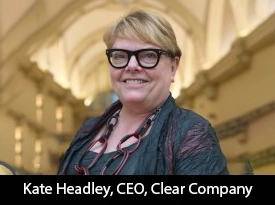
The commercial context has sharpened. Employers face regulatory obligations alongside reputational ones, and the workforce data supporting inclusion claims must withstand scrutiny. Clear Company's answer is an accreditation standard, Clear Assured, benchmarked against a framework reviewed by external third parties and assessed quarterly rather than annually. Under Chief Executive Officer Kate Headley, who also serves as UK Government Disability and Access Ambassador for the Recruitment Industry, the firm has accumulated recognition including the Inclusive Awards 2024 D&I Consultancy Award and a CIPD People Management Award for its work with Balfour Beatty.
Diagnosis before Prescription
Clear Company's entry point is measurement, and the tools are structured to make measurement defensible. Holistic culture audits combine interviews, focus groups and surveys to link policy, structure and process with lived employee experience, producing root-cause analysis rather than surface findings. The Inclusion Maturity Index collects anonymized DEI data through a questionnaire designed to raise disclosure rates, generating an overall inclusion score with demographic breakdowns across disability, race, gender and sexuality.
The Leadership Diagnostics tool addresses a different gap: leaders frequently lack awareness of their own starting point. A self-rating and multi-perspective assessment surfaces where each executive sits on their personal inclusion journey, creating the feedback loop that coaching and development require.
The Accreditation Engine
Clear Assured is where Clear Company's revenue model and its evidentiary claim converge. The accreditation is structured around four pillars finding talent, assessing talent, retaining talent, and policies and procedures and assessed across the full employee lifecycle. Subscribers receive a dedicated account manager, a custom action plan aligned to long-term objectives, and access to an Inclusion Hub containing more than 200 DEI resources, guides and toolkits.
The quarterly review cadence is the differentiating decision. Most accreditations run on annual cycles, which allow organizations to drift for months before correction. Quarterly task review converts accreditation from a certificate into a management rhythm, and it creates recurring engagement that sustains subscription economics.
The outcomes Clear Company publishes from Chaucer Group's Gold accreditation illustrate the model's intended effect: women in senior roles rising from 18% to 35%, a 12.2% reduction in the gender pay gap, a 7.6% reduction in the ethnicity pay gap after voluntary race disclosure, and 92% of colleagues reporting that the firm respects and encourages diversity.
Learning as the Retention Layer
Training carries the culture change into daily behavior, and Clear Company's learning portfolio spans inclusive leadership, inclusive hiring, neuroinclusivity, disability inclusion, race equality and non-inclusive behavior management. Delivery formats range from accredited in-house workshops and virtual open courses to e-learning modules and coaching.
The measurable claims are specific. Clear Company reports running 126 workshops and reaching more than 2,000 leaders with inclusive leadership training in 2023, with an average NPS of 4.61 out of 5 for 2024 programs. Its long-running partnership with Balfour Beatty, delivering the "Right to Respect" program across the organization and its supply chain, produced a 15% improvement in engagement scores for female, Global Majority and disabled employees over a two-year period.
Software Where Process Fails
ClearTalents addresses a persistent operational failure: workplace adjustments depend on employees advocating for themselves, often without knowing what to request. The platform invites all employees proactively to share circumstances or challenges, supplies managers with expert guidance on accommodations, and ports agreed adjustments when employees move internally. Clear Company cites an average reasonable adjustment cost of £75 per person, with 78% of disabled employees having initiated their own adjustment process absent such a system a statistic that reframes adjustments as routine operating practice rather than exception handling.
Why Evidence Outlasts Enthusiasm
Inclusion work has historically been funded on conviction and defunded on scepticism. Clear Company's structure audit, index, diagnostics, accreditation, training, software builds a record at every stage, and records survive leadership turnover and budget review. With a team of 20 specialists and clients including Lloyd's, AtkinsRéalis and Chaucer, the firm's proposition is less about inspiration than about producing documentation that holds when examined. That is a durable position in a market where sentiment alone no longer secures funding.
Kate Headley, CEO and UK Government Disability & Access Ambassador for the Recruitment Industry
"When it comes to disability there is a common fear of getting it wrong, which is stopping people and organisations from making progress. We're here to encourage and support you to just start!"
Search Magazine
Latest Listings












