Smartest Companies of the Year 2026
CycloChem Bio: Turning Cyclodextrin Science into the Next Generation of Functional Food Innovation
The Silicon Review
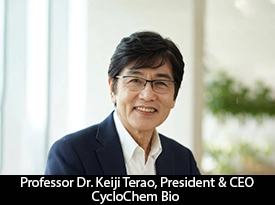
For CycloChem Bio, the journey from a specialist Japanese importer to an R&D-driven company in functional foods and nutraceuticals has been shaped by one scientific idea: a molecule’s potential can change dramatically when it is placed in the right molecular environment. At the centre of that philosophy is cyclodextrin, a naturally derived carbohydrate structure that can act as a molecular host, encapsulating other compounds within its cavity and changing how those compounds behave in food, digestion and commercial formulations. The company’s origins can be traced to President Keiji Terao’s early career in organic chemistry. After earning his PhD in 1986, Terao joined Wacker Chemie in Germany, where an encounter with biologist Dr. Gerhard Schmid at the company’s Munich headquarters introduced him to cyclodextrin research. Schmid was working on the development and production of cyclodextrins, and his work ultimately influenced Terao’s decision to make the chemistry a central part of his own professional career.
Cyclodextrins occur naturally in three principal forms that can be produced industrially: α-cyclodextrin, made from six glucose units; β-cyclodextrin, made from seven; and γ-cyclodextrin, made from eight. While β-cyclodextrin had already entered industrial production in Japan during the 1970s, economical large-scale production of α- and γ-cyclodextrin presented greater challenges. Schmid’s work helped establish production methods for all three, culminating in the construction of a large-scale manufacturing facility in the United States in 2000. That development created the foundation for a new business opportunity. Terao left Wacker Chemie and established CycloChem Bio with the ambition of taking cyclodextrin beyond its conventional applications and applying it to functional foods and nutraceuticals. What began with distribution would gradually become a research-led enterprise focused on understanding how these molecular structures could solve practical formulation problems.
The Science of Making Difficult Ingredients Work Better
The functional food industry has no shortage of ingredients associated with health and wellness, but scientific potential does not automatically translate into an effective commercial product. Many nutraceutical compounds are poorly soluble in water, unstable under digestive conditions or vulnerable to heat, light and oxygen. This creates a formulation challenge that sits between laboratory science and consumer nutrition.
CycloChem Bio approaches that challenge through what it describes as cycloencapsulation technology, using cyclodextrins as molecular capsules. The objective is not simply to add another ingredient to a formulation, but to modify how an existing functional compound behaves.
One of the company’s research areas involves hydrophobic nutraceuticals such as coenzyme Q10, curcumin, tocotrienols and ursolic acid. These compounds are highly oil-soluble and have limited hydrophilicity, which can contribute to low absorption in the small intestine. Conventional formulation approaches may use oils or emulsifiers to improve dispersion, but CycloChem Bio’s approach focuses on molecular-level inclusion within γ-cyclodextrin.
According to Terao, once a γ-cyclodextrin-encapsulated compound reaches the small intestine, interactions with bile acids can facilitate what is known as guest exchange. The encapsulated compound can then become associated with bile acid micelles, potentially improving its availability for absorption. The company applies similar principles to compounds like R-alpha lipoic acid and caffeic acid phenethyl ester in propolis that are vulnerable to stomach acid, using γ-cyclodextrin to improve their stability before they reach the intestinal environment.
The distinction is important because CycloChem Bio is positioning cyclodextrin not merely as an ingredient, but as a formulation platform. The same underlying molecular principle can be adapted to different compounds, different delivery challenges and different categories of finished products.
Three Generations of Research
CycloChem Bio describes more than 25 years of cyclodextrin application research as progressing through three generations. The first centred on bioavailability, particularly through the solubilisation and stabilisation of functional ingredients using γ-cyclodextrin. Compounds such as CoQ10 and R-α-lipoic acid became examples of how inclusion technology could address fundamental formulation limitations.
The second generation moved toward understanding α-cyclodextrin as a dietary fibre and developing commercial applications around its physiological properties. The company investigated areas including post-meal blood glucose response, small dense LDL cholesterol and gut health, expanding the role of cyclodextrin beyond simple delivery technology.
The third generation takes the technology into sustainability and food utilisation. Here, CycloChem Bio’s Fresh Oligo Powder Technology is designed to preserve functional components from fresh agricultural materials while extending their shelf life. The concept has particular relevance to food loss because materials that might otherwise be discarded can potentially become functional ingredients.
This represents a broader change in the company’s thinking. Instead of starting with a commercially established ingredient and asking how it can be formulated, CycloChem Bio is increasingly looking at agricultural resources and asking how molecular encapsulation can preserve their value.
Fresh Oligo Powder and the Circular Food Opportunity
Conventional drying technologies can expose sensitive ingredients to heat and oxygen, potentially affecting enzymes, volatile compounds, flavour and biological activity. CycloChem Bio’s Fresh Oligo Powder Technology uses α-cyclodextrin as a molecular capsule, with the aim of protecting functional compounds from environmental factors such as heat, light and oxygen.
Actinidin, the protein-degrading enzyme naturally found in kiwi fruit, provides one example cited by the company. Terao says that when actinidin is encapsulated with α-cyclodextrin and converted into fresh powder, its activity can remain almost completely preserved after a year at room temperature. The company has also applied the approach to volatile compounds such as isothiocyanates found in radishes.
The commercial implications extend beyond preservation. In Japan, CycloChem Bio is exploring ways to turn agricultural products that might otherwise be classified as out-of-specification into higher-value functional materials. Peaches, apples, tomatoes, watermelons and olives are among the resources identified by the company as potential candidates.
The model creates a connection between agriculture, food technology and health products. A crop that cannot enter conventional retail channels because of appearance, size, surplus production or other specifications could potentially be processed into a functional powder rather than becoming waste. In that sense, CycloChem Bio sees molecular encapsulation as part of a circular business model in which agricultural resources retain economic value further along the supply chain.
From Human Chemistry to Personal Nutrition
Another concept developed by Terao is the idea of “Hito Chemicals,” a term derived from the Japanese word hito, meaning human. The concept distinguishes naturally occurring compounds produced within the human body from plant-derived phytochemicals.
CycloChem Bio’s research focuses particularly on substances such as CoQ10 and R-α-lipoic acid, whose endogenous production or bioavailability reduce with age. CoQ10 has an established biochemical role in mitochondrial energy production and antioxidant defence, while R-α-lipoic acid participates in mitochondrial glucose metabolism and antioxidant processes. The company’s strategy is to identify such compounds, understand their formulation limitations and then use cyclodextrin technology to develop stable, commercially viable products. CoQ10, for example, is fat-soluble and therefore presents a formulation challenge in aqueous digestive environments. CycloChem Bio uses γ-cyclodextrin encapsulation to improve its dispersibility and absorption characteristics.
L-carnitine represents another example, although its challenge is different. The compound is relatively well absorbed by the body but is highly hygroscopic, creating difficulties in handling and powder formulation. CycloChem Bio applies α-cyclodextrin encapsulation to create a more manageable commercial ingredient while retaining its functional properties.
Together, these applications demonstrate the company’s broader R&D philosophy: identify a biologically meaningful compound, determine what prevents it from functioning effectively in a commercial formulation, and then use molecular inclusion chemistry to address the bottleneck.
Research as the Company’s Competitive Foundation
CycloChem Bio’s scientific strategy is supported by a multidisciplinary research team that includes PhDs with backgrounds spanning medicine, engineering, science, agriculture and pharmacy. That breadth matters because cyclodextrin applications sit across multiple disciplines, requiring knowledge of chemistry, food science, biology, formulation and physiology. The company also conducts a weekly journal club in which research papers related to cyclodextrins are examined from different scientific perspectives. Terao sees this cross-disciplinary approach as one of the company’s distinguishing characteristics because it allows researchers to concentrate specifically on how cyclodextrin can be applied across different fields.
CycloChem Bio has also built an intellectual-property portfolio that Terao says includes more than 37 patents, alongside publications in journals including the Journal of Functional Foods and Applied Biochemistry and Biotechnology. For a company operating in the functional food and nutraceutical space, this emphasis on published research and proprietary technology provides a framework for differentiating scientific development from simple ingredient distribution.
Its recent recognition with the “TOP CYCLOENCAPSULATION TECHNOLOGY IN APAC 2026” award reflects the company’s emphasis on cycloencapsulation as a core technological capability. Rather than treating its history as an ingredient distributor as the endpoint, CycloChem Bio has used that foundation to develop application knowledge around α-, β- and γ-cyclodextrins.
From Distributor to Technology Company
The company’s evolution is particularly visible in its early relationship with Wacker Chemie. In 2002, CycloChem Bio became the sole Japanese importer of Wacker’s cyclodextrins, entering a market in which α- and γ-cyclodextrin were still relatively unfamiliar to Japanese food companies.
The commercial challenge was significant because demand had not yet been established. β-cyclodextrin was already familiar to food-sector researchers through Japanese manufacturers, whereas α- and γ-cyclodextrin required education, application development and demonstration of practical value.
CycloChem Bio therefore invested in applied research rather than relying solely on distribution revenue. Its researchers began developing applications for α- and γ-cyclodextrin in food and nutraceutical products, gradually building a body of knowledge that could be converted into proprietary formulations and customer solutions.
That transition from selling an ingredient to developing technology around the ingredient is central to the company’s identity today. CycloChem Bio’s value proposition increasingly lies in knowing how cyclodextrins can be used, rather than simply making them available.
A New International Chapter in Mongolia
The next phase of the company’s strategy is taking shape outside Japan. CycloChem Bio is developing Fresh Oligo Powder applications based on Mongolian camel milk, an initiative connected to Terao’s role as a visiting professor at the National University of Mongolia. In August 2026, the company established Cyclochem Mongolia with local cooperation.
Camel milk has attracted research interest for its nutritional characteristics and potential metabolic benefits, although claims surrounding specific antidiabetic effects need to be distinguished from established clinical evidence. For CycloChem Bio, one practical challenge is shelf life compared with conventional cow’s milk. Fresh Oligo Powder Technology could provide a route to stabilise camel milk while creating a shelf-stable powdered format that can be reconstituted.
The Mongolia initiative extends beyond camel milk. CycloChem Mongolia is also expected to explore fresh powders based on sea buckthorn, a plant associated with beauty and nutritional applications, and flaxseed oil, which contains compounds of interest in lipid and cardiovascular nutrition.
The underlying ambition is larger than launching individual products. CycloChem Bio wants to help create a new value chain in which Mongolia’s distinctive agricultural and natural resources can be processed into higher-value functional ingredients for international markets.
Building the Future One Molecule at a Time
CycloChem Bio’s story is ultimately one of transformation: from organic chemistry to applied molecular science, from distribution to proprietary technology, and from conventional nutraceutical formulation to a model that connects health, food preservation and agricultural sustainability.
Its Fresh Oligo Powder Technology illustrates where that strategy could lead. If sensitive enzymes, volatile compounds, surplus milk and underutilised agricultural materials can be stabilised without losing their functional characteristics, the technology has applications that extend well beyond a single category of dietary supplements.
The company’s future will depend on how successfully these scientific concepts translate into validated products, regulatory-compliant claims, scalable manufacturing and international markets. Yet the direction is clear. CycloChem Bio is betting that the next generation of functional food innovation will not be defined only by discovering new ingredients, but by understanding existing ingredients at the molecular level and finding smarter ways to preserve, deliver and utilise them.
Under Keiji Terao’s leadership, cyclodextrin has become more than a chemical structure at CycloChem Bio. It has become the foundation for a broader R&D philosophy, one that seeks to connect molecular science with commercial applications while giving overlooked biological and agricultural resources a new lease on life.
Meet the leader behind the success of CycloChem Bio Co., Ltd.
Professor Dr. Keiji Terao is President and CEO of CycloChem Bio Co., Ltd., Kobe, Japan, and a Doctor of Engineering from Kyoto University. Born in Okayama Prefecture in 1957, he began his international career at Wacker Chemie’s headquarters in Munich before joining Wacker Chemicals East Asia. In 2002, he founded CycloChem Bio, where he continues to lead research and innovation in cyclodextrin applications. Professor Terao has held visiting professorships at leading academic institutions, including Kobe University, Kobe Women’s University, Tokyo University of Agriculture and Technology, and the National University of Mongolia. His recent research focuses on cyclodextrin applications for preventive health, particularly in food science.
A strong advocate of industry-academia collaboration, he currently serves as Chairman of the Cyclodextrin Society and has held leadership roles in the Japan Cyclodextrin Industry Association. He has authored or contributed to more than 50 scientific books and published over 200 peer-reviewed papers.
Search Magazine
Latest Listings