Dr Kinnar Shah Teaches Dentists to Convert Clinical Excellence into Commercial Performance
The Silicon Review
Dentistry trains practitioners to diagnose, treat, and restore. It does not train them to run businesses. Most dental graduates enter practice with deep clinical competence and almost no exposure to case acceptance psychology, team accountability, fee positioning, marketing economics, or the operational systems that determine whether a practice generates margin or merely generates activity. The consequence appears years later: talented clinicians working longer hours, producing excellent dentistry, and still watching revenue plateau while burnout accumulates and practice value stagnates.
Dr Kinnar Shah built his coaching practice around that specific gap. A practicing dentist with more than two decades of clinical experience, he founded and scaled a premium dental practice in Sydney, growing it sevenfold within three years while reducing his own clinical commitment to two and a half days per week and reaching a volume of 220 new patients per month. That outcome was not the product of working harder. It came from rebuilding the systems that governed how the practice attracted patients, communicated treatment, converted enquiries, and aligned teams. Those same systems now form the foundation of his coaching methodology.
Operating across Australia through one-on-one mentorship, structured group programs, live workshops, and in-practice team training, Shah has coached hundreds of dental professionals and worked with more than 500 practices. His approach centers on frameworks rather than inspiration: the GPS Case Acceptance System, the Leadership and Identity Expansion Model, Practice Growth Architecture, and a Team Alignment Framework. For practice owners who have consumed plenty of motivational content without seeing their numbers change, the distinction matters. What Shah teaches is operational.
Case Acceptance as the Highest-Leverage Revenue Variable
Most practices respond to flat revenue by increasing marketing spend. Shah's methodology reverses that sequence, treating case acceptance as the first variable to address because it monetizes patients already sitting in the chair. His GPS Case Acceptance System structures consultations through four stages engage, gather intelligence, present, and secure commitment replacing improvised treatment conversations with a repeatable process grounded in ethical influence rather than pressure tactics. Practices applying the framework report case acceptance climbing toward 75 percent, with one client documenting an increase to that level alongside a 455 percent rise in monthly new patients. The revenue logic is direct: every additional accepted treatment plan converts existing clinical capacity into production without adding marketing cost or chair time.
NLP Applied to Patient Communication
Shah's use of Neuro-Linguistic Programming is practical rather than theoretical. Patients process information through different channels visual, auditory, and emotional and treatment explanations that ignore those differences create hesitation even when the clinical recommendation is sound. NLP techniques allow practitioners to identify communication preferences, build rapport quickly, reduce anxiety in nervous patients, and present complex treatment in language that produces understanding rather than confusion. For high-value procedures in particular, the difference between clinical accuracy and patient comprehension determines whether treatment proceeds. Shah's workshops consistently receive feedback citing immediate applicability, with attendees describing the material as a blueprint they can deploy the following day.
Marketing, Conversion, and Measurable Economics
Shah treats dental marketing as a measurable acquisition function rather than a branding exercise. His framework tracks website visibility, conversion rates, cost per new patient, case acceptance, and revenue growth metrics that convert marketing from speculation into accountable investment. One client practice tripled new patient volume, raised booking rates to 70–80 percent, and lifted patient retention and recalls above 70 percent after implementing the system. Another reported personal income increases of $40,000 monthly and practice income growth of $75,000 monthly. A third documented 46 percent monthly revenue growth alongside a 455 percent increase in new patients. These figures appear in verified client testimonials, and they reflect the compounding effect of aligning acquisition, conversion, and retention into a single operating system rather than managing them as separate initiatives.
Team Alignment and Leadership Development
Practice growth eventually outpaces the owner's capacity to manage everything personally. Shah's Team Alignment Framework addresses this by structuring purpose, problem identification, possibility, plan, and participation into a repeatable process for building accountable teams. His leadership coaching extends to associate dentists seeking confidence and influence, and to teams requiring consistent communication standards across every patient touchpoint. One client scaled from a business turning over under $300,000 annually to $2 million within five years after working through Shah's programs. That trajectory reflects the effect of leadership development on retention, productivity, and ultimately enterprise value.
The Economics of Coaching as an Investment
Shah's coaching operates through multiple tiers one-on-one mentorship for practice owners scaling aggressively, the Destiny Design Club for structured group development, team training modules delivered in practice, and live events including a two-day Brisbane workshop and a year-long Destiny Design program. Each engagement addresses a specific constraint: acquisition, conversion, leadership, or systems. The economics favor practices that address these constraints simultaneously, since improvements in case acceptance compound with improvements in marketing efficiency and team performance. Practices that upgrade only one dimension typically see partial results.
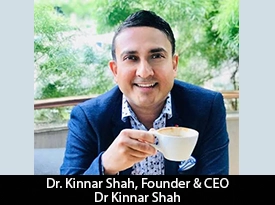
Dr. Kinnar Shah, Founder and CEO
"Dentists do not lack clinical skill they lack the business systems that turn that skill into sustainable revenue. Most practices are not underperforming because of effort. They are underperforming because nobody taught them how to run the business side."
Search Magazine
Latest Listings