Erem Latif, Engagement Lab Founder: “To me, success isn’t measured by how many people know your name. It’s measured by how many lives are meaningfully changed because of your work.”
The Silicon Review
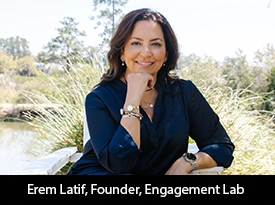
Founded by executive advisor, researcher, and best-selling author Erem Latif, Engagement Lab is the enterprise advisory practice advancing Human Technology, an emerging interdisciplinary field that explores how individuals and organizations think, decide, adapt, lead, and thrive. Drawing on more than twenty-five years of experience spanning healthcare, patient engagement, neuroscience, organizational transformation, and executive advisory, Latif is helping shape a new conversation about human performance by asking the deceptively simple question: What if sustainable performance begins by understanding the human operating system itself?
Throughout her career, Latif observed a recurring pattern. Success was rarely determined by intelligence, education, or opportunity alone. Instead, the greatest differentiator was the invisible system influencing how people perceive challenges, regulate emotions, make decisions, build relationships, recover from adversity, and lead under pressure. Traditional leadership development often focuses on behaviors, competencies, and outcomes. Latif believed those were expressions of something deeper. That insight became the foundation for Human Technology Architecture™ (HTA), an evidence-informed framework integrating neuroscience, behavioral science, physiology, psychology, and leadership to better understand the internal systems that drive human performance.
Through Engagement Lab, organizations apply Human Technology to strengthen decision quality, leadership effectiveness, adaptability, resilience, and sustainable performance. Looking ahead, Latif is expanding this work through research, media, education, and the development of the Human Technology Index, an evidence-informed measurement initiative designed to better understand the internal capacities that shape how people think, decide, recover, and perform. As technology continues to transform the world around us, Human Technology explores how we cultivate the uniquely human capabilities that technology cannot replace.
Under Erem Latif’s leadership, Engagement Lab has established itself as a trusted partner for private equity groups, executive teams, managing directors, athletic organizations, and individuals seeking meaningful, measurable change. By combining scientific rigor with human-centered leadership principles, the company is helping redefine what effective leadership looks like in the modern era. Its mission reflects the growing influence of women-led innovation: creating environments where people not only perform at higher levels but also lead with greater clarity, confidence, and purpose.
In conversation with Erem Latif, Founder of Engagement Lab
You describe your work as addressing the “disconnect buried in your Human Technology Architecture™.” As an influential woman leader, what led you to recognize this gap in traditional leadership development, & why do so many high-performing women experience it?
I came to this work through physiology and clinical research, not coaching. My training taught me to think in systems: how the body, brain, and environment interact to produce outcomes. Throughout my career in healthcare, executive advisory, and organizational transformation, I kept observing the same pattern. Traditional development models focused on upgrading the software: skills, behaviors, habits, and strategies. Those are all important, but they are expressions of something deeper. Few ask what operating system is producing those behaviors in the first place.
That’s where I believe many performance challenges originate. Identity, nervous system regulation, biology, perception, and belief systems shape how we think, decide, communicate, recover, and lead long before behavior becomes visible. If we only address what people do without understanding what’s driving those actions, change is often temporary rather than lasting or transformational.
Many high performers, particularly women, aren’t struggling because they lack intelligence, capability, or even ambition. They’re often succeeding despite operating from systems under chronic strain. Years of over-functioning, caregiving, perfectionism, or constant achievement can create a biological and psychological state that quietly influences decision quality, resilience, creativity, relationships, and overall well-being.
That realization became the foundation for Human Technology. My work is built on the belief that sustainable performance begins by understanding, measuring, and intentionally calibrating the human operating system. When people better understand the systems shaping how they think, decide, and perform, they don’t just achieve different outcomes… they experience work, leadership, and life differently.
Human Technology integrates neuroscience, behavioral science, physiology, identity development, and leadership into a single framework for understanding human performance. What makes this interdisciplinary approach different from traditional leadership and performance development, and why do you believe it’s especially relevant today?
Most leadership development begins by asking, “What skills should we teach?” Human Technology begins by asking, “What system is producing those behaviors in the first place?”
Traditional models often address communication, strategy, or leadership competencies independently. Those are all important, but they’re expressions of something deeper. Every decision we make is influenced by an interconnected system of biology, identity, cognition, emotion, relationships, and environment.
Human Technology brings disciplines together into a more integrated understanding of how people think, decide, recover, adapt, and perform. Rather than treating resilience, leadership, well-being, and performance as separate conversations, it recognizes them as interconnected outcomes of the same human operating system. What differentiates the model is not any individual component, the integration of all these disciplines. Sustainable performance requires alignment between how a person thinks, how they regulate, and how they act.
This is why I describe the work as Human Technology Architecture™, an approach that optimizes the underlying system that drives leadership, decision-making, and performance.The various tools we’ve developed, including the Helix of Health™, the Identity Playbook, and Cards for Coherence, are simply practical ways of helping people understand and calibrate different parts of that system.
I believe this integrated perspective is increasingly important because, while artificial intelligence continues to transform technology, the next competitive advantage will come from optimizing uniquely human capabilities: judgment, adaptability, resilience, connection, and aligned decision-making.
You have been featured in various publications for your transformative approach to leadership and human performance. How does this external recognition reflect the broader impact you’re hoping to create, and what does being a “transformational leader” mean to you personally?
To me, recognition is simply a lagging indicator. It reflects work that has already created value rather than the reason for doing it.
What motivates me isn’t visibility; it’s witnessing meaningful transformation. Whether I’m working with an executive, a founder, a leadership team, or an organization, the greatest reward is watching people begin to understand themselves differently. When individuals uncover the patterns, beliefs, biological responses, and assumptions shaping how they think, decide, and lead, they gain the freedom to respond more intentionally rather than react automatically at work, at home, and across their lives.
That’s what I believe transformational leadership really is. It’s not about becoming someone different. It’s about becoming more aware of the systems influencing your decisions and developing the capacity to lead with greater clarity, wisdom, and alignment.
To me, success isn’t measured by how many people know your name. It’s measured by how many lives are meaningfully changed because of your work.
Your book Live Engaged™ introduces the concept of physiological incongruence the hidden gap between external success & internal alignment. Why is this concept so important, and how does understanding it change the way people lead and live?
Physiological incongruence describes the gap between the life we’re trying to create and the internal state from which we’re attempting to create it. Many high achievers believe they need more discipline, stronger habits, or greater resilience. In reality, they may be pursuing meaningful goals from a system operating under chronic stress, exhaustion, or persistent activation.
That misalignment influences far more than physical well-being. It shapes how we think, interpret challenges, make decisions, communicate, recover, and relate to others. It can quietly show up as persistent fatigue, anxiety, perfectionism, emotional reactivity, second-guessing, or the feeling of working harder while making less meaningful progress. Too often, people interpret those experiences as personal shortcomings when they may actually be signals that the system itself is asking for attention.
Naming the pattern changes everything. Once people recognize that biology, identity, beliefs, and nervous system regulation all influence performance, they can begin addressing root causes rather than simply managing symptoms. A named pattern can be understood and transformed. An unnamed pattern can often be mistaken for identity.
When I wrote Live Engaged™, I wasn’t simply writing a book about personal growth. I wanted to share it as a philosophy, a lifestyle. I was describing the lived experience of Human Technology. Human Technology provides the framework for understanding and intentionally calibrating the human operating system. Living Engaged is what becomes possible when that system is more aligned.
When people begin thinking more clearly, recovering more effectively, making wiser decisions, strengthening their relationships, and aligning their actions with their values, they don’t simply perform differently; they experience life differently. To me, that’s what it truly means to live engaged.
Your offerings range from self-led tools at accessible price points to private executive recalibration containers at higher investment levels. How do you ensure that your influence & transformational impact reach your clients, no matter the stage of their journey from those just beginning to name what feels off, to those leading at the highest levels without compromising depth or quality?
The system itself was born from a simple observation: people cannot change what they cannot see. Most development work focuses on outcomes while overlooking the underlying systems producing those outcomes. We tell people to communicate better, lead better, or perform better, but rarely provide a way to understand the biological, cognitive, emotional, and behavioral patterns shaping those results.
Human Technology Architecture™ was created to bridge that gap. It begins by making hidden patterns visible through diagnostics, assessments, and guided reflection that make hidden patterns visible. awareness… what I like to describe as ‘cultivating space’. The tools then build a greater sense of understanding oneself better. For those that wish to go deeper, we provide a pathway for progressively immersive levels of support. We also bring this work to organizations through executive advisory and transformational engagement events.
The science remains the same across all levels. The difference is the depth of application and support. Whether someone starts with a self-guided tool or a high-touch advisory engagement, the objective is the same: greater awareness, greater agency, and ultimately, more intentional coherent action.
The framework doesn’t change. The level of integration and the length of time do.
Human Technology emphasizes the importance of the internal state from which we think, decide, and lead. What is the most profound shift you’ve witnessed when someone moves from simply pursuing performance to understanding the system driving that performance?
Most leadership advice focuses on decisions. Human Technology begins one step earlier by asking: What is the state from which those decisions are being made?
Imagine two leaders facing exactly the same challenge. Both make a difficult decision. From the outside, they appear equally decisive. But after the meeting ends, their experiences diverge. One spends the evening replaying the conversation, questioning every affiliated sidebar, seeking reassurance, and carrying the emotional weight long after the moment has passed. The other reflects on the decision, learns from any sidebar moments, and moves forward with clarity.
The difference isn’t intelligence, experience, or even technical competence. More often, it’s their relationship with uncertainty, self-trust, emotional regulation, and their capacity to recover under pressure. Those internal patterns quietly influence every future decision, every conversation, and every relationship.
That’s why I often say that leadership is not just revealed in the choices we make. It’s revealed in what happens after the choice is made. Human Technology explores the internal systems that shape how we think, decide, recover, adapt, and ultimately perform. When those systems become more aligned, performance isn’t driven by constant effort or external validation; it becomes a natural expression of greater clarity, resilience, and intentionality.
What does the future hold for your company and its customers? Are exciting things on the way?
I believe we’re still at the beginning of a much larger conversation about Human Technology and the systems that shape how we think, decide, adapt, lead, and ultimately experience our lives. My vision has never been simply to build a consulting company. It’s to help establish Human Technology as an evidence-informed discipline that bridges research with practical application.
Over the next several years, we’re expanding Human Technology through an interconnected ecosystem. Engagement Lab will continue serving as our enterprise advisory practice, helping organizations apply Human Technology to leadership, decision quality, organizational effectiveness, and sustainable performance. At the same time, we’re investing in research, media, education, and immersive experiences that make these ideas more accessible to a broader audience.
One initiative I’m particularly excited about is the development of the Human Technology Index, an evidence-informed measurement initiative designed to better understand the internal capacities that influence how people think, decide, recover, adapt, and perform. Over time, we also envision the Human Technology Institute as a collaborative platform for research, education, and interdisciplinary partnerships that advance both the science and practice of Human Technology.
We’re also preparing to launch the Living Engaged podcast (August 2026), expand our media platform, and convene the inaugural Human Technology Forum (late 2027), to foster broader conversations with leaders from business, healthcare, education, technology, and research to explore the future of human performance from a more integrated perspective.
Ultimately, my hope isn’t simply to build a successful business. It’s to contribute a body of work that helps individuals and organizations better understand themselves so they can make wiser decisions, cultivate healthier cultures, and create more meaningful, sustainable outcomes.
Meet the leader behind the success of Engagement Lab
Erem Latif is the Founder of Engagement Lab and the creator of Human Technology Architecture™, a framework that integrates physiology, neuroscience, leadership development, and human performance.
Drawing on more than 25 years of experience spanning healthcare, life sciences, executive leadership, patient engagement, and organizational transformation, Latif’s work focuses on understanding the human systems that influence decision-making, leadership effectiveness, and sustainable performance.
Her perspective was shaped by both professional experience and personal observation: why do people with similar opportunities, resources, and support achieve dramatically different outcomes?
Today, she advises executives, leadership teams, entrepreneurs, and organizations seeking to improve performance by addressing the underlying factors that drive behavior, resilience, and execution.
Through Engagement Lab, her writing, speaking, and future Human Technology Forum, Latif is helping establish a new conversation around the intersection of human potential, leadership, and performance in the modern era.
“Leadership is not just revealed in the choices we make. It’s revealed in what happens after the choice is made. That’s where Human Technology Architecture™ begins… examining the internal patterns that shape how leaders think, decide, recover, and perform.”
Search Magazine
Latest Listings