EvaluAgent Extends Quality Assurance to AI Agents, Arguing That a Bot's Containment Rate Is Not the Same as a Correct Answer
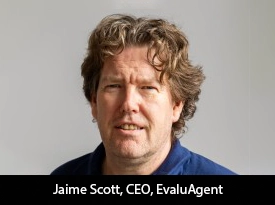
EvaluAgent was founded in 2012 by three people who had run contact centers themselves, and the founding conviction has not moved in fourteen years: you cannot improve what you cannot see clearly. That principle originally applied to human agents, whose performance was assessed through sampling a fraction of calls reviewed, extrapolated across the population, coached weeks after the fact.
The company's current position extends that principle to a different kind of agent. As AI systems handle real customer interactions, the questions that always mattered still require answers: was the response accurate, was it compliant, did the customer actually receive what they came for. Most contact centers can report a bot's containment rate. Almost none can demonstrate whether the answers were right. EvaluAgent evaluates every AI conversation against the organization's own standard and compares it to the performance of its best human agents.
The platform spans AutoQM and improvement, conversation intelligence, and AI agent observability, with certifications including SOC 2 Type II, ISO/IEC 27001:2022, Cyber Essentials Plus, GDPR and HIPAA, plus EU AI Act readiness. Published customer outcomes include a 25% increase in quality scores at ManyPets, a 95% reduction in QA planning time at 1st Central, and 285% QA productivity improvement at The Share Centre. Jaime Scott serves as CEO, having spent over a decade running contact center operations before co-founding the business.
The Sampling Compromise Finally Ends
Quality assurance has always been a statistical exercise by necessity. Reviewing every call was impossible, so teams reviewed a sample and inferred. The compromise was accepted because the alternative was unaffordable, not because it was accurate.
Full-coverage scoring changes the nature of the evidence. When 100% of interactions are evaluated, trends surface from the population rather than a confident guess, compliance records cover conversations nobody happened to select, and coaching targets individuals rather than cohorts. The company reports 90% time saved on QA monitoring a figure that describes reallocation rather than elimination, since human reviewers move from scoring to calibration and judgment.
The Independent Position on AI Quality
EvaluAgent's most consequential strategic decision is architectural: it sits above the agent layer rather than inside it. Whether a bot was built by Cognigy, Sierra, Decagon or an in-house team, the same scoring engine that runs human QA evaluates it.
That independence carries commercial weight. Contact centers increasingly run multiple bots and change vendors; a quality record held inside one vendor's platform does not travel. EvaluAgent keeps conversations, scores and trend reporting in its own system, so the historical evidence belongs to the client and remains available for regulatory review regardless of which vendor is deployed next.
Where the Revenue Influence Forms
The commercial case runs through four channels. Quality management replaces sampling with complete scoring at scale. Coaching connects scores to targeted action through structured one-to-ones, real-time feedback and triggered workflows.
Conversation intelligence surfaces reasons for contact, sentiment movement and predictive customer metrics across the full population. And AI agent observability addresses the newest budget line: hallucination and risk detection, intent-level performance, and knowledge base grounding that grades every bot response against a source of truth.
Each channel maps to a separate buyer quality leadership, operations, CX executives, and increasingly risk and compliance. That is why the platform expands inside accounts.
Built by Operators, Sold to Operators
The founding team's background shapes both product and credibility. Michelle Dinsmore brought deep QA expertise from day one, and her understanding of where quality programs fail informed the platform's foundations. Alex Richards built the commercial function from an operational perspective, designing for the people using the software rather than the people signing the contract.
That orientation explains a design choice worth noting: blended scorecards, where automated checks and human observations sit on a single scorecard. The company's position is that AI handles the rote while people handle judgment — a division of labor that preserves the reviewer's role rather than eliminating it.
What Governance Requires When the Agent Is Software
Regulated industries do not purchase observability as a convenience. Under the EU AI Act and existing financial services supervision, an organization deploying an AI agent must be able to explain how it reached a conclusion and demonstrate that its outputs were monitored. A vendor reporting its own bot's containment rate cannot supply that evidence independently.
EvaluAgent's proposition is that the quality function should extend across both kinds of agent without distinction, scored by the same engine, against the same standard, with the same audit trail. For a category moving rapidly toward automation, that is less a product feature than the condition under which deployment can be defended.
Jaime Scott, CEO
"Quality is the most underinvested lever in customer experience. We started evaluagent because we'd run contact centres ourselves and knew the gap between good intentions and consistent delivery."
Search Magazine
Latest Listings












