Most Admired Companies of the Year 2026
Global IT Alliance Turned Fourteen Competitors into One Contract, Then Standardised the Pricing behind It
Multinational IT procurement has a structural absurdity at its core. A company operating in twenty countries must find a competent technology partner in each one, negotiate separate terms, reconcile divergent pricing and absorb inconsistent service levels. The headquarters retains a primary provider; the regional offices inherit whatever the local market offers. Contracts multiply, escalation paths fracture, and the chief information officer spends time managing vendors rather than strategy.
The Global IT Alliance, known as GITA, was formed in 2013 to address that fragmentation. It is not a company in the conventional sense but an alliance of fourteen OEM-validated IT providers Bechtle, BroadVision, Compucentro, Computec, Connection, Data#3, Dynacons, General Technologies, HKBN JOS, Inova Solutions, MCPC, Microware, TOGA Technology and Noventiq operating across more than 243 offices in 96 countries.
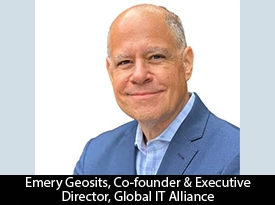
The model's premise is that no two members share an overlapping market or service area. Members collaborate rather than compete, sharing best practices and leveraging collective strength with global OEM partners. The published coverage claims are substantial: 150-plus countries, more than 400 OEM partners, 30 years of experience in respective markets and 100,000-plus satisfied customers. Emery Geosits serves as Co-Founder and Executive Director.
Where the Revenue Model Actually Forms
GITA does not sell to end customers directly. Revenue flows to member organizations through engagements coordinated by the alliance, which means the commercial structure is a referral and standardization system rather than a distribution channel.
That distinction matters. Members pay for participation and governance, and in return receive access to multinational customers they could not serve alone. The customer contracts locally with a member in each country, invoiced in local currency, while the alliance provides the consistency that makes multi-country procurement feasible.
The pricing commitment is the commercial heart of the model: standardized solutions and pricing across the alliance, with no fees or markups. That is a genuine cost to members, who forgo the margin they could extract from a captive multinational client. In exchange, they gain volume they would otherwise lose to a competitor capable of serving the whole footprint.
The Governance Decision That Made It Work
GITA's own history describes the problem clearly. In its early days the network operated on person-to-person relationships without scalability or consistency; individual partners followed their own business models, producing inconsistent processes and service offerings.
The response was to charter a new direction from the ground up: an exclusive membership structure, a defined governance model, and a value proposition built on accelerated service. Members were selected through a multi-phased vetting and interview process, recommended by OEM partners on criteria including engineering certifications, customer satisfaction ratings, revenue thresholds, sales training and executive board participation.
That selection discipline is what allows the standardization promise to hold. An alliance that admits anyone cannot guarantee consistent pricing.
The Ambassador Function
Each member organization designates a GITA Ambassador who serves as team lead for international business—a bi-directional role communicating between the member and the alliance, working international RFPs, training local staff and visiting customers.
The function addresses the practical failure mode of alliances: good intentions at the executive level that dissolve at the account level. A named individual accountable for cross-border engagement converts a memorandum of understanding into an operating practice.
Service Depth across Five Lines
The alliance's solution portfolio spans professional services (cloud, infrastructure, security, unified communications), managed services (infrastructure, cloud, application management, security, service desk), lifecycle services (deployment, support, IMAC, asset disposition), procurement and financial services including leasing and structuring.
Breadth matters because multinational customers rarely need one capability. A company standardizing collaboration platforms across forty offices requires procurement, deployment, support and financing ideally from the same relationship.
Why Standardization Is the Scarce Product
Multinational IT procurement is not short of capable providers. It is short of consistency the assurance that a contract signed in Germany will be honored with the same terms, response times and quality in Singapore. GITA's contribution is governance that makes that assurance credible, enforced through membership criteria, standardized pricing and a defined escalation model. For organizations expanding across borders, that infrastructure is worth more than a lower quote from a local vendor nobody has vetted.
Emery Geosits, Co-Founder & Executive Director
"We make the world feel a little more like home offering each and every customer a home-country experience, regardless of the geography they operate in."
Search Magazine
Latest Listings












