Gruve Gives Enterprises Private AI Infrastructure without Surrendering Data Sovereignty
The Silicon Review
Enterprise AI adoption has reached an inflection point where the constraint is no longer ambition but architecture. Organizations want to deploy models, agents, and autonomous workflows across their operations, yet most existing infrastructure was designed for transactional software running predictable workloads. AI behaves differently. It retrieves context dynamically, decides probabilistically, and acts independently. Those characteristics break three assumptions that enterprise security programs have relied on for decades: that system behavior is deterministic, that intellectual property remains inside organizational boundaries, and that existing controls adequately cover the attack surface.
Gruve was built to address that mismatch. The company delivers PulseAI, an Agent-to-Silicon AI infrastructure platform designed to keep enterprise data secure and sovereign while enabling production AI deployment. Its offering combines proven GPU compute sized to workload requirements, a private AI control center where models, data, and agents remain within organizational boundaries, and fully managed operations that require no additional headcount. The platform enters production in under two weeks, addressing a timeline problem that typically stalls enterprise AI initiatives for months.
The company operates at the intersection of AI infrastructure and cybersecurity, with services spanning AI SOC, digital forensics and incident response, data and AI advisory, and managed AI security. Gruve holds status as a Cisco Strategy Services Partner, delivering Cisco Powered AI, Enterprise, Data Center, and Security solutions. With operations across two continents and five nations supported by more than 500 personnel, and backing from Mayfield Fund and Cisco Investments, Gruve has positioned itself among the innovative cybersecurity and AI infrastructure providers worth watching in 2026.
The Ownership Problem in Enterprise AI
The central question Gruve raises is one most organizations have not yet confronted directly. Enterprise AI generates institutional intelligence, and the question is whether the organization owns it. When models run inside third-party environments, when training data traverses external infrastructure, and when agent behavior depends on vendor-controlled systems, the intelligence an organization produces accumulates value elsewhere. Gruve's Private AI Control Center addresses that by ensuring models, data, and agents never leave the client environment. For organizations operating under data residency requirements, regulatory constraints, or competitive sensitivity, that architectural boundary determines whether AI deployment remains viable at all.
Infrastructure Sized to Actual Workloads
PulseAI provides GPU capacity matched to workload requirements rather than sold in standardized allocations that force organizations into overprovisioning or capacity shortages. That alignment matters commercially because AI infrastructure costs escalate quickly when compute is misallocated. Organizations frequently purchase capacity they cannot fully utilize or discover mid-deployment that available resources cannot support production demands. Sizing compute to actual requirements reduces capital waste while preserving the ability to scale as workloads expand. The platform's modular architecture supports continuous adaptation as AI capabilities and business priorities shift, distinguishing it from fixed systems built around known requirements.
Security Designed for AI Rather Than Adapted to It
Gruve's security services address the specific threat surface AI introduces. Managed AI security services include AI SOC implementation, MCP security implementation, cybersecurity AI agent implementation, and OpenShift AI implementation. Digital forensics and incident response capabilities apply AI assistance to compromise assessments and continuous assurance, producing defensible findings suitable for executive and board reporting. The company also delivers Salesforce Agentforce advisory, implementation, and managed services through AgentOps, extending its coverage into the enterprise application layer where AI agents increasingly operate.
The Expert Team Model
Gruve structures delivery around specialists rather than generalist consultants. Data Science Architects build governed data foundations and engineering pipelines for AI agents. Forward Deployment Engineers align business workflows with AI teammates that drive measurable KPIs. Kubernetes SREs build AI-native application clusters and handle end-to-end platform engineering. Security Experts enhance cybersecurity using AI while managing AI-powered SOC operations and compliance. AI Solution Architects deliver cloud, container, and infrastructure transformation. That composition addresses a common failure mode in enterprise AI programs: technical capability exists, but no single team connects it to operational outcomes.
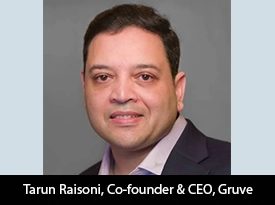
Tarun Raisoni, Co-Founder and CEO
Tarun Raisoni leads Gruve as Co-Founder and CEO. His positioning of the company centers on a specific conviction, that AI should create outcomes rather than overhead. Under his direction, Gruve has expanded into a global operation spanning five nations while maintaining the AI-native approach that distinguishes its platform from legacy transformation models. The company's values emphasize customer success, constructive feedback, integrity, and teamwork, with a culture built around continuous learning and community contribution.
The Growth Logic of Sovereign AI Infrastructure
Gruve's expansion reflects accelerating demand for AI infrastructure that satisfies both performance and governance requirements simultaneously. With PulseAI deployable in less than two weeks, backing from institutional investors, and services spanning infrastructure, security, and AI enablement, the company has established itself among the innovative providers worth watching in 2026. The commercial logic is direct: enterprises cannot deploy AI at scale without infrastructure that protects data sovereignty, and they cannot protect sovereignty without infrastructure built for AI rather than adapted to it.
Tarun Raisoni, Co-Founder and CEO
"AI should create outcomes, not overhead. Most enterprises do not need another transformation roadmap. They need private infrastructure that runs their models, protects their data, and lets them own the intelligence their business generates."
Search Magazine
Latest Listings