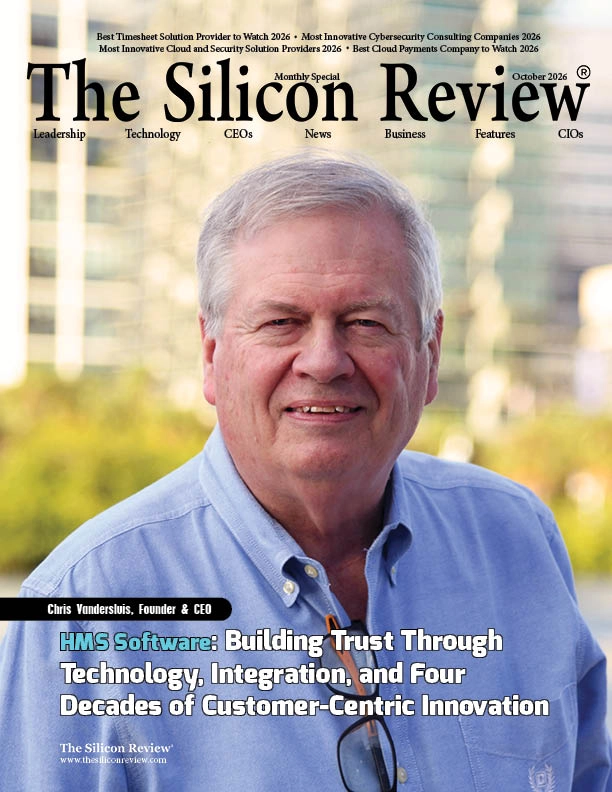
HMS Software: Building Trust through Technology, Integration, and Four Decades of Customer-Centric Innovation
The Silicon Review
In enterprise software, longevity is rarely accidental. Technology evolves at relentless speed, customer expectations shift with every new digital transformation wave, and countless software vendors disappear long before celebrating their second decade. Yet Montreal-based HMS Software has not only remained relevant since its founding in 1984, but has consistently anticipated where enterprise project management was heading long before many competitors recognized the opportunity. Under the leadership of Founder and CEO Chris Vandersluis, the company has built a reputation around solving one of business’s most persistent operational challenges: capturing accurate project information once and making it meaningful across every department that depends on it.
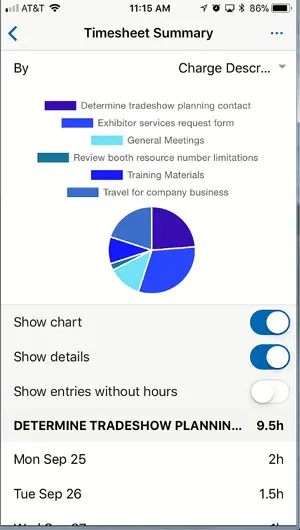
Today, HMS Software serves mid-sized and large project-oriented organizations across industries including engineering, manufacturing, construction, government, utilities, pharmaceuticals, aerospace, and professional services. Its flagship platform, TimeControl, has evolved from a specialized enterprise timesheet into a comprehensive operational system that connects finance, payroll, project management, human resources, billing, and job costing through a single source of trusted data. Organizations such as AMD, CAE, Interpol, Andritz, Azuria Water Solutions, Volvo Novabus, Zoetis, Foster Wheeler, Kelly Services, the Government of Quebec, and numerous other global enterprises rely on the platform to support complex project environments where accountability and visibility are essential.
What distinguishes HMS Software is not merely its technology but its philosophy. Rather than attempting to replace every enterprise application within an organization, the company has consistently focused on becoming the connective tissue between mission-critical business systems. That strategy has allowed it to remain indispensable even as generations of enterprise software have come and gone.
Recognizing an Opportunity Before Project Management Became Mainstream
The origins of HMS Software are closely tied to one of the most transformative periods in business technology. During the early 1980s, organizations throughout Canada were rapidly adopting desktop computers, recognizing that automation would fundamentally reshape business operations. Project management software, however, remained a niche capability. Few commercial solutions existed, implementation expertise was scarce, and organizations lacked experienced partners capable of deploying enterprise project management environments effectively.
Chris Vandersluis recognized that this gap represented a significant business opportunity. HMS Software was founded to help organizations navigate the emerging intersection of personal computing and project management, positioning itself at precisely the moment when enterprises needed guidance more than software alone. The company’s early expertise allowed it to participate in some of Canada’s largest project implementations during a period when digital project planning was still unfamiliar territory. Long before project management software became commonplace, HMS Software was helping organizations establish structured planning, scheduling, and performance tracking practices that would eventually become industry standards. That early specialization proved invaluable. Rather than chasing multiple technology markets simultaneously, HMS Software concentrated on mastering one discipline and understanding the operational realities of project-driven businesses. Those lessons would eventually shape every product the company developed over the following four decades.
The Customer Requirement That Changed Everything
Many successful software companies begin with an ambitious product vision. HMS Software’s defining innovation began instead with a customer’s practical problem. One of the company’s earliest project management clients, Philips Information Systems, required an integrated scheduling solution that included employee timesheets. At the time, no commercial software offered both capabilities together. HMS Software identified a scheduling platform that satisfied the client’s planning requirements and developed the timesheet component itself. What initially appeared to be a straightforward technical assignment soon revealed a far more significant business challenge.
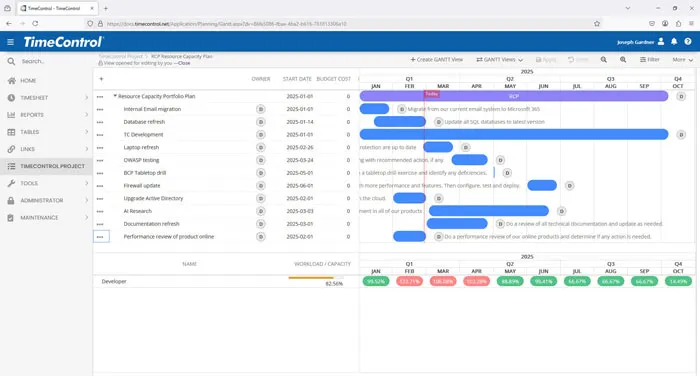
Project managers wanted weekly progress updates to measure project performance, while the finance department intended to use exactly the same information for payroll processing. Both departments required identical time data, yet each viewed it through completely different operational perspectives. Rather than creating separate systems, HMS Software recognized that organizations needed one trustworthy dataset capable of serving multiple departments simultaneously. Although this realization occurred in 1984, it took another decade of experience before the company transformed that concept into a commercial product. In 1994, HMS Software introduced TimeControl 1.0, creating what would become one of the enterprise software industry’s earliest truly multi-purpose timesheet platforms and shifting HMS Software’s focus world-wide.
The underlying principle remains remarkably relevant today. Instead of forcing organizations to maintain separate applications for payroll, project management, billing, HR, and costing, TimeControl enables users to enter information once while distributing that trusted data intelligently across every business function that requires it.
Creating a Single Source of Truth Across the Enterprise
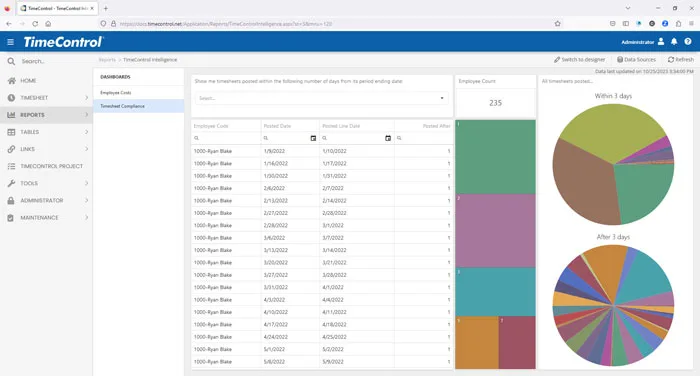
Despite decades of digital transformation, many organizations continue to struggle with fragmented operational data. Multiple departments often maintain separate timesheet systems, each designed to satisfy a different internal requirement. Payroll maintains one record, project management maintains another, billing tracks time independently, while finance and human resources frequently rely on additional platforms altogether. This duplication creates administrative inefficiencies, inconsistent reporting, reconciliation challenges, and increased compliance risks. HMS Software designed TimeControl specifically to eliminate those problems. The platform provides a highly configurable enterprise timesheet that serves finance, payroll, HR, billing, job costing, and project management from a single auditable dataset. Rather than compromising the needs of one department to satisfy another, TimeControl allows organizations to configure workflows capable of supporting diverse operational requirements without duplicating information.
This flexibility has become particularly valuable in highly regulated industries where financial transparency and auditability are essential. Finance departments can confidently treat TimeControl as a system of record while project managers simultaneously gain accurate, task-based performance reporting from the same information. The result is a genuine enterprise-wide “single source of truth,” reducing administrative complexity while improving decision-making across the organization.
Innovation Through Every Technology Wave
Remaining competitive for more than forty years requires more than maintaining existing products. HMS Software has consistently embraced emerging technologies before they became industry expectations. The company introduced one of the industry’s first web-based enterprise timesheet systems in 1999, recognizing that browser-based accessibility would eventually replace desktop-only software. More than a decade later, in 2011, it expanded further by launching a Software-as-a-Service version of TimeControl, enabling organizations to adopt cloud deployment without sacrificing enterprise functionality. These milestones were not isolated events but part of a broader philosophy that continues to guide the organization.
Over four decades, HMS Software has successfully transitioned through virtually every major enterprise software evolution, including personal computing, web applications, mobile platforms, SaaS delivery, advanced cybersecurity, and most recently, artificial intelligence. The company’s internal newsletter carries the title The Leading Edge, reflecting a culture that prioritizes continuous technological adaptation rather than incremental maintenance. That commitment ensures customers remain protected from technological obsolescence while preserving the long-term value of their enterprise investments. Rather than reacting after industry standards shift, HMS Software has consistently positioned itself ahead of major technology transitions, enabling clients to modernize without disrupting established operational processes.
Integration Instead of Replacement
One of HMS Software’s most enduring competitive advantages lies in its integration strategy. Many software vendors encourage customers to replace existing enterprise systems entirely. HMS Software has taken the opposite approach. Recognizing that organizations often possess significant investments in ERP platforms, project management software, payroll systems, and financial applications, TimeControl was designed from its earliest versions to integrate seamlessly into existing enterprise environments. Long-standing partnerships with Microsoft, Oracle, and Oracle Primavera demonstrate this philosophy in practice. HMS Software has maintained relationships with Microsoft since 1995 and Oracle since 1997, ensuring that enterprise customers relying on those ecosystems continue to experience reliable interoperability.
Beyond these strategic partnerships, TimeControl provides flexible integration capabilities with platforms such as SAP, ADP, PeopleSoft, NetSuite, and numerous proprietary enterprise applications. For customers, this means technology investments remain protected while operational efficiency improves. Organizations are not required to abandon trusted business systems simply to modernize their timesheet or project management capabilities. Instead, TimeControl becomes the bridge connecting enterprise data across diverse software environments.
Meeting the Demands of Industrial Operations
As HMS Software expanded across industries, another challenge emerged that traditional enterprise timesheets struggled to address. Construction sites, manufacturing facilities, utility projects, defense contractors, and engineering operations often involve hundreds of field workers who never directly access enterprise software. Supervisors collect time, equipment usage, material consumption, and project progress on behalf of entire crews while working in demanding physical environments. Conventional office-oriented timesheets proved inadequate. To address these realities, HMS Software introduced TimeControl Industrial, extending the core TimeControl platform with capabilities specifically designed for field operations. The solution includes crew-based timesheets that enable supervisors to submit work records for multiple employees, comprehensive material and equipment tracking, advanced rate structures supporting complex industrial compensation models, and mobile functionality allowing project updates directly from active job sites.
Integrated mobile capabilities further enhance usability by enabling supervisors to capture photographs documenting project progress alongside traditional operational data, providing richer project visibility without introducing additional administrative burdens. Today, TimeControl Industrial supports organizations operating in sectors including nuclear construction, defense contracting, utility engineering, heavy manufacturing, and other industries where accurate field data directly influences project success.
A Customer Philosophy That Shapes the Business
Technology alone rarely explains four decades of customer loyalty. HMS Software attributes much of its long-term success to a corporate philosophy centered on understanding client problems before proposing technical solutions. Rather than approaching engagements with predetermined product recommendations, the company’s implementation teams begin by asking a fundamental question: “What problem are we trying to solve?” This mindset often requires declining customer requests that may ultimately produce ineffective outcomes. Instead of automatically agreeing to every customization or feature request, HMS Software evaluates whether proposed changes genuinely benefit the client’s long-term objectives. That willingness to prioritize customer success over immediate commercial opportunity has contributed to unusually strong client retention across multiple decades.
The company’s internal mission extends beyond customer satisfaction. HMS Software strives to ensure every client becomes a referenceable customer, a principle that influences hiring practices, implementation methodologies, technical support, and ongoing product development. Word-of-mouth referrals continue to represent one of the organization’s strongest sources of new business, suggesting that this philosophy has translated into measurable marketplace credibility.
Human Expertise Behind Enterprise Software
While cloud platforms have made enterprise software easier to deploy than ever before, successful implementation remains highly dependent on experience.
HMS Software complements its SaaS offering with a delivery model it describes as SaaS+, combining cloud software with hands-on consulting expertise throughout deployment and ongoing operations. Its QuikStart implementation programs provide customers with experienced deployment specialists whose knowledge often extends well beyond the software itself. Many members of HMS Software’s team have spent between ten and thirty years implementing enterprise project management systems across multiple industries. The company’s technical support organization also includes software developers, allowing customers to receive assistance from professionals with direct product knowledge rather than generalized support personnel.
This continuity has become increasingly uncommon within enterprise software, where frequent staff turnover often limits institutional knowledge. At HMS Software, decades of accumulated implementation experience remain available to customers long after initial deployment.
Looking Toward an AI-Enabled Future
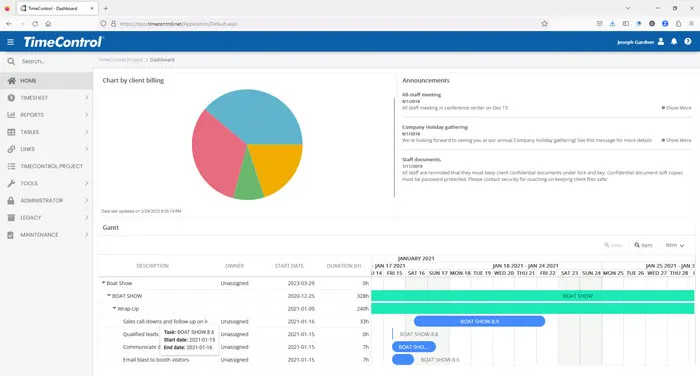
After more than forty years of continuous evolution, HMS Software shows little indication of slowing its pace of innovation. Future releases of TimeControl will continue expanding the company’s integrated project management capabilities through enhancements to TimeControl Project, while new artificial intelligence functionality is expected to further improve enterprise decision-making and operational efficiency. Although specific AI features remain under development, the company’s history suggests they will follow the same practical philosophy that has guided HMS Software since 1984. Rather than introducing technology for its own sake, innovations are expected to solve measurable business problems while preserving the reliability and auditability enterprise customers require.
That approach has consistently differentiated HMS Software throughout successive technology revolutions and positions the company to remain relevant as AI reshapes enterprise operations over the coming decade.
A Legacy Built on Solving Business Problems
In an industry often captivated by disruption, HMS Software demonstrates that sustainable success is frequently built through disciplined execution rather than constant reinvention. From helping organizations automate project management during the desktop computing revolution to pioneering web-based timesheets, embracing SaaS delivery, integrating with global enterprise platforms, and preparing for AI-enabled operations, the company has consistently evolved while remaining focused on a remarkably consistent mission: providing organizations with one trusted source of project information capable of serving the entire business. For project-driven enterprises, that mission remains as valuable today as it was four decades ago. As organizations continue seeking greater visibility, stronger financial governance, seamless system integration, and more intelligent project execution, HMS Software’s long-standing commitment to solving practical business challenges ensures that its influence extends well beyond software itself. It represents a model of enterprise technology where innovation is measured not by novelty, but by lasting business value.
Meet the leader behind the success of HMS Software
Chris Vandersluis, the Founder and CEO of HMS Software, publishers of TimeControl has become known around the world in the project management industry. He is an economist from Montreal’s McGill University and has been published hundreds of times including in Fortune Magazine, Heavy Construction News and the American Management Association’s Handbook of Project Management, Microsoft’s Technet, Computing Canada magazine PMI’s PMNetwork Technology Trends column.
Search Magazine
Latest Listings