Smartest Companies of the Year 2026
Hypha Labs: An innovator Pioneering Precision Mushroom Production through Controlled Biomanufacturing
The Silicon Review
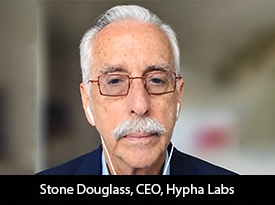
Hypha Labs, Inc. stands out as a company challenging conventional thinking around mushroom cultivation through a precision-driven approach to biological production. Founded in 2013 and headquartered across Las Vegas, Nevada, and Lake Elsinore, California, the company emerged from a strong laboratory foundation and a desire to address the limitations of traditional mushroom cultivation. Led by CEO Stone Douglass, Hypha Labs recognized an opportunity to bring greater control, consistency, and efficiency to an industry that has historically depended on agricultural growing methods, variable environmental conditions, solid substrates, and lengthy production cycles. Its work reflects a broader shift toward controlled biomanufacturing, with a focus on producing valuable mushroom-derived biological material in a more standardized and scalable manner.
What fuels Hypha Labs’ innovation is the Mushroom Accelerator™, a bioreactor-based cultivation platform designed to manage the environmental conditions required for mushroom growth and enable production in approximately seven to eight days. The company is also developing strain-specific refill cartridges containing the nutrients and media required for individual production cycles, creating the foundation for an integrated cultivation ecosystem. What particularly distinguishes Hypha Labs is its broader vision: bringing together specialized equipment, nutrient formulations, operating protocols, strain knowledge, and production data into a unified platform capable of serving different market needs. From consumer-oriented systems to larger commercial applications spanning nutraceuticals, ingredients, research, and other high-volume uses, the company is pursuing a model designed around repeatability and scalability. For mushroom enthusiasts, including consumers interested in functional and psychedelic mushrooms, Hypha Labs represents an emerging intersection of biotechnology, controlled cultivation, and modern production. As part of The Silicon Review’s Smartest Companies of the Year 2026, we recognize Hypha Labs for its distinctive approach to rethinking how mushroom-derived materials can be produced and for its vision of moving mushroom cultivation toward a more precise, data-informed future.
In conversation with Stone Douglass, CEO of Hypha Labs, Inc.
The Mushroom Accelerator™ reduces production cycles from 6–16 weeks to approximately 8 days using data-driven process control. With patents now issued covering the Mushroom Accelerator™ and the commercial production process, what were the key breakthroughs that made this acceleration possible?
There was not one single “aha” moment. The breakthrough came through systematic experimentation and repeated refinement. Different strains responded differently to changes in temperature, aeration, agitation or spin speed, nutrient composition, and other operating variables. By continuously adjusting those conditions and measuring the results, we learned that the production environment could be tuned around the biology of a particular strain.
That is important because it changes the process from traditional cultivation into something closer to precision biomanufacturing. Instead of relying primarily on a long agricultural growth cycle, we can create a controlled environment and optimize the parameters that matter most. The eight-day cycle is the result of that accumulated process knowledge, not a single isolated discovery. The issuance of patents covering both the Mushroom Accelerator™ and the commercial production process represents an important milestone in that progression. It validates the distinctiveness of the platform while allowing us to continue moving the technology from development toward broader commercial deployment and scale.
Your system creates a compounding competitive moat: every production cycle feeds data back into the AI, improving efficiency for every user. How does this network intelligence make your platform progressively smarter and harder to replicate?
The physical equipment is only one layer of the platform. Every production cycle can generate information about how a specific strain performs under a specific set of conditions. Over time, that creates a growing knowledge base linking genetics, nutrient formulations, temperature, aeration, agitation, cycle time, and resulting biological output.
As that dataset expands, it can improve how future production cycles are configured and optimized. This is where data science, machine learning, and automation become increasingly valuable. The competitive advantage is therefore not simply the bioreactor itself; it is the combination of hardware, biological know-how, operating recipes, and accumulated production data. A competitor could attempt to reproduce a piece of equipment, but reproducing years of strain-specific process learning and validated production parameters is a much more difficult challenge.
Your output, Micropearls™, is produced inside sterile, controlled bioreactors. How does this proprietary output change how mushroom-derived ingredients can be standardized and integrated into consumer and pharmaceutical products?
Micropearls™ are the controlled biological output produced within the Hypha Labs system. Their importance is not simply their physical form; it is the ability to generate mushroom-derived material inside a repeatable, managed production environment.
For manufacturers, consistency is one of the industry's biggest challenges. Agricultural inputs can vary based on substrate, environment, harvest timing, genetics, storage, and other factors. A controlled bioreactor process creates the opportunity to standardize production much more tightly from batch to batch. That can make downstream drying, extraction, formulation, and analytical testing more predictable.
Ultimately, we see Micropearls™ as a bridge between cultivation and finished-product manufacturing. The output can be further processed for use in nutraceuticals, functional beverages, powders, extracts, research applications, and other formulated products where consistency and repeatability are important.
You've adopted a “razor and blade” business model with recurring revenue from Refill Cartridges. How does this recurring-revenue model create long-term sustainability and growth for Hypha Labs?
The refill-cartridge model creates recurring revenue, but its strategic value goes beyond the economics. Each cartridge can be designed around the nutritional requirements of a particular strain and production cycle, helping to standardize what enters the system and reduce variability at the user level.
That creates an ecosystem in which the machine and consumables work together. As the installed base of Accelerators grows, cartridge demand can grow with it, creating a more predictable recurring-revenue component while also helping Hypha Labs maintain greater consistency in the production process. It is similar to a razor-and-blade model, but in our case the consumable can also function as part of the quality-control architecture of the platform.
You've partnered with Mycology Resources to combine advanced mushroom genetics with your technology. How does this strategic collaboration accelerate commercial-scale production and address the industry's supply-chain and quality challenges?
Our collaboration with Mycology Resources is a central part of the commercial strategy for Hypha Labs. Hypha Labs has developed the core production technology and is deploying it first in the home-scale Mushroom Accelerator™. Mycology Resources intends to take that same underlying technology and scale it into a commercial production platform capable of manufacturing mycelium pearls at meaningful industrial volumes.
Mycology Resources brings the infrastructure and expertise needed to make that transition possible: an established library of mushroom genetics, cultivation experience, analytical capabilities, process-development knowledge, and downstream extraction and formulation expertise. Together, the companies can optimize individual strains for bioreactor production, validate their performance analytically, and then translate those optimized parameters from the home unit into larger commercial systems without losing the core process discipline that makes the technology valuable.
The commercial objective is to bring to market clean, pure, potent mycelium pearls as a superior alternative to the myceliated grain and other lower-quality mushroom ingredients that are common in today's market. Rather than producing biomass on grain and carrying a significant amount of residual substrate into the finished material, the Hypha Labs-Mycology Resources model is designed around controlled liquid cultivation and direct recovery of the mycelial pearls themselves. That creates the opportunity for a cleaner, more consistent and more concentrated starting material for drying, extraction and finished-product manufacturing. In that sense, Mycology Resources is not simply a genetics partner; it is the commercialization and scale-up partner that can help turn Hypha Labs' technology from an innovative home-production system into a new commercial supply platform for the mushroom industry.
What does the future hold for your company and its customers? Are exciting things on the way?
We expect to begin sales of the home-oriented units during the first part of 2027. At the same time, we are developing a larger commercial platform based on the same underlying technology for nutraceutical, ingredient, and other mass-market applications.
The long-term opportunity is much larger than one machine. We envision a family of systems that can scale from countertop production to industrial bioreactors while using the same underlying biological knowledge, nutrient strategy, and process-control framework.
If we are successful, mushroom production can become less dependent on geography, long cultivation cycles, and centralized agricultural infrastructure. Production can move closer to the point of processing or use, potentially creating a more responsive and resilient supply chain. Our goal is to help move the industry from conventional mushroom farming toward controlled, data-driven biological manufacturing.
Meet the leader behind the success of Hypha Labs, Inc.
Stone Douglass, CEO of Hypha Labs, brings more than 35 years of senior-management, restructuring, and company-building experience across a wide range of industries. Over the course of his career, he has helped reorganize more than 30 companies, including businesses associated with names such as Piper Aircraft, RedEnvelope, and Spy Optic. That breadth of experience has given him a practical understanding of how emerging technologies move from concept to commercial operation, and how companies must evolve as markets mature.
Douglass has also held leadership roles across technology, gaming, clean-energy, manufacturing, and regulated-market businesses. His experience in the legal cannabis sector was particularly formative. As Chairman of Digipath, he was involved in a business focused on certified analytical testing at a time when the cannabis industry was rapidly professionalizing and state-by-state legalization was creating new requirements for testing, quality control, and regulatory compliance. That experience reinforced the importance of standardization, data, repeatability, and laboratory discipline when an emerging biological industry begins scaling commercially.
After Digipath's laboratory assets were sold, Douglass and his team began studying the mushroom industry and saw many of the same structural challenges: fragmented production, long cultivation cycles, inconsistent raw material, and limited standardization. Rather than simply entering the market as another cultivator, he approached the problem from the standpoint of process engineering and controlled production. That perspective helped lead to the development of Hypha Labs and the Mushroom Accelerator™.
Today, Douglass is focused on building Hypha Labs into a scalable biological-manufacturing platform. His role combines corporate strategy, commercialization, partnerships, and capital formation with a long-term objective of moving mushroom production away from conventional agricultural constraints and toward a more controlled, data-driven, and repeatable manufacturing model.
“The physical equipment is only one layer of the platform. Every production cycle can generate information about how a specific strain performs under a specific set of conditions. Over time, that creates a growing knowledge base linking genetics, nutrient formulations, temperature, aeration, agitation, cycle time, and resulting biological output.”
Search Magazine
Latest Listings












