Literal Humans Bets That Human Creativity Outperforms Automation in Modern Marketing
The Silicon Review
Marketing technology has delivered exactly what it promised: unlimited content production, algorithmic targeting, and campaign deployment at a scale no human team could match. It has also delivered an unintended consequence. Brand voices across digital channels now sound interchangeable, written in the same optimized cadence, structured around the same keyword patterns, and stripped of the idiosyncrasy that once made brands recognizable. Audiences have adapted accordingly, developing a reflexive skepticism toward anything that reads as machine-generated. The result is a paradox: more content, less connection.
Literal Humans was founded on the contrarian premise that this gap represents the largest available opportunity in digital marketing. The agency operates as a full-service practice built around Human-to-Human marketing, a framework that rejects the depersonalized logic of B2C and B2B categorization in favor of a simpler observation business transactions happen between people, driven by trust, emotion, and narrative. Its client roster concentrates on mission-driven brands across fintech, edtech, and healthtech, sectors where credibility depends on authentic communication rather than volume.
That positioning has established Literal Humans among the global companies worth watching in 2026. The agency pairs strategic rigor with premium editorial production, conversion-optimized design, and performance marketing, operating as a distributed remote-first team on a four-day workweek at full salary. It maintains Certified B Corporation status, aligning its operating model with the values of the clients it serves. For brands navigating a market where generic content is abundant and effective content is scarce, that combination produces measurable advantage.
Strategic Rigor before Tactical Execution
Literal Humans begins engagements with business analysis rather than content requests. That sequence matters because most marketing waste originates upstream campaigns launch before anyone has defined the customer journey, mapped the competitive landscape, or established what the brand needs to communicate. By embedding strategy at the foundation, the agency prevents the accumulation of disconnected tactics that produce activity without compounding results. Campaigns align across channels from public relations placements through website user experience, which means every dollar spent reinforces a unified narrative rather than fragmenting attention across unrelated initiatives.
Premium Content as a Conversion Asset
The agency invests in journalist-standard editorial work rather than volume production. That decision carries direct commercial logic. Paid advertising amplifies whatever asset it points toward, which means weak landing pages and thin content convert poorly regardless of media spend. By building high-quality assets first content pillars that address genuine audience questions while serving search objectives Literal Humans ensures that performance marketing amplifies something worth amplifying. Trust generated at the top of the funnel then carries through bespoke email sequences and organic social strategy, reducing customer acquisition costs over time as brand affinity accumulates.
Funnel Economics Rather Than Vanity Metrics
The agency's revenue influence appears most clearly in how it defines success. Rather than reporting impressions and engagement rates, Literal Humans structures engagements around funnel efficiency qualified lead volume, conversion rates, and cost per acquisition. That orientation shapes service delivery: content production supports SEO and audience education, design work incorporates conversion rate optimization, and performance marketing concentrates budget on channels with measurable return. For clients operating under margin pressure, this alignment converts marketing from an unpredictable expense into a forecastable contributor to pipeline.
The Four-Day Week as Operational Strategy
Literal Humans operates on a four-day workweek at full salary, a policy the agency treats as strategic infrastructure rather than a perk. The reasoning is straightforward: creative work depends on cognitive capacity, and depleted teams produce derivative output. A rested, stable team generates more original thinking, maintains stronger client relationships, and avoids the turnover that disrupts institutional knowledge in traditional agencies. For clients, this translates into continuity the same senior practitioners remain engaged across the lifecycle of a partnership rather than cycling out after a year.
Certified B Corporation as Market Signal
The agency's Certified B Corporation status serves a dual function. For mission-driven clients, it provides assurance of values alignment before a contract is signed, which shortens procurement friction in sectors where brand authenticity carries reputational risk. Internally, the certification reinforces a culture that attracts experienced practitioners seeking work environments consistent with their own priorities. That combination produces a stable, senior team an outcome that directly affects service consistency and, by extension, client retention.
The Growth Logic of Human-Centered Marketing
Literal Humans' expansion reflects growing demand for marketing partners who can differentiate brands in channels saturated with automated output. With Certified B Corporation status, a distributed senior team, and a client base concentrated in mission-driven technology sectors, the agency has established itself among the global companies worth watching in 2026. The commercial logic is direct: produce content worth reading, build assets worth amplifying, and measure outcomes that affect revenue. As audience skepticism toward automated content deepens, the premium on genuine human voice increases.
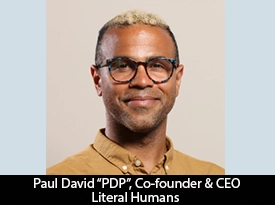
Paul David “PDP”, Co-Founder & CEO
"Audiences have learned to recognize content written for algorithms rather than for people. The brands that win the next decade will be the ones that sound like they were written by someone who actually understands who they are talking to."
Search Magazine
Latest Listings