Most Admired Companies of the Year 2026
RDash Refuses to Be a Dashboard, Wiring Accountability into Every Site Task So Construction Truth Stops Living in Group Chats
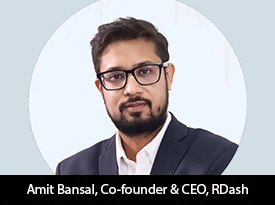
Construction runs on an inconvenient truth: the operational record rarely matches what actually happens on site. A change order is agreed verbally, a vendor delivers against an outdated drawing, a milestone slips by a week without anyone documenting why. By the time the discrepancy reaches a project review, the cost has already been incurred. For developers and contractors managing dozens of concurrent sites, that gap between agreed plan and executed reality is not an administrative irritant it is the mechanism through which margin disappears.
RDash was built to close it. Founded by Co-Founder and CEO Amit Bansal alongside Co-Founder and CPO Puneet Bansal and Co-Founder and CFO Amit Mishra, the company operates as a construction management operating system rather than a reporting layer. Its platform connects developers, contractors and design studios onto a single governed environment where budgets, timelines, vendors, procurement and site execution remain visible and auditable in real time.
The company launched publicly in November 2022 after securing $10 million led by Stellaris Venture Partners and selection into Y Combinator. Its commercial scale is now measurable: more than 250 clients, over 9,000 completed projects and ₹500 crore in managed budgets. By May 2025, its financing arm, RFin, crossed ₹300 crore in disbursements. Supporting the platform is 91sqft, an established name in Indian commercial interiors, which contributes operational depth that pure software companies cannot replicate.
Where the Revenue Model Actually Sits
RDash's commercial structure runs through three connected components. The software platform generates subscription revenue from developers, contractors and design studios. PMO-as-a-Service produces service fees for an outsourced chief project officer function, combining technology with human governance. And RFin generates financing income by funding project execution for clients who would otherwise stall on working capital.
The trifecta matters because each component reinforces the others. A client adopting the software gains visibility that reveals financing needs; RFin addresses them; 91sqft supplies execution capacity where the client lacks it. The company reports a 12% reduction in overall project costs through the PMO service, which is the kind of result that supports premium pricing and renewal.
Accountability Engineered Rather Than Requested
The platform's defining architectural choice is that it does not simply store data. The Survey-to-Handover Project Tracker, smart BOQ generator and Vendor Performance Ratings are built to interpret information rather than archive it, which enables prevention of delays and overruns rather than post-mortem analysis.
Vendors carry performance ratings. Activities remain interdependent and tracked. Milestones carry timestamps and digital evidence rather than vague status descriptions. That shift from firefighting to orchestration is a cultural change as much as a technical one, and it spreads as teams adapt to operating with visible accountability.
The Human Layer That Software Alone Cannot Supply
Most construction platforms sell tooling and leave adoption to the client. RDash's PMO Services operate as an outsourced Chief Project Officer function: planning activity schedules, optimizing long-lead items, coordinating interdepartmental dependencies and enforcing audit protocols in real time.
The mechanism combines dynamic dashboards, live alerts, risk mitigation tooling and structured vendor training. Runtime financial hygiene frameworks monitor scope creep, change orders and unplanned expenditure. For a growing firm without a dedicated project management office, that capability is difficult to build internally and easy to buy.
Why India's Fit-Out Market Rewards This Model
India's commercial interiors and fit-out sector moves quickly, involves many vendors and operates on thin margins. Fragmentation there produces direct financial loss rather than abstract inefficiency, which makes governed execution a purchasing priority rather than a nice-to-have.
RDash's positioning benefits from the 91sqft relationship: a software company that also understands how a site is actually run can configure workflows around real constraints rather than idealized ones.
What a Shared Operating Truth Is Worth
The construction technology category has produced many dashboards and few behavioural changes. RDash's argument is that visibility without accountability is decoration, and that the platform's value lies in making deviation visible at the moment it occurs. With 9,000 completed projects and ₹500 crore in managed budgets, that argument now has a track record behind it. Whether the model scales beyond India's fit-out market depends on whether the underlying problem that no two stakeholders share the same operational truth is as universal as it appears.
Amit Bansal, Co-Founder & CEO
"Construction does not fail because people lack skill. It fails because no one shares the same operational truth."
Search Magazine
Latest Listings












