Fastest Growing Companies of the Year 2026
SMSbiotech, Inc.: Building a New Path for Scalable, Off-the-Shelf Regenerative Cell Therapies
The Silicon Review
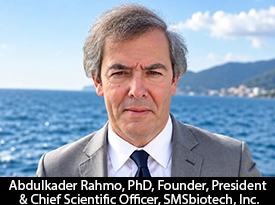
Founded in 2015 by Abdulkader Rahmo, PhD, Founder, President and Chief Scientific Officer, SMSbiotech, Inc. is a clinical-stage regenerative medicine company focused on advancing a new approach to cell-based therapies for chronic degenerative diseases. From its headquarters in Carlsbad, California, with an in-house manufacturing facility in San Diego, the company is developing its proprietary Small Mobile Stem (SMS) Cell platform, built around naturally occurring, adult blood-derived cells that are non-genetically modified and designed with allogeneic, off-the-shelf use in mind. At The Silicon Review, we see SMSbiotech as a company working at the intersection of regenerative medicine, cell biology, and scalable biomanufacturing. Its founding vision was shaped by a fundamental challenge in regenerative medicine: how to develop adult stem cell-based approaches that can be manufactured at meaningful scale while potentially expanding access for patients living with chronic degenerative conditions. With research, clinical development, and biomanufacturing capabilities brought together within the organization, SMSbiotech continues to investigate the potential of its SMS Cell platform across multiple areas of unmet medical need.
The company’s lead clinical program is investigating SMS Cells delivered directly to the lungs through a nebulizer for people with chronic obstructive pulmonary disease (COPD), reflecting SMSbiotech’s broader ambition to explore cell-based approaches beyond a single therapeutic area. Unlike a conventional inhaled drug, however, this approach involves delivering viable cells through an aerosolization system while seeking to maintain relevant cell characteristics, viability, and dose consistency throughout the delivery process. That creates technical and manufacturing considerations that differ from simply nebulizing a conventional pharmaceutical compound. The U.S. IND milestone therefore represents not only authorization to investigate SMS Cells in a clinical setting, but also an important step in developing a cell-plus-delivery approach suitable for clinical investigation. Its research pipeline also considers potential applications in respiratory, orthopedic, cardiovascular, central nervous system, and wound-related conditions. While no SMS Cell therapy has received marketing approval to date, SMSbiotech reports that patients in several countries have accessed the therapy on a limited basis through compassionate-use programs. The company is also actively exploring research collaborations and strategic partnerships as it advances its clinical-stage programs.
For researchers and clinicians, these developments offer an opportunity to follow emerging work in adult cell-based regenerative medicine. For investors and potential strategic partners, they provide a window into a biotechnology company building its own platform, clinical programs, and manufacturing capabilities. Through this feature in The Silicon Review’s Fastest Growing Companies of the Year 2026, SMSbiotech, Inc. represents a focused effort to translate scientific innovation in cell therapy into investigational solutions for complex and chronic diseases, while keeping scalability, clinical development, and potential patient access central to its long-term vision.
In conversation with Abdulkader Rahmo, PhD, Founder, President and Chief Scientific Officer of SMSbiotech, Inc.
What has driven the transition from research concept to a clinical-stage company?
The central driver has been disciplined translation of a scientific discovery into a product that can be manufactured at scale and tested. SMSbiotech has built intellectual property around its SMS Cell technology through successful studies on SMS cell interaction with other human cells, the effect of SMS cells on animal models and companion animals, the establishment of a reproducible in-house manufacturing process, and advancing nebulized SMS Cells into an Australian Phase 1b COPD trial. In September 2026, the FDA completed its 30-day review of the company’s U.S. COPD IND and issued a “Study May Proceed” notification. To the company’s knowledge, this is the first effective U.S. IND for an inhaled stem cell therapy in COPD. That milestone permits a U.S. clinical study to begin under the IND; it does not mean the FDA has approved the product or established efficacy. The progression reflects coordinated work across science, clinical development, manufacturing, regulatory affairs, and leadership.
How does the COPD clinical program inform the company’s growth and commercial potential?
COPD is a major unmet medical need: current treatment largely focuses on symptom control and disease management, while many patients continue to experience decline or exacerbations. SMSbiotech’s direct-to-lung, nebulized approach offers a way to study a different therapeutic modality using an established delivery device. In the ongoing Australian Phase 1b trial, the first of three dose cohorts completed protocol-specified 28-day monitoring with no therapy-related adverse events, and escalation to the second cohort was underway at the September 2026 announcement. The company has also reported early exploratory changes in forced vital capacity, six-minute walk distance, and St. George’s Respiratory Questionnaire scores. These small, early clinical trial observations are encouraging research signals, not proof of clinical benefit.
The effective U.S. IND broadens clinical evaluation, with first U.S. patient dosing targeted for Q4 2026. Commercial potential will depend on subsequent controlled evidence, regulatory approval, and practical delivery at scale.
How does an allogeneic, off-the-shelf approach support scale?
SMS Cells originate from adult human blood and are expanded from a few-donor cell bank. Their very small size (approximately 4–6 μm), mobility, ability to traverse small vascular spaces, stable potency over extensive proliferative cycles, and in vitro demonstrated selective physical interaction with specific resident cell population known to be important in tissue regeneration are important features that distinguish SMS Cells from other stem cells such as Mesenchymal Stem Cells (MSC) products. This design allows doses to be manufactured and quality tested ahead of treatment rather than produced separately for each patient autologous treatment. SMSbiotech reports refrigerated stability beyond 26 days, which could make distribution simpler and cell quality more reliable than products requiring more complex cryo handling. Its in-house, GMP-compliant ISO Class 7 facility in San Diego supports process control and clinical supply without routine reliance on an outside contract manufacturer. Together, these features support a plausible path to repeatable production.
How does the broader pipeline create opportunities?
SMSbiotech is using COPD as its first clinical test of the platform while evaluating additional indications with significant unmet need. The company identifies lung fibrosis and orthopedic conditions, including osteoarthritis, among areas of interest, alongside cardiovascular, central nervous system, wound and surgical applications.
The underlying hypothesis is that SMS Cells may do more than simply deliver a generic regenerative or immunomodulatory effect. Because of their small size, mobility, ability to move through small vascular spaces, and interactions with particular resident cell types, the cells may reach and engage specific tissue-resident cells involved in maintaining or repairing damaged tissue. The company proposes that these interactions, that would include physically binding to target cells, would influence the activity of multiple genes within the targeted resident cells, altering cellular behavior associated with inflammation, tissue maintenance, and regeneration. SMSbiotech refers to this proposed mechanism as Targeted Multi-Gene Activity Modulation, or TMAM.
In practical terms, the hypothesis is that SMS Cells could act as mobile cellular orchestrator and signaling agent that interact localized with selected resident cells and modulate their biological activity that would regenerate and repair tissue rather than SMS cells themselves replacing endogenous resident cells and risking immune rejection. This remains a proposed mechanism and requires clinical validation. If the COPD program produces more convincing evidence of safety and biological or clinical activity, it could strengthen the rationale for further investigating the platform in additional diseases and for pursuing partnerships. Each condition will nevertheless likely require its own preclinical package, development plan, and clinical evaluation; the current U.S. IND applies to COPD alone.
What do preclinical findings mean for possible future applications?
In preclinical lung studies, SMS Cells have been observed interacting with lung mesenchymal stem cells, fibroblasts, and progenitor epithelial cells, with associated gene-expression activity relevant to tissue repair. Rather than viewing SMS Cells simply as cells intended to regenerate damaged cells tissue, the company’s hypothesis is that chronic degenerative disease can leave resident cells in persistent inflammatory, dysfunctional, fibrotic, or otherwise maladaptive states. SMSbiotech is investigating whether SMS Cells can interact with these resident cells and shift their cellular activity toward processes associated with tissue/organ maintenance and repair. SMS cells produce in vitro copious amounts of extracellular matrices and interact with endothelial cells resulting in what appears to be a strong angiogenic effect. In fact, laboratory in vitro studies demonstrate the ability to induce the formation of endothelial large vessels like structures.
In an emphysema animal model, the company has reported structural and functional lung recovery, including alveolar and microvascular changes. Other proof-of-concept work has explored neuronal cells, musculoskeletal, and wound-related settings. The broader significance of these findings is the possibility that SMS Cells may interact with different resident cell populations and produce different meaningful biological responses depending on the tissue environment. If supported by further research, this cell-specific interaction could provide a mechanistic rationale for investigating a single cellular platform across multiple areas, including lung, vascular, neurological, orthopedic, and wound-related indications. In this sense, the breadth of the pipeline is connected to the proposed biology and cellular/molecular mechanism of action rather than simply representing a collection of unrelated therapeutic opportunities.
These observations provide a basis for further studying TMAM and determining which indications warrant additional development. However, the proposed in vitro mechanism remains a hypothesis requiring clinical validation. Preclinical studies cannot establish that human lung tissue will regenerate or that SMS Cells will reverse COPD in patients. Those questions require rigorous clinical testing with appropriate endpoints, controls, and follow-up.
How does manufacturing infrastructure position the company for future development?
SMSbiotech operates a fully integrated, GMP-compliant ISO Class 7 manufacturing facility in San Diego, supporting end-to-end chemistry, manufacturing and controls work, process development, quality systems, and clinical supply. Its donor cell bank and modular manufacturing approach are intended to support consistent allogeneic off the shelf production as studies grow. Extensive refrigerated storage stability may also simplify distribution to treatment centers. These investments give the company greater direct control over a critical part of clinical development and may support partnerships or future expansion. The company is planning additional manufacturing redundancy and scale; projected throughput and commercial readiness remain goals that require validation and investment.
Can a living-cell therapy eventually behave operationally more like a routinely distributable pharmaceutical product?
That is a powerful question for investors and industry readers. We believe the commercial potential is driven not only by the biological mechanism, but also by the ability to develop an allogeneic, scalable and economically affordable product with advanced quality control and release processes, refrigerated storage, and potentially straightforward administration. Together, these factors could make the platform more practical to manufacture, distribute, and ultimately adopt at scale.
What does the future hold?
SMSbiotech’s immediate priorities are completing the ongoing Australian Phase 1b dose-escalation study and initiating its U.S. COPD clinical study under the effective IND, with first U.S. patient dosing targeted for Q4 2026. Subject to Phase 1b safety and tolerability results, the company has stated that it plans to initiate Phase 2a in the first half of 2027. In parallel, it aims to advance manufacturing capacity and redundancy, protect its global intellectual property, strengthen clinical and research collaborations, and evaluate a second indication. The company also intends to expand patient access through appropriate compassionate use programs. For patients and clinicians, the meaningful next milestone is stronger evidence about safety and potential benefit.
Meet the leaders behind the success of SMSbiotech, Inc.
Abdulkader Rahmo, PhD, Founder, President and Chief Scientific Officer
Abdulkader Rahmo, PhD, founded SMSbiotech in 2015 based on his research of Small Mobile Stem cells. He serves as its president and chief scientific officer. He has led the SMS Cell platform from discovery into clinical research, including the investigational COPD program. He is supported by a world-class leadership team spanning clinical development, finance and business: Dr. Jason Kirkness, Chief Clinical Officer; Michael Swartzburg, Chief Financial Officer; Adrien Smith, Vice President of Business Development and Licensing; and Dr. Roger Schechter, Senior Medical Director. Joe Kiani, an early investor and supporter of SMSbiotech, serves as chairman of the board of directors. Together, they are advancing the COPD clinical program and building the evidence needed to assess the platform’s broader potential.
“SMS Cells originate from adult human blood and are expanded from a few-donor cell bank. This design allows doses to be manufactured and quality tested ahead of treatment rather than produced separately for each patient.”
What Makes SMS Cells Different?
SMS Cells are being developed as a distinct adult blood-derived, non-genetically modified cell platform. Their small size, mobility, interaction with selected existing resident cell populations (TMAM) and proposed ability to influence patient own multiple repair-related cellular pathways, rather than SMS cells itself replacing patient damaged cells, form the basis of SMS cell mechanism of action. Combined with allogeneic manufacturing, refrigerated storage and direct-to-lung delivery, these characteristics are intended to address both the biological and logistical limitations that have challenged previous regenerative cell therapies. These properties remain investigational and their clinical significance must be established through controlled studies.
Search Magazine
Latest Listings