Most Admired Companies of the Year 2026
South Street & Co. Trades Impressions for Revenue, Publishing Client Numbers That Most Agencies Keep Private
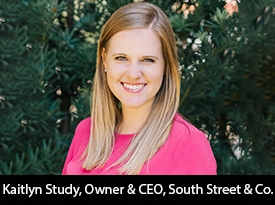
Digital marketing agencies have a measurement problem that is partly structural and partly convenient. Impressions, reach and engagement are easy to report and rarely disputed, while revenue attribution is difficult, requires access to client systems, and exposes the agency to accountability it did not previously carry. South Street & Co., founded in Orlando in 2015 by Kaitlyn Study, chose the harder reporting standard and built its positioning on publishing outcomes that can be checked.
The evidence appears in its case studies rather than in its claims. A new criminal defense firm went from zero website traffic to 148 sessions in the first month and reached top-three rankings for seven high-value local keywords within weeks. A septic business generated 582 organic leads over twelve months, expanded its keyword footprint by 80% and saw local impressions rise 105% in key service zones. A general contractor landed the largest project in company history, an 84-unit multifamily development, through organic search.
The agency serves three verticals where marketing spend connects directly to revenue: law firms, home service providers and B2B commercial service companies. Services span digital marketing, design and development, SEO, paid search, social media, reputation management and email. Study remains hands-on in client strategy and execution, a founder-led model the firm treats as a service guarantee rather than a biographical detail.
Specialization as a Structural Advantage
South Street's decision to concentrate on three verticals is a revenue decision as much as a marketing one. Legal client acquisition behaves differently from home services scheduling, which behaves differently from B2B commercial contracting. An agency working across all three accumulates comparative pattern recognition that a generalist cannot assemble.
The practical effect is faster diagnosis. A roofer whose calls rose 71% in twelve months through SEO, Google Business Profile optimization and paid advertising is not a unique outcome in that vertical it is a repeatable one, because the demand patterns and competitive dynamics resemble the last roofing client.
Where the Revenue Model Forms
The commercial structure runs through four channels. Digital marketing retainers cover SEO, social, email and paid search. Design and development projects generate higher-ticket engagement fees and frequently precede retained marketing work.
Reputation management and Google Business Profile optimization serve local service businesses where map visibility determines call volume. And Creative Coaching, a service Study offers to other agency owners and marketing professionals, converts the firm's operating expertise into a separate product line.
Each channel feeds the others. A design engagement produces a site built for conversion; the SEO retainer then drives traffic to it; the reputation work converts visibility into trust signals; and the coaching arm extends the brand into an audience that influences referrals.
Transparency as a Client Retention Mechanism
The firm states that transparency drives its operations, with clients guided step by step through performance data. That claim is validated less by the statement than by the client testimony it publishes, which repeatedly describes responsiveness and communication quality rather than campaign metrics.
For a small agency competing against larger regional firms, that reputation effect is the acquisition engine. Several published reviews note the client doubled annual business income or signed on for multi-year relationships, which suggests retention is being driven by demonstrated outcomes rather than contract terms.
The Founder-Led Delivery Question
Agency founders typically exit delivery as the business scales, because their time becomes the constraint. South Street has taken the opposite position, keeping Study involved in client strategy and execution.
The trade is capacity. A founder-led model limits the number of clients the firm can serve well, which caps growth by design. The benefit is that senior judgment is applied to the work rather than sold during the pitch and withdrawn afterward a recurring complaint in the agency category that South Street's model appears designed to answer.
What Accountability Actually Costs
Attribution requires analytics access, CRM integration and a willingness to be measured on outcomes the agency does not fully control. Many firms avoid it because a reported revenue number can disappoint as easily as it can impress.
South Street's published case studies suggest it accepts that exposure. For clients weighing agencies on comparable terms, that willingness is the qualification an agency that publishes specific numbers has less room to hide behind a deck.
Kaitlyn Study, Owner & CEO
"Marketing should be measured by revenue generated, not impressions served. South Street exists because we believe that transparency and measurable outcomes are not optional they are the foundation of trust between an agency and its clients."
Search Magazine
Latest Listings












