Tom Hamlin: The Persistent Entrepreneur Redefining Retirement Planning Through Resilience, Technology, and Client-First Leadership
The Silicon Review
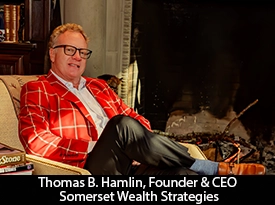
In an industry where trust is earned over decades, business models evolve with markets, and every financial recommendation carries consequences for a client’s future, leadership requires more than technical knowledge or commercial ambition. It demands persistence, adaptability, sound judgment, and a willingness to take responsibility when circumstances become difficult. For Tom Hamlin, Founder and CEO of Somerset Wealth Strategies, these principles have shaped a career spanning more than three decades, during which he has navigated industry transformations, established independent financial businesses, and built an organization focused on retirement planning and long-term financial security. In recognition of his professional journey and leadership philosophy, The Silicon Review has selected him for its Best Leaders to Watch 2026 issue.
From Industry Newcomer to Independent Entrepreneur
Hamlin’s professional journey began in 1990 at Independent Advantage Financial, an independent Los Angeles-based firm that marketed annuities through newsletters at a time when the internet had not yet transformed financial services. The business operated across geographical boundaries, serving clients throughout the United States without requiring frequent face-to-face meetings. This gave him an early appreciation for relationship-building, communication, and the ability to serve customers beyond traditional local markets. Despite entering the industry without prior financial services experience, he became the firm’s leading salesperson among 35 agents in just over a year, demonstrating a capacity to learn quickly and translate determination into results.
Professional success did not necessarily guarantee an ownership opportunity. The company’s founders were unwilling to offer him an equity stake, leaving Hamlin with a difficult choice between continuing within an established structure and pursuing a more independent future. That turning point arrived in late 1994, when he and his mentor, Jeff Oster, decided to leave the firm after becoming dissatisfied with their prospects. Their subsequent move to Prudential Securities proved considerably more difficult than anticipated. Disagreements surrounding client transitions led to a prolonged dispute with their former employer. The experience left him with a lasting lesson about the importance of client choice, contractual clarity, and the need to understand the practical consequences of business agreements before signing them.
Rather than allowing the setback to define his career, he used it to reconsider the structure under which he wanted to operate. In May 1997, following extensive planning, Hamlin established his own business while affiliating with an arm of Raymond James, reuniting with former colleagues Tom Harding and Mark Huntley along the way. The new venture eventually became Somerset Wealth Strategies, a name inspired by Somerset County in England, where Hamlin’s father had grown up.
Building a Business around Independence and Responsibility
The origins of Somerset reflect a broader entrepreneurial conviction that independence creates both opportunity and accountability. Hamlin has never portrayed business ownership as an uncomplicated route to success. Instead, he describes it as a demanding commitment that often requires founders to sacrifice the very activities that initially attracted them to their profession. Financial obligations, regulatory scrutiny, operational problems, staffing responsibilities, and the constant need to generate business become part of the daily reality of running an organization. For him, the difficult aspects of entrepreneurship are inseparable from its rewards, and his experience has reinforced the belief that persistence often matters as much as intelligence when building a company over the long term.
Somerset Wealth Strategies was founded in 1997 as an independent insurance agency, with Hamlin initially conducting much of his fixed insurance business through Somerset while handling securities-related activities through his Raymond James affiliation. A significant organizational transition followed in 2012 and 2013, when he separated from Raymond James, acquired Bay Colony Securities, an established Boston-based broker-dealer, and founded Somerset Wealth Management, LLC, to focus on fee-based, fiduciary wealth management. These developments expanded the business beyond its original insurance foundation and established a broader structure for serving clients with different retirement and investment planning requirements. According to the company’s published profile, its mission centers on helping pre-retirees and retirees pursue financial independence through personalized planning, responsible recommendations, and a family-oriented service philosophy. For Hamlin, independence is not simply an ownership structure; it is a responsibility to make decisions with the client’s long-term interests in view.
A Leadership Philosophy Grounded in Trust and Accountability
Hamlin’s leadership philosophy begins with the people around him. Recognizing that he continues to generate a substantial share of the company’s revenue, he understands that effective leadership cannot depend on a founder personally supervising every task or resolving every operational issue. Instead, he places considerable importance on recruiting self-starters who demonstrate initiative, professionalism, and a willingness to take ownership of their responsibilities. His objective is to establish a team capable of making sound decisions independently while involving him in matters that require executive judgment or have significant implications for the organization. This approach reflects a practical understanding of leadership in a specialized professional services business, where institutional knowledge, consistent execution, and individual accountability must coexist.
The longevity of Somerset’s core team offers a tangible illustration of that philosophy. Hamlin identifies Andrew, his senior lieutenant, as a 22-year member of the organization, alongside advisor Derek, who has spent 14 years with the business, executive assistant Meg with 12 years, office manager Kristen with 11.5 years, and compliance manager Meagan with 10.5 years. Including Hamlin himself, the six key team members represent more than a century of combined tenure. Such continuity can help preserve client relationships, reinforce operating standards, and retain knowledge that would otherwise be difficult and expensive to rebuild through repeated recruitment. His investment in training, mentoring, goal-setting, and professional development reflects his understanding that capable employees do not emerge overnight. His son Brian has also joined the business as a financial advisor, adding a family dimension to the organization’s longer-term development and succession aspirations.
Evolution without Losing Strategic Focus
Over the course of his career, Hamlin has witnessed and participated in several shifts in financial services, moving from a business dominated by annuities to a broader mix of annuities, mutual funds, life insurance, fee-based wealth management, and alternative investments. Each stage brought new opportunities, but experience also taught him that expanding the product menu does not automatically create a better business or improve the client experience. Somerset’s current strategy emphasizes annuities and fee-based, fiduciary wealth management, complemented by selected alternative investments, life insurance, and supplemental long-term care solutions. Rather than pursuing growth through an ever-expanding range of offerings, he favors a more concentrated model built around areas where the firm believes it can provide meaningful retirement planning value.
This strategic focus also reflects a recognition that the financial services industry’s economics have changed. Hamlin acknowledges that the company historically concentrated heavily on annuity transactions and did not develop recurring revenue from fee-based wealth management as early as it could have. Over recent years, Somerset has worked to strengthen this component of its business, which he identifies as an important foundation for sustainable wealth management operations. He reports that annual recurring revenue has reached well into seven figures, with a target of reaching eight figures within five years. He also estimates that the firm’s new and repeat annuity business has historically averaged approximately $100 million in annual premiums, while fee-based wealth management assets under management could receive approximately $50 million in new assets during 2026. These figures illustrate the scale and direction of the business while highlighting his emphasis on balancing transaction-based activity with more predictable, ongoing client relationships.
Retirement Planning Through a Broader Risk Perspective
Somerset’s approach to retirement planning rests on the idea that clients need more than a conventional allocation between stocks and bonds. Hamlin believes that combining fee-based wealth management with an appropriately selected range of annuity products can offer additional ways to address market exposure, income requirements, and the preservation of retirement assets. The company works with several categories of annuities, including multi-year guaranteed annuities, fixed indexed annuities, registered index-linked annuities, and immediate annuities, alongside its wealth management services. Each category has different contractual provisions, costs, liquidity characteristics, guarantees, and exposure to investment risk, making individual circumstances and product terms central to determining suitability.
Among the offerings that particularly interest him are registered index-linked annuities, or RILAs, which can provide limited downside protection while allowing participation in index-linked returns, subject to contractual caps, buffers, participation rates, and other terms. He sees these products as potential tools for clients who want market-linked growth opportunities without accepting the same level of downside exposure associated with direct equity investment. He has suggested that such strategies may allow certain investors to reconsider the balance between equities and more defensive assets, while fixed annuities may serve a role in the income or principal-preservation portion of a portfolio. These possibilities are not universal outcomes, however, and annuity guarantees depend on the claims-paying ability of the issuing insurer, while index-linked products can still incur losses. His broader argument is that retirement planning should examine the full range of available instruments rather than assume that one traditional portfolio structure will meet every client’s needs.
Learning from Market Cycles and Unexpected Disruptions
Hamlin’s views on risk have been shaped by the experience of navigating multiple difficult market periods, including the downturns of the early 2000s, the 2008 financial crisis, and the operational disruptions associated with the COVID-19 pandemic. He believes Somerset successfully navigated several major market challenges, although he also acknowledges that one area of the firm’s investment strategy produced painful lessons during the pandemic’s aftermath. The experience reinforced the importance of contingency planning, careful scrutiny of investment structures, and a willingness to discontinue strategies that no longer fit the organization’s risk framework. In particular, Somerset has reduced its involvement in many private placements and alternative investments following real estate difficulties associated with the pandemic period, favoring a more focused approach to its core retirement and wealth management platforms.
This willingness to reconsider established practices forms an important part of his business philosophy. He does not describe failure as something to celebrate indiscriminately, but as an inevitable part of entrepreneurship that must be managed intelligently. New initiatives require sufficient time and resources to demonstrate their potential, yet they cannot be allowed to consume capital indefinitely when results fail to justify continued investment. He approaches such decisions with an awareness that he remains ultimately accountable for the company’s financial commitments and the people who depend on its continued operation. His emphasis on persistence therefore comes with an equally important qualification: determination must be accompanied by judgment, and the ability to change direction is as valuable as the willingness to persevere.
Technology and AI as Drivers of the Next Chapter
Technology has become one of the central pillars of Somerset’s forward-looking strategy. Hamlin believes that artificial intelligence, specialized software, and better-integrated operating systems will reshape financial services over the coming decade, changing how advisory businesses organize information, support employees, communicate with clients, and manage administrative responsibilities. Somerset is investing in technology partnerships and AI-enabled training resources with the aim of helping its team accomplish more without expanding its operational footprint unnecessarily. He describes the company’s ambition as equipping individual employees to operate with the effectiveness of a much larger team, an approach that prioritizes productivity and organizational agility over headcount alone.
The opportunity, however, is not simply to adopt new tools because they are available. In a regulated industry built around sensitive financial information, technology must support appropriate oversight, data protection, accurate communication, and reliable decision-making. AI can assist with training, research, workflow management, and routine processes, but its outputs still require suitable human supervision, particularly where financial recommendations and client outcomes are concerned. His focus on rapid adoption reflects his belief that businesses that fail to adapt may struggle to remain competitive, while his experience with failed initiatives provides a reminder that implementation must be evaluated against real operational needs. Somerset’s challenge will be to translate technological enthusiasm into measurable improvements in service quality, efficiency, and consistency without compromising the trust on which its business depends.
Recognizing Leadership Built for the Long Term
The selection of Tom Hamlin for The Silicon Review’s Best Leaders to Watch 2026 issue recognizes a career defined by independent thinking, sustained effort, and a willingness to evolve through difficult circumstances. His journey from a newcomer to financial services to the founder of a multi-company wealth management organization illustrates the realities of entrepreneurship beyond the conventional success narrative, including the contractual setbacks, regulatory pressures, strategic missteps, and operational responsibilities that rarely receive the same attention as revenue growth. His leadership approach combines a preference for experienced, accountable colleagues with a commitment to mentoring, technology adoption, and a more focused business model designed around retirement and wealth management needs.
As Somerset moves into its next phase, his priorities remain grounded in continuity and adaptation: strengthen recurring wealth management relationships, refine its core product platforms, invest in technology, and retain the people who understand the business and its clients. His story is not one of growth at any cost, but of learning which opportunities deserve investment, which risks require restraint, and which principles should remain constant even as the industry changes. For Hamlin, persistence is not merely the refusal to give up; it is the discipline to keep improving after setbacks, the humility to learn from experience, and the determination to continue serving clients through changing economic and technological conditions. It is this combination of resilience and forward-looking ambition that makes his leadership journey a fitting subject for Best Leaders to Watch 2026.
Meet the Leader
Thomas B. Hamlin is the Founder and CEO of Somerset Wealth Strategies, an independent financial services firm dedicated to helping individuals and families navigate retirement with greater confidence and financial security. With more than 35 years of industry experience, he has built his career around a central philosophy: retirement income planning and investment management should work together to support long-term financial well-being. Since entering the financial services industry in 1990, he has focused on developing integrated strategies that balance growth, income protection, and wealth preservation.
He founded Somerset Wealth Strategies in 1997 and later expanded the business through the development of Somerset Wealth Management, a fee-based fiduciary advisory platform. Today, the Somerset family of companies combines retirement income solutions, annuities, fiduciary wealth management, life insurance, long-term care planning, Medicare guidance, and estate planning services. Under his leadership, Somerset has grown into a nationally serving organization supporting clients across all 50 U.S. states, two U.S. territories, and more than 20 countries.
His commitment to client education also led him to establish AnnuityFYI in 2000, an independent educational platform designed to help consumers better understand annuity products and make informed financial decisions. A recognized voice in the financial services industry, he has been featured in more than 100 articles, including coverage in The Wall Street Journal and Barron’s. In 2010, Barron’s ranked him the No. 2 financial advisor in Oregon. His professional recognition reflects decades of work in retirement planning, investment management, and client-focused financial strategy.
As CEO, he continues to advance Somerset’s operations through technology and artificial intelligence, with the goal of improving efficiency while preserving the personal relationships at the heart of financial advice. His leadership is grounded in independence, accountability, education, and a commitment to treating every client’s retirement as if it belonged to someone he loves. Through his work, he remains focused on helping families protect what they have built, create sustainable retirement income, and pursue lasting peace of mind.
Search Magazine
Latest Listings