Tripleseat Turns Private Dining From an Afterthought into Hospitality's Most Reliable Revenue Line
The Silicon Review
Private dining is the highest-margin business most restaurants already possess and the least systematically managed. A single event can generate the contribution of a dozen covers while consuming a fraction of the labor, yet inquiries arrive by email, proposals live in shared drives, payments are chased by phone, and banquet event orders circulate as attachments that nobody can locate during service. The revenue is real, but the infrastructure supporting it is improvised. When a venue misses an inquiry or mangles a handoff between sales and operations, the loss is invisible because it never appears on any report.
Tripleseat was founded in 2008 to replace that patchwork with a single platform built for how hospitality teams actually operate events. The company serves more than 20,000 venues worldwide, processing $9.6 billion in event revenue booked annually across 4.8 million events, supported by more than 50 partners and integrations. Its client roster includes Starr Restaurants, Stoney Creek Hospitality, Tao Group, Thomas Keller, Daniel, and Hawksmoor. The platform structure follows the events lifecycle directly: capture inquiries, book qualified leads, plan every detail, and grow event revenue.
The company positions itself as hospitality-built rather than technology-adapted. Its team includes operators who have worked late nights and high-volume service, and its name references the industry expression for managing three tables simultaneously under full attention. That orientation shapes product decisions around practical execution rather than feature breadth. For venues where private dining represents the difference between a profitable quarter and a marginal one, the distinction between software that records events and software that closes them determines revenue outcomes.
Inquiry Capture as the First Revenue Decision
Tripleseat's capture layer addresses the most immediate leak in event sales: response time. The platform captures every inquiry the moment it arrives and routes it automatically, eliminating the morning catch-up that allows leads to cool overnight. For venues competing against dozens of comparable private dining rooms in the same market, the first credible reply frequently determines who wins the booking. Missing an inquiry is not a service failure that generates a complaint; it is a silent revenue loss that nobody records. Automated routing converts that invisible loss into a managed queue with accountable ownership.
Booking, Proposals, and Payment Flow
The platform manages proposals, budgets, contracts, and payments within the same environment. Direct Book, available as a package add-on, enables self-serve online booking with approval retained on every event, allowing venues to capture demand outside business hours without surrendering control over calendar commitments. Payments, tickets, and venue marketplace functionality extend the revenue surface beyond the initial booking. The commercial consequence is compression in the interval between inquiry and signed contract. For an events team managing dozens of simultaneous proposals, that interval directly determines how many events close within a given quarter.
Floor Plans and Spatial Selling
Tripleseat Floor Plans provides 2D and 3D venue diagramming, allowing sales teams to close deals without requiring a site visit. For wedding venues, banquet halls, and event spaces where layout determines capacity and revenue, spatial visualization shortens the decision cycle because clients can see the configuration rather than imagine it. The operational benefit extends beyond sales: approved floor plans flow into execution, reducing the discrepancy between what the client agreed to and what the operations team sets up on the day.
Hotel Group Sales and PMS Integration
Tripleseat Hotels addresses the specific complexity of properties managing room blocks, multi-day events, and coordination with property management systems. Hotels juggling group sales alongside transient inventory face a distinct problem: events and rooms must be sold together, but their systems frequently operate apart. Connecting sales, banquets, and operations within one environment reduces the information loss that occurs when a room block and a banquet event are managed by different departments using different tools.
Tripleseat Intelligence and Contextual AI
Tripleseat Intelligence applies AI to the platform's existing data, workflows, and venue context rather than operating as a generic assistant. The stated purpose is to help event teams capture leads, book more, plan better, and grow faster. For a company serving more than 20,000 venues, the value of AI depends entirely on whether it understands the specific venue's capacity, pricing history, and operating constraints. Building that context natively avoids the integration overhead that typically accompanies bolt-on AI tools.
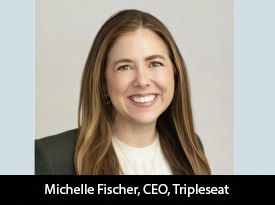
Michelle Fischer, CEO
Michelle Fischer serves as Chief Executive Officer of Tripleseat. Under her leadership, the company maintains a pricing structure starting at $375 per venue per month with unlimited users, integrations, and full feature access, deliberately rejecting the paywalled tier models common in vertical SaaS. The company reports recognition as a Capterra top-rated product and G2 category leader, alongside retention across enterprise hospitality groups including Starr, Tao Group, and Stoney Creek Hospitality.
The Growth Logic of Event Revenue Infrastructure
Tripleseat's expansion reflects sustained demand for event management infrastructure that treats private dining as a revenue system rather than a scheduling function. With 20,000-plus venues, $9.6 billion in annual event revenue booked, 4.8 million events processed yearly, and package options spanning core platform, self-serve booking, floor plans, and hotel group sales, the company has established itself among the hospitality sales solution providers worth watching in 2026. The commercial logic is direct: events carry the highest margin in hospitality, and the venues that capture that margin reliably are the ones whose inquiry-to-execution process never depends on improvisation.
Michelle Fischer, CEO
"Private dining is already the highest-margin business in most restaurants. The problem is not demand. The problem is that venues manage their most profitable revenue stream with the least structured process, and every missed inquiry is money nobody ever sees."
Search Magazine
Latest Listings












