TruSteel Grew From the Extraction Floor Itself, Building the Machine Its Founders Could Not Buy Anywhere Else
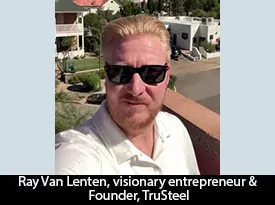
The most instructive origin stories in industrial equipment begin with a frustrated operator, not a business plan. TruSteel's founding follows that pattern precisely. Working the extraction floor, its team confronted a bottleneck the market had accepted as normal: solvent recovery depended on rooms filled with rotary evaporators, each unit running batch by batch, consuming labor and floor space in equal measure. The machine that would have solved the problem did not exist, so the company built it the AutoVap falling film evaporator, engineered to replace an entire room of rotovaps with a single continuous unit.
Founded in 2015, TruSteel grew from toll processing into manufacturing, and the pivot shaped everything that followed. Today the Nevada City, California company designs, builds and supports a full line of fluid-processing equipment in-house: solvent storage and transfer, InstaCool inline chilling, extraction, filtration, the AutoVap solvent-recovery line, DR-series decarboxylation and reactors, and EVO modular distillation. Hundreds of AutoVaps have been sold and remain in field operation, and the company reports its engineers average more than a decade of extraction experience apiece.
The roster of industries served has widened well beyond the company's cold ethanol roots in hemp and cannabis. When Operation Warp Speed created demand for pharmaceutical-grade vaccine production, TruSteel developed the AutoVap 40 GMP, bringing cGMP compliance and 316L sanitary construction to continuous evaporation. That work opened doors into food and beverage, pharmaceuticals and biochemistry—the same evaporation and solvent-recovery discipline applied to unfamiliar compounds. Ray Van Lenten, the company's founder, built the enterprise around a simple guarantee: by extractors, for extractors.
One Roof, One Consequence
The strategic decision that defines TruSteel is vertical integration. The company is not a reseller or an integrator assembling third-party components under its own badge. Engineering, manufacturing and support all sit in-house in the Sierra Foothills, which produces a specific commercial consequence: when a client's process requires a modification, the answer does not travel through a supply chain. It travels down a hallway. That control compounds across the product line. Storage, chilling, extraction, filtration, solvent recovery, reaction and distillation are each engineered to hand off to the next stage as one continuous automated process, culminating in the TRU Series, a fully integrated end-to-end system. For a producer scaling from bench to commercial volume, the value is measured in uptime and consistency rather than individual unit specifications.
Where the Revenue Actually Forms
TruSteel's revenue model extends past the capital sale, and the extension is deliberate. Material testing in an in-house lab lets customers validate a process on the company's equipment before committing capital, which shortens the sales cycle by removing the guesswork that stalls equipment purchases. System design follows, engineered around the client's process and peer-reviewed. Installation and commissioning follow that, with on-site training delivered by the same team. The recurring layer sits beneath all of it: spare parts kits, maintenance tickets, service agreements and process optimization. The company frames this as TruSupport, and the logic is straightforward a producer running continuous operations cannot tolerate extended downtime, so service capability becomes a purchasing criterion rather than an afterthought. Used equipment startup rounds out the offering, with pre-owned systems inspected, refurbished and re-certified to factory standard, capturing customers who enter the market at a lower capital threshold.
Standards as a Market Key
TruSteel's engineering range functions as a competitive moat because compliance requirements vary sharply by industry and geography. The company builds to NFPA fire protection standards, pharmaceutical-grade BPE requirements, and C1D1 hazardous-location ratings, across scales from bench-top to full production. A supplier that can only serve one standard serves one market. A supplier that can serve several, with engineering held in-house, can move a proven technology from cannabis extraction into food concentrates, then into pharmaceutical production, without rebuilding its capability. The customer testimony the company publishes points to a consistent theme that is operational rather than technical: responsiveness during commissioning, direct engagement with contractors, and training delivered before production pressure peaks. In capital equipment, where a delayed startup carries real cost, that behavior is a differentiator with measurable value.
The Case for Staying Operator-Led
Industrial equipment markets reward companies that understand how work actually happens on a floor, and TruSteel's structure preserves that understanding by keeping production experience inside the specification process. The company's expansion into adjacent industries suggests the model travels that solvent recovery and evaporation expertise, once proven in one regulated environment, transfers credibly into others. For a market where scale-up failures are common and expensive, equipment built by people who have run the process themselves is a defensible position, not a slogan.
Ray Van Lenten, visionary entrepreneur and founder
"Combining high-efficiency solutions with high output capabilities and automation to reduce labor and increase consistency, our clients have some of the highest returns on investment in the industry and can grow by taking market share quickly."
Search Magazine
Latest Listings












