Vectors Institute Equips Nonprofit Leaders with the Governance Discipline Their Missions Demand
The Silicon Review
Nonprofit organizations now operate under conditions that resemble those of commercial enterprises, yet with fewer resources and higher accountability. Donors scrutinize overhead. Regulators scrutinize compliance. Communities scrutinize outcomes. Boards carry fiduciary responsibility for organizations whose missions often exceed their operational capacity. The sector's growth in scale has outpaced its growth in management infrastructure, and the consequences appear as governance failures, funding instability, and leadership burnout. Passion alone no longer sustains organizations operating at this level of complexity.
Vectors Institute was founded to close that capability gap. The organization delivers certificate programs, workshops, and governance-driven training designed specifically for nonprofit executives, board members, and emerging leaders. Its curriculum translates advanced management practice into formats nonprofits can apply directly covering governance, funding diversification, risk management, and strategic planning without stripping away the social purpose that distinguishes the sector. Rather than offering one-off consulting engagements, the Institute builds internal capability that outlasts individual leaders and funding cycles.
That positioning has earned recognition as one of the global companies to watch in 2026. Operating at the intersection of academic rigor and practical application, Vectors Institute serves as both an educational platform and a convening force for universities, nonprofits, and social enterprises. Its programs emphasize applied learning simulations, governance dashboards, and execution blueprints so participants return to their organizations equipped to lead transformation rather than recommend it.
Governance as Institutional Infrastructure
Vectors Institute places governance at the center of nonprofit resilience, treating it as a living system rather than a compliance obligation. The Nonprofit Governance Certificate Program guides organizations through policy development, board accountability structures, and legal alignment, teaching boards to balance oversight responsibilities with strategic vision. The distinction matters because governance failures rarely stem from bad intentions; they stem from undefined roles, unclear authority, and absent accountability mechanisms. By establishing governance as a functioning system, the Institute equips boards to make defensible decisions during periods of instability when those structures matter most.
Leadership Development with Applied Outcomes
The Nonprofit Leadership Growth Program targets executives seeking to convert vision into operational execution. Curriculum draws on case studies developed through decades of nonprofit consulting and academic research, and participants complete applied projects tied to their own organizations. The pedagogy deliberately avoids abstraction. Executives leave with actionable blueprints rather than theoretical frameworks, which accelerates implementation and reduces dependency on external advisors. For organizations with limited budgets, that self-sufficiency represents a durable return on the training investment.
Capacity Building through Peer Networks
Beyond curriculum, Vectors Institute functions as a convening platform where nonprofit leaders exchange practices, form alliances, and work through shared challenges. Workshops create structured peer environments that produce collaboration across organizations facing similar constraints funding shortfalls, regulatory pressure, digital transition, and workforce instability. The Institute extends that convening function across sectors, connecting nonprofits with universities, government bodies, and private enterprises. Cross-sector relationships frequently translate into funding pathways, research partnerships, and operational resources that individual organizations cannot access independently.
The Social Enterprise Extension
The Social Enterprise Leadership Workshop addresses a segment of the sector that operates between traditional nonprofit and commercial models. Organizations pursuing earned revenue, impact investing, or hybrid structures require capabilities that standard nonprofit training does not cover. By extending its curriculum into social enterprise management, Vectors Institute positions itself with organizations navigating the sector's fastest-growing structural shift where financial sustainability and mission delivery require simultaneous management rather than sequential tradeoffs.
Values as Operating Discipline
Vectors Institute anchors its work in integrity, inclusion, and collaboration, treating those principles as operational standards rather than marketing language. Curriculum design reflects input from practitioners across geographies and organizational types, which keeps content relevant to varied regulatory and cultural contexts. For a sector where credibility determines funding access, that values-driven positioning supports both institutional reputation and participant trust.
The Growth Logic of Nonprofit Capability
Vectors Institute's expansion reflects rising demand for structured leadership development across a sector that has outgrown informal management practice. With certificate programs serving executives and boards internationally and recognition among global companies to watch, the Institute has established itself as a strategic partner rather than a training vendor. The commercial logic is direct: nonprofits require capable governance and leadership to sustain their missions, and capability requires structured development rather than instinct. As the sector confronts compounding complexity, demand for that development strengthens.
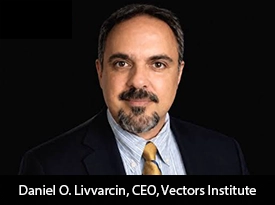
Daniel O. Livvarcin, CEO
"Nonprofits do not lack commitment they lack infrastructure. Our work focuses on building the governance and leadership systems that let committed people deliver on their missions without burning out or losing the public's trust."
Search Magazine
Latest Listings