Waabi Bets That Simulation, Not Mileage, Is the Path to Autonomy and One Brain Can Drive Both Trucks and Robotaxis
The autonomous vehicle industry has spent a decade proving that the technology can work while failing to prove that it can scale. Billions of dollars have funded fleets, test drivers and accumulated mileage, yet commercial deployment remains confined to a handful of geographies. The constraint was never perception or planning in isolation. It was the cost of validating safety, measured in real-world miles that must be driven before regulators and insurers will accept the result.
Waabi was founded in 2021 to attack that constraint directly. The Toronto-based company has built what it describes as a Physical AI Platform, combining a single end-to-end AI model with a high-fidelity neural simulator called Waabi World. Rather than validating behavior primarily through road miles, Waabi tests thousands of safety-critical scenarios in simulation before they occur in public.
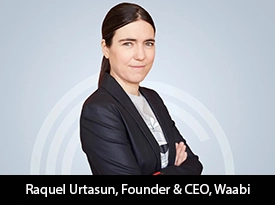
The architectural claim is the one worth examining. The same AI model acts as a shared brain for both autonomous trucks and robotaxis a unified system rather than separate stacks for each application. That decision has commercial consequences: development costs amortize across two markets, and capability proven in one vertical transfer to the other. Raquel Urtasun, a leading AI researcher, serves as Founder & CEO.
The Simulation Argument, Stated Precisely
Simulation-first development has been attempted before, usually as a supplement to real-world testing rather than a substitute for it. Waabi's proposition is more demanding: that a neural simulator capable of replicating both routine conditions and rare edge cases can carry the majority of validation burden.
Waabi World generates synthetic scenarios at fidelity sufficient to expose failures the company would otherwise need years to encounter on roads. Mixed Reality Testing extends this by combining real trucks with real-time synthetic scenarios, injecting dangerous situations into live operations without putting people or cargo at risk. The efficiency argument is straightforward: every real mile becomes more valuable because it is informed by simulated ones.
Where the Platform Becomes a Business Model
The unified architecture is Waabi's most consequential commercial decision. Building separate systems for trucks and robotaxis would double engineering cost and split validation effort. A shared model means one investment serves two markets with different regulatory pathways and different customers.
For investors, that produces a broader addressable market against the same development spend. For Waabi, it shortens the path to revenue in whichever vertical matures first, and it means progress in long-haul trucking compounds into robotaxi readiness rather than sitting beside it.
Partnerships as Deployment Infrastructure
Waabi's commercial position rests on partnerships that supply what a software company cannot build alone. The collaboration with Volvo Autonomous Solutions advances the technology while assembling the ecosystem hardware, OEM integration, service networks required for commercial operation. The partnership with Uber accelerates entry into robotaxis by providing demand and distribution rather than requiring Waabi to build a consumer-facing network.
For a company selling autonomy rather than vehicles, these relationships convert capability into deployment without capital-intensive fleet ownership.
The Physical AI Ambition
Waabi frames its platform as the foundation of a broader category: Physical AI, in which the same reasoning architecture applies to robotics, logistics and other systems operating in the physical world. That framing is strategically useful because it positions the company against the wider AI investment thesis rather than the narrower autonomous vehicle thesis.
The claim requires scrutiny. Autonomy on roads is a specific, heavily regulated problem; generalizing to arbitrary physical systems is a much larger assertion. But the underlying architecture one model, one simulator, multiple embodiments is the same logic driving the unified truck-and-robotaxi decision, and it is coherent.
Why the Safety Standard Matters Commercially
Regulators and insurers do not purchase autonomy; they permit it. Waabi's simulation-first approach is designed to produce evidence that satisfies both: verifiable scenario coverage, documented failure modes, and validation that do not depend on accumulating millions of public road miles.
For logistics partners, that translates into a credible timeline. For Waabi, it reduces the capital intensity of proving safety which is the single largest barrier to commercialization in the sector.
What Scale Actually Requires
The autonomous vehicle industry's failure has been one of economics rather than engineering. Waabi's bet is that simulation collapses the cost of validation that a unified model collapses the cost of expansion, and that partnerships collapse the cost of deployment. Each of those is a plausible lever. Together they describe a company that has organized itself around the constraint the industry could not solve, rather than around the demonstration the industry could.
Raquel Urtasun, Founder & CEO
"Autonomous technology can be truly scalable, efficient, and safe and the path to deployment runs through simulation, not just real-world miles."
Search Magazine
Latest Listings












