Wiideman Consulting Group: Enterprise Search Strategy for the AI Era
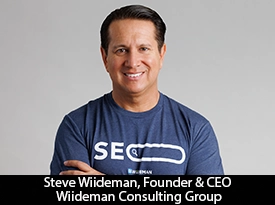
Founded by multi-location and franchise SEO consultant Steve Wiideman, Wiideman Consulting Group, Inc. is a specialized SEO consultancy built around a simple but demanding idea: search visibility should be treated as a business operations challenge, not a guessing game. Incorporated in 2015, with roots in SEO consulting dating back to 2005, the California-based firm has developed a strong reputation for helping multi-location, franchise, enterprise, and e-commerce organizations navigate increasingly complex search environments. Wiideman Consulting Group was created in response to a persistent problem across the digital marketing industry: talented in-house teams and agencies were often stretched across too many priorities, losing focus on the fundamentals that genuinely drive sustainable search performance. The company was designed to fill that gap with a small, senior-level team capable of delivering direct assessments, competitive intelligence, and practical strategies that organizations can actually implement. Steve Wiideman’s background, including his experience in the U.S. Army Infantry, helped shape the company’s disciplined approach to preparation, planning, and execution. Today, the firm serves organizations across retail, restaurants, hospitality, self-storage, automotive, and e-commerce, supporting brands ranging from 50 locations to more than 5,000. Its client portfolio includes globally recognized names such as Disney, Linksys, Belkin, Public Storage, Honda, Skechers, Applebee’s, IHOP, Outback Steakhouse, Jollibee, Meineke, Dave’s Hot Chicken, QDOBA, and Dole Sunshine.
At the core of Wiideman Consulting Group’s methodology is a comprehensive, outcome-focused approach to SEO. Engagements typically begin with technical, competitive, and off-page audits that establish a clear understanding of a brand’s current search position and opportunities for growth. Those findings are translated into strategic roadmaps connected to measurable business objectives, including qualified leads, trackable revenue, customer orders, and stronger local market visibility. The firm works extensively with data accuracy and location management across platforms such as Google Business Profile, Bing Places, and Apple Maps, while also developing scalable multi-location and franchise search programs, including location pages, service-area content, intent-driven pages, local data governance, and entity consistency. Reputation and authority are strengthened through strategic attention to platforms including Google, Yelp, Reddit, and industry-specific channels. Looking beyond traditional search, Wiideman Consulting Group also helps brands prepare for the changing discovery landscape through Answer Engine Optimization and Generative Engine Optimization, supporting visibility across platforms such as ChatGPT, Claude, Perplexity, and Google AI Overviews. The company additionally provides expert witness services for legal matters involving search marketing. From its headquarters in La Mirada, California, Wiideman Consulting Group continues to position itself as a senior strategic partner for organizations seeking honest guidance, disciplined execution, and durable search strategies built around real business results.
In conversation with Steve Wiideman, Founder and CEO of Wiideman Consulting Group, Inc.
You are known for serving enterprise brands, agencies, and in-house marketing teams. How does this unique positioning drive innovation in your service delivery?
When agencies and in-house teams call us, they already know the basics. What they need is a partner who has seen the same problem across dozens of enterprise environments and can shortcut the guesswork. That pressure keeps us honest. We cannot sell buzzwords to a technical SEO lead at a Fortune 500 brand or to another agency’s strategist, so every recommendation we make has to be defensible, testable, and repeatable. It pushes us to invest in things most firms skip, proprietary research, internal training documentation, and reusable frameworks that let our consultants deliver senior-level thinking without burning a client’s budget on reinvention. Being the agency’s agency also means we are constantly exposed to new verticals and platforms, which becomes fuel for the next round of innovation.
You co-authored “SEO: Search Strategy for the AI Era.” How is your approach to SEO evolving to integrate AI, and how does this innovation benefit your clients?
Co-authoring the book with Professor Scott Cowley of Western Michigan University forced us to write down, in plain English, how modern search actually works when AI is layered on top of it. The core shift is that “Google it” is quietly giving way to “ask Chat,” and Brands are more likely to be understood, cited, and surfaced when their entities, content, structured data, and third-party signals are consistent. Our clients benefit because we bring those principles into every engagement, entity alignment, structured data, third-party corroboration, schema markup, review analysis with AI-assisted sentiment and topic clustering, and content built to be quoted rather than just ranked. We test what actually influences visibility across search engines and AI platforms, then continually review and refine the playbook as new evidence emerges. Our clients aren’t guessing about where discovery is headed.
You have developed a comprehensive “SEO Roadmap” system with training videos and documentation. How does this innovative solution empower businesses to take control of their SEO and inbound marketing?
The SEO Roadmap started as a way to hand off institutional knowledge to clients who wanted to build internal capability rather than outsource it forever. It combines written playbooks, checklists, and training videos that walk teams through the same processes our consultants use every day, competitive analysis, keyword and topic mapping, on-page optimization, local data management, link earning, and measurement. The result is that a marketing manager or franchisee can pick up the Roadmap on Monday morning and know exactly what to work on, in what order, with what tool. With clear training and defined responsibilities, local managers and frontline teams can contribute location-specific information while the central marketing team maintains governance and quality control. That transparency is intentional. We would rather teach a team to fish than lock them into a dependency.
You published an extensive data-driven analysis of high-ranking local landing pages. How does this research-oriented approach distinguish your consultancy?
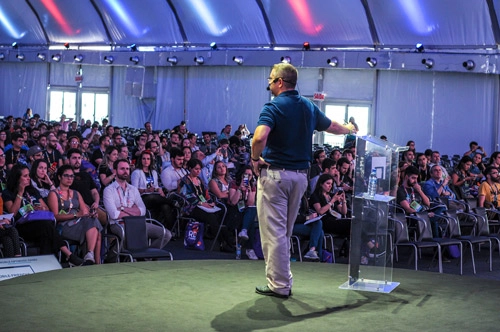
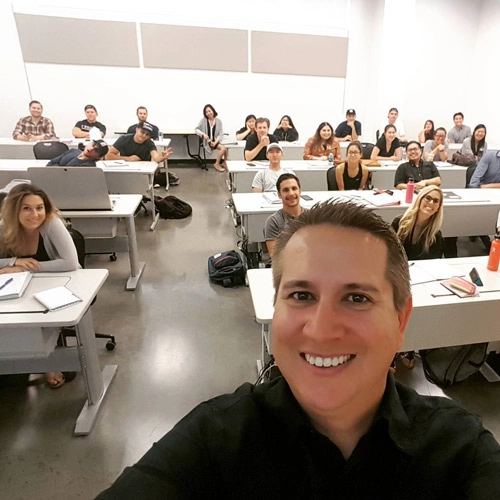
We analyzed high-ranking location pages across a disclosed dataset of 100 food-and-dining chains, while also studying patterns in retail and insurance. We examined relationships between page architecture, content, local signals, and ranking performance. That research changed how we build page templates, how we prioritize on-page elements, and how we advise clients on scaling city and neighborhood content without creating cannibalization, duplication, indexation, or low-value page risks. It also shows up in the classroom, because I teach the same findings to students and working professionals through programs at UC San Diego and Cal State Fullerton. Clients get the benefit of a firm that treats local SEO as an ongoing research program, not a static checklist, and that discipline is hard for competitors to replicate.
Your team has served enterprise brands like Public Storage, Skechers, and Applebee’s. How does working with such diverse, large-scale clients drive continuous innovation in your methodologies?
Every enterprise brand teaches us something. Public Storage sharpens our approach to hyperlocal data at scale. Skechers stretches our thinking on e-commerce and international discovery. IHOP and Applebee’s push us on off-premises revenue and franchisee enablement. Because the verticals are different but the underlying problems rhyme, clean data, scalable content, defensible measurement, we get to test the same hypotheses across many environments and keep only what actually works. Innovation for us is not a slide in a pitch deck. Our methodologies have been evaluated against analytics, attributed revenue, customer order data, and other business performance indicators. When a new client shows up, we already have a shelf of proven playbooks and can spend our time on the parts of their problem that are genuinely unique.
You also provide expert-witness services in matters involving search marketing and digital platforms. How has that work influenced the rigor of your consulting methodology?
Expert-witness work requires a level of documentation and methodological rigor that ordinary consulting does not always demand. Attorneys and courts require opinions grounded in sufficient facts, reliable methods, and careful application of those methods to the matter at hand. Because our consulting work is already built on audits, sourced data, and repeatable frameworks, moving that same discipline into litigation is a natural extension. Handling matters involving trademark infringement, competitive interference, digital marketing malpractice, and platform disputes has sharpened how we document everything on the consulting side too, which in turn benefits every commercial client we serve. It is a virtuous loop between practice and evidence.
What does the future hold for your company and its customers? Are exciting things on the way?
The next three to five years will redefine how customers find and choose brands. AI platforms are starting to facilitate direct reservations, purchases, and comparisons, so visibility will no longer be measured only in blue-link rankings. We are investing heavily in four areas, entity-based optimization and knowledge graph work, AI-assisted review analysis, reputation-management programs built around authentic customer feedback, and hyperlocal grounding that improves the consistency and accuracy of location data across the source ecosystems used by search and AI platforms. We are also expanding our educational footprint through the new textbook, our university courses, and updated training inside the SEO Roadmap. For our clients, that translates into being ready for an agent-driven ecosystem rather than reacting to it.
Meet the leader behind the success of Wiideman Consulting Group
Steve Wiideman is the Founder and CEO of Wiideman Consulting Group and a multi-location and franchise SEO consultant recognized for his work with brands including Disney, Linksys, Belkin, Public Storage, Honda, Skechers, Applebee’s, IHOP, Outback Steakhouse, Jollibee, Meineke, Dave’s Hot Chicken, and QDOBA. He is the co-author of “SEO: Search Strategy for the AI Era” with Professor Scott Cowley of Western Michigan University, published by Stukent, and previously co-authored four editions of “SEO: Strategy and Skills.” He is an adjunct professor at the UC San Diego Division of Extended Studies and Cal State Fullerton Extension, where he designed the Website Optimization and Strategic Search Engine Marketing course. Recognitions include Industry MVP at Conductor’s Searchies Awards, FORTUNE GAMEChangers honors, the Web Excellence Award, and the Career College Association’s G.R.E.A.T. Award. A veteran of the U.S. Army Infantry, Steve is based in La Mirada, California, and is a frequent speaker at Pubcon, DigiMarCon, and industry events around the world.
“We test what actually influences visibility across search engines and AI platforms, then continually review and refine the playbook as new evidence emerges. Our clients aren’t guessing about where discovery is headed.”
Search Magazine
Latest Listings












