>>
Other>>
Politics>>
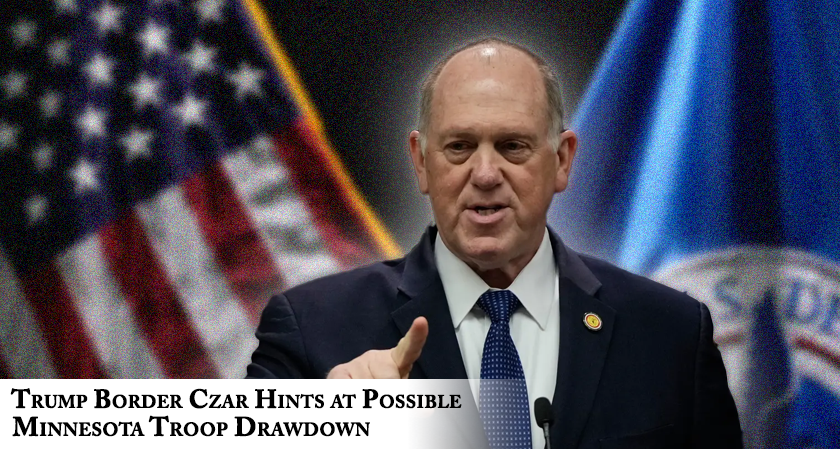
Trump Border Czar Hints at Pos...Trump Border Czar Hints at Possible Minnesota Troop Drawdown
The Silicon Review
30 January, 2026
Author:
The Silicon Review Team
The White House border czar suggested a potential drawdown of federal personnel in Minnesota is possible, but only after state and local "cooperation."
The White House border czar appointed by President Trump suggested that a potential drawdown of federal law enforcement and National Guard personnel deployed to Minnesota is possible. However, in a statement, the official clarified that any reduction would be contingent upon demonstrated "cooperation" from state and local authorities in Minneapolis and St. Paul. The comments come amid ongoing federal support for local police following sustained protests, with the administration linking continued assistance to the state's adherence to federal law enforcement priorities.
The border czar's statement did not specify a timeline or the number of personnel that could be affected but framed the presence as a necessary response to previous failures to maintain public order. The condition of "cooperation" is broadly interpreted as requiring state and local leaders to align more closely with federal strategies on protest policing and immigration enforcement, potentially influencing local policy decisions in exchange for reduced federal presence.
"The federal support provided to Minnesota has been essential for protecting lives and property. A responsible drawdown can only follow a period of proven, sustained cooperation from local leadership," the border czar stated. A spokesperson for Minnesota's governor responded, "Our focus remains on the safety of all Minnesotans. We expect any federal decisions to be based on objective conditions, not political prerequisites."
This stance represents the administration's use of federal leverage in interstate relations, where the provision or withdrawal of resources is used to influence state and municipal policy. It follows a pattern of conditioning federal assistance on compliance with administration directives, turning operational support into a tool for broader political alignment. The situation highlights the tension between federal authority and local autonomy in managing civil unrest.
The prospect of a drawdown will likely be a topic in ongoing discussions between state and federal officials. Further details on what specific actions constitute sufficient "cooperation" and the criteria for reducing the federal footprint are expected to be negotiated in the coming weeks.