>>
Industry>>
Real estate>>
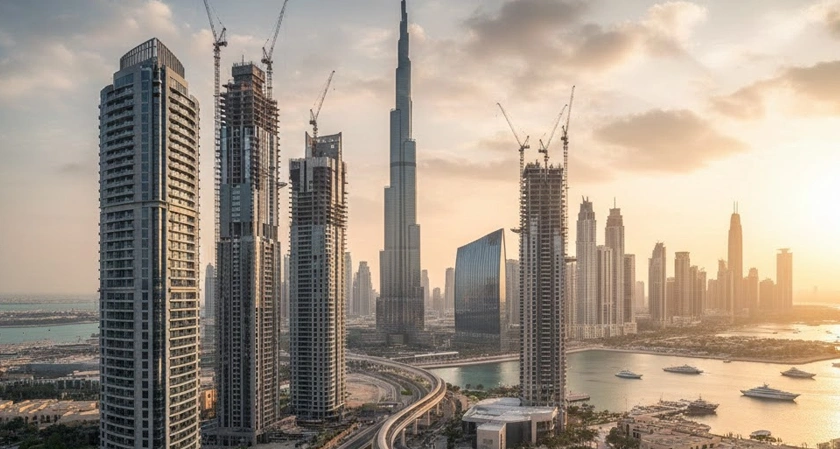
Dubai Off-Plan Market Enters M...Dubai Off-Plan Market Enters Maturity Phase in 2026
The Silicon Review
20 January, 2026
Author:
The Silicon Review Team
Between January and November 2025, Dubai recorded more than 197,000 property transactions worth AED 624.1 billion (USD 170 billion), surpassing previous annual records before the year closed. Much of that activity was fueled by payment plan flexibility and rapid price appreciation in the off-plan segment, where buyers locked in today's prices for properties delivering in 2027 or beyond. But beneath the headline figures, behavior began to shift.
"In 2025, momentum drove decisions, but 2026 will be the year when buyers and investors operate with far more logic and discipline," said Firas Al Msaddi, chief executive of fäm Properties. That transition is reshaping how developers position projects, with greater emphasis on community planning and end-user appeal rather than launch-driven hype.
What Changed: The End of Launch Hype
For the past several years, Dubai's off-plan market rewarded early movers. Now, investors are conducting rigorous due diligence on payment plans and handover track records. Micro-location analysis has become standard practice, with buyers cross-referencing proximity to employment hubs, school catchment zones, and healthcare facilities before committing capital.
Infrastructure connectivity is crucial. The Dubai Metro Blue Line is influencing which corridors attract serious buyer interest. Real end-user demand is driving property absorption near proven stations. In transit-oriented communities, Dubai Creek Harbour off-plan projects compete on verified walkability to future metro access, waterfront positioning, and phased community completion that reduces handover risk.
Festival City and Dubai Silicon Oasis are experiencing similar dynamics. The common denominator is simple: locations where connectivity improvements are funded, planned, and actively under construction are outperforming launches in areas where infrastructure remains aspirational.
The result is a market where off-plan still dominates—accounting for over 70% of transactions in 2025—but with sharper scrutiny on which projects justify premium pricing and which rely purely on speculative momentum. Investors who thrived on quick flips are being replaced by buyers evaluating five-year resale scenarios and rental yield sustainability.
Smart Investor Checklist: Logic Over Launch
Selective buyers entering 2026 are applying a fundamentals-driven framework. Key decision factors now include:
Developer track record: Verified delivery history matters more than projected handover dates. Buyers are cross-referencing completion timelines across a developer's portfolio before signing sale and purchase agreements.
Infrastructure connectivity: Proximity to metro lines, highways, and employment hubs is being priced in earlier. Projects near planned transit corridors command premiums, while launches in isolated pockets face longer absorption periods.
Absorption rates: The ratio of units launched versus units sold signals real demand. High absorption in early phases suggests genuine buyer interest, while stalled sales indicate pricing misalignment or weak fundamentals.
Service charge transparency: Buyers are requesting detailed breakdowns of post-handover fees, recognizing that low purchase prices can be offset by high recurring costs that erode rental yields.
Where to Focus: Areas With Infrastructure and Proven Demand
Dubai South continues to benefit from its proximity to Al Maktoum International Airport and Expo City's transformation into a sustainable smart district. Connectivity to major highways and logistics hubs positions the area for structural demand growth beyond residential speculation.
Business Bay remains a commercial anchor, with office demand spillover supporting residential occupancy. Investors are targeting units near metro stations and waterfront access, where tenant pools are deepest and vacancy risk is lowest.
Dubai Creek Harbour sits at the intersection of metro connectivity narratives and established master-plan credibility. Projects in this corridor are attracting buyers focused on commute logic and resale liquidity.
The common thread across these areas is verifiable demand drivers that support pricing even when speculative interest cools.
Payment Plans and Capital Appreciation: The New Equation
Off-plan properties in Dubai still offer capital appreciation margins forecasted between 12% and 18% for well-located developments from reputable builders. The difference in 2026 is that appreciation is being driven by fundamentals rather than launch momentum.
Developers continue to offer flexible payment structures, including post-handover installments and long-term financing that reduce immediate capital strain. But buyers are no longer treating payment plans as a way to defer risk—they are using them as tools to manage liquidity while holding exposure to infrastructure-led growth.
The most successful investors are adopting a two-phase strategy: securing properties early in high-demand corridors, then holding select assets through completion to capture both appreciation and rental income. This approach requires more patience than the flip-on-launch model that dominated 2023 and 2024, but it aligns better with a market entering a more balanced phase.
2026: A Market That Rewards Discipline
Sales volumes in the off-plan sector continue rising—analysts project 10–15% growth in 2026—but with a different buyer base. End-users and institutions have replaced speculative investors as the primary market force.
Developers have responded by front-loading transparency. Launch packages now include service charge estimates, verified contractor lists, and phased handover timelines. Buyers can walk away from projects that don't provide this information, and many are.
Successful investors are now verifying developer completion records through DLD databases, tracking metro construction timelines via RTA announcements, and studying building-level transaction data instead of relying on broker estimates.
Dubai's off-plan market in 2026 rewards patience over speed. The buyers closing deals today are underwriting projects the same way they would analyze public equities—with data, verification, and realistic exit timelines. That approach may lack the excitement of 2023's launch-day flips, but it's producing more consistent returns with less execution risk.









-Recovered-Recovered-Recovered_2026-07-25_10-24-34.webp")

-Recovered-Recovered-Recovered_2026-07-25_10-03-12.webp")