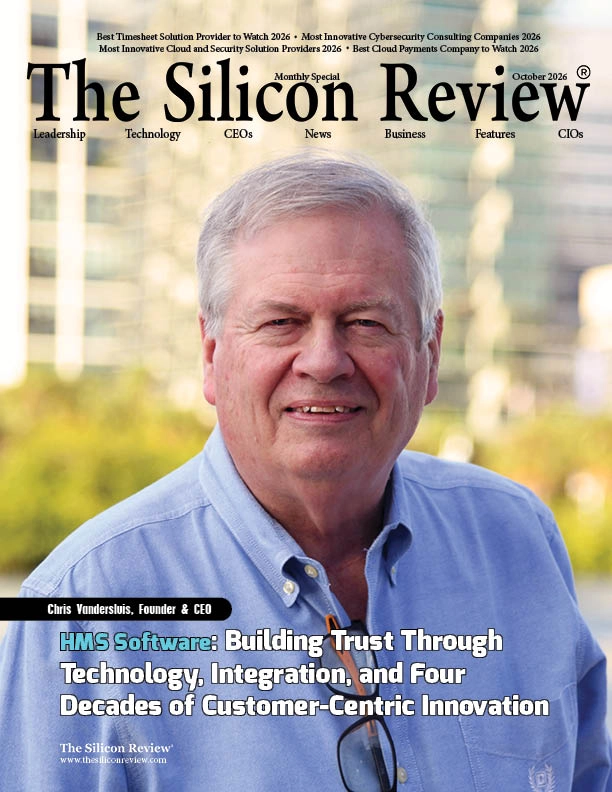
How HMS Software Turned a Simple Timesheet into a 40-Year Innovation Story
The Silicon Review
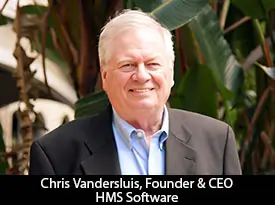
In 1984, when desktop computers were just starting to appear in corporate offices, Chris Vandersluis saw something most people didn’t. Mid- and large-sized companies were adopting project management software to handle their increasingly complex operations, but they were missing a crucial link: a way to track not just what was being planned, but how people were actually spending their time.
That insight became HMS Software. Four decades later, the Montreal-based company has grown from a niche consultancy into a global software publisher serving organizations as varied as AMD, Interpol, CAE, Volvo Novabus, and the Government of Quebec. Its flagship product, TimeControl, is now one of the most trusted multi-purpose timesheet systems in the world.
The Beginning: A Consulting Firm That Followed the Data
Vandersluis founded HMS Software at a time when the idea of a software company was still novel in Canada. Back then, HMS wasn’t building software. It was helping companies understand how to use it. “We started as a consulting company,” he recalls, “helping mid- and large-sized organizations adopt project management software.”
It was the perfect moment. Project scheduling tools were suddenly essential for large-scale engineering, construction, and manufacturing firms. HMS helped deploy them, and in the process, clients began asking for more.
“One of our first clients asked if we could extend their project scheduling software to include a timesheet system,” Vandersluis says. “They wanted it to handle both project tracking and payroll.”
That request changed everything. Over the next decade, HMS built similar custom systems for dozens of organizations, eventually realizing it had stumbled upon a universal problem. In 1994, the company made a decisive pivot from consulting to publishing with the first commercial version of TimeControl, a timesheet platform designed to serve multiple functions at once: project management, payroll, finance, and HR.
“TimeControl has been the prime motivator ever since,” Vandersluis says.
Why One Timesheet Beats Five
If you’ve ever worked in a large organization, you know how fragmented internal systems can be. Payroll wants hours worked. Project managers want hours by task. Finance wants costs by project. HR wants vacation and overtime data. Each team uses its own software, and the result is duplication, confusion, and wasted effort.
HMS built TimeControl to fix that. “Our very first client asked that the system handle both project management and payroll,” Vandersluis explains. “We had no idea how different those requests were at the time.”
That early challenge forced HMS to design TimeControl around two core ideas: auditability and flexibility. Every piece of data had to be traceable for compliance and reporting, but the system also needed to adapt to different processes across departments.
This flexibility became the company’s defining advantage. TimeControl lets each department use the same core time data in its own way, eliminating the need for multiple timesheet systems. For clients, the payoff is huge: fewer silos, lower administrative costs, and more accurate project insight.
What sounds simple in concept, a single time entry feeding multiple workflows, is technically hard to achieve. “The biggest challenge,” Vandersluis says, “is that the people responsible for Payroll, HR, and Project Management often can’t agree on what they need. Payroll doesn’t care what someone did with their time; Project Management doesn’t care how many hours they worked, only what those hours were spent on. Our job was to bridge those worlds.”
Building for Everyone, from Interpol to Zoetis
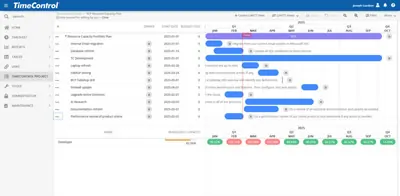
Today, HMS’s clients span every continent and industry, from biotech to government to heavy construction. That diversity has shaped the evolution of TimeControl and its variants, including TimeControl Industrial, built for field operations and blue-collar environments, and TimeControl Project, which integrates tightly with project portfolio management tools.
“How do you build software that works for both a 50-person firm and a 50,000-person enterprise?” Vandersluis asks. “The keyword is flexibility.”
The company designs for scale and adaptability. A small business may not need audit trails or complex compliance reports; a multinational must have them. So HMS built those capabilities as configurable options rather than fixed rules. “The data must be auditable,” Vandersluis says, “and the software must be able to adapt. Those two ideas drive everything we build.”
The Secret Ingredient: Everyone Wears Multiple Hats
Inside HMS, culture and process are designed with the same care as the software itself. One of its more unconventional practices is rotating staff between development, support, and implementation roles.
In most software companies, support tickets move up a hierarchy: from a call center to a tech specialist, then to a developer, then finally to someone who can read the source code. At HMS, that chain doesn’t exist. “Every technical call goes straight to the top layer,” Vandersluis says. “Everyone shares or rotates through those roles.”
It’s a system born from necessity in the company’s early years, but it turned out to be a strength. Developers who regularly help customers troubleshoot real-world problems build more intuitive software. Support staff who understand the codebase solve issues faster. Implementation consultants who’ve written the code know exactly how to extend it. The result is a level of reliability and responsiveness that keeps clients loyal for decades.
Keeping Up with the Giants
HMS doesn’t operate in a vacuum. Its software has to integrate smoothly with major enterprise systems from Oracle, Microsoft, and Deltek that power global organizations. That’s both a technical challenge and a moving target.
“There’s no such thing as future-proof,” Vandersluis says. “The platforms we integrate with are always changing. We have to budget time every year just to stay ahead of their updates.”
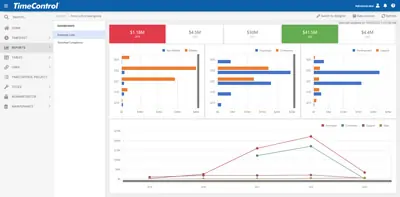
That ongoing effort has paid off. TimeControl is one of the few timesheet systems that can link simultaneously with multiple project management tools, from Microsoft Project to Primavera to Birdview PSA, as well as ERP systems like SAP and Oracle Financials. For companies that run complex technology stacks, that kind of interoperability is critical.
The “Heuristic” Philosophy
The name HMS stands for Heuristic Management Systems, and the word heuristic—meaning learning through experience—is a perfect fit for a company that has thrived by adapting.
“It’s interesting,” Vandersluis says, “that the software industry today is obsessed with machine learning and AI, when we’ve had a popular AI term in our name since the early ’80s.”
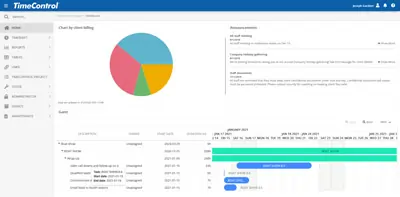
That philosophy shows up everywhere in the company’s evolution. Over forty years, HMS has learned, often directly from clients, that one-size-fits-all software doesn’t work. “A timesheet is not the same thing for everyone,” Vandersluis explains. “Different parts of an organization see it through completely different lenses.”
Rather than force conformity, HMS built a framework that allows customization at every level: fields, approvals, calculations, and reports. That adaptability, combined with almost obsessive reliability, is why the company’s client retention is so high.
Reliability as a Brand Promise
If there’s one word that keeps showing up in client testimonials, it’s reliability. HMS didn’t stumble into that reputation; it built it deliberately.
“For almost 40 years, one of the key elements of our mission statement has been that every client will become referenceable,” Vandersluis says. “Being reliable isn’t just surviving for decades. It’s making sure the solution we created actually solves the problems clients bought it for.”
That long-term focus has turned satisfied customers into advocates. Many of HMS’s biggest accounts came from referrals. “Gaining referrals so often for new clients is one of the proudest elements of our company,” Vandersluis says.
Four Decades In, Still Building
Forty years is an eternity in software. Companies have come and gone through countless technology waves, from mainframes to mobile apps to AI, but HMS has stayed relevant by treating change as routine.
“There are always exciting things on the way,” Vandersluis says. The next major release of TimeControl will bring enhancements across all editions: TimeControl On-Premise, TimeControl Online, TimeControl Industrial, and TimeControl Project. “We’re adding features to our mobile app and integrating with at least two new project management tools,” he adds.
That steady rhythm of improvement keeps clients confident that TimeControl will grow with them, not lag behind.
The Bigger Picture: Why Time Still Matters
What’s easy to miss in HMS’s story is how foundational time tracking actually is. Behind every project plan, every budget forecast, and every payroll run lies a simple question: how are people spending their time?
Organizations that treat time data as a nuisance, something to collect just to cut paychecks, end up blind to where their real costs and bottlenecks lie. HMS built its business on the opposite belief: that time data, when collected accurately and shared intelligently, becomes a strategic asset.
It’s a philosophy that resonates especially in today’s hybrid, project-driven economy, where work crosses departments, countries, and contractors. The ability to pull unified insights from a single timesheet entry isn’t just efficient; it’s competitive.
Legacy and Longevity
When Vandersluis founded HMS, he couldn’t have imagined that the same company would still be thriving 40 years later in an industry known for reinvention. But maybe longevity was baked in from the start.
HMS didn’t chase trends. It solved specific, recurring problems for organizations that depend on precision and accountability. It built relationships that lasted decades and partnerships that weathered countless technological shifts. It treated every client as a long-term reference, not a transaction.
And it never stopped learning.That’s what makes HMS Software more than just a software publisher. It’s a reminder that in business, as in project management, progress comes not from rushing ahead but from paying close attention to where the time really goes.
Meet the leader behind the success of HMS Software
Chris Vandersluis is the Founder and CEO of HMS Software, the company behind TimeControl, one of the world’s most recognized project management systems. An economist trained at McGill University in Montreal, Chris has built a reputation as a global voice in project management and enterprise timekeeping. His work has been published hundreds of times in outlets such as Fortune Magazine, Heavy Construction News, Microsoft’s TechNet, and the American Management Association’s Handbook of Project Management. He also wrote the Technology Trends column for PMI’s PMNetwork and contributed regularly to Computing Canada. Listed in Marquis Who’s Who in America, Chris is a sought-after speaker at project management and technology conferences across North America, where he shares insights drawn from decades of helping organizations improve performance through smarter time and resource management.
Search Magazine
Latest Listings