>>
Industry>>
Clean energy>>
China on Cusp of Green Aluminu...China on Cusp of Green Aluminum Boom as Smelters Shift to Clean Power
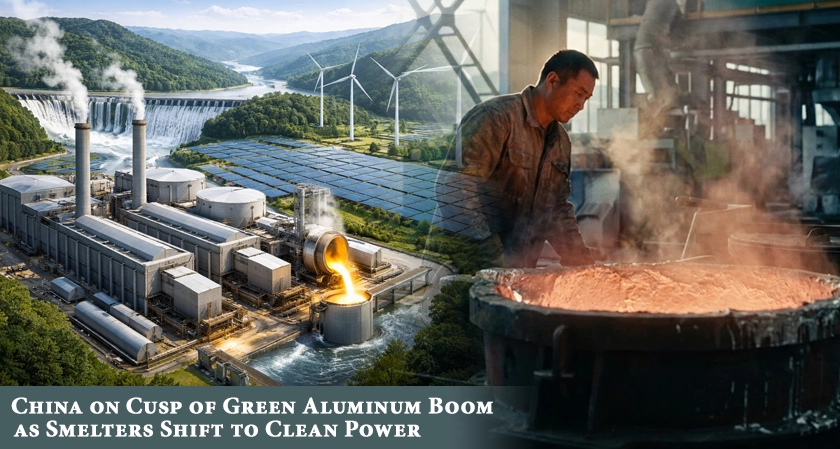
China is pursuing policies to spur aluminum smelters to run on clean electricity. With a hard cap on coal-based capacity, the sector is shifting to renewables-rich regions, potentially unlocking a green aluminum boom.
China, which produces about 60% of the world's aluminum, is on the cusp of a green aluminum boom as government policies push smelters to run on clean electricity. The country has capped total smelting capacity at 45 million tonnes and is relocating nearly 30% of its production roughly 13 million tonnes to provinces rich in hydropower, wind, and solar, such as Yunnan, Sichuan, and Inner Mongolia.
The shift is driven by Beijing's 2025–2027 Aluminium Industry Action Plan, which mandates that over 30% of primary aluminum capacity meet benchmark energy efficiency levels and that clean energy account for more than 30% of power use. New smelters in regions like Yunnan are being designed around hydropower and integrated renewable generation, with the local grid's carbon footprint just one-fifth the national average. A leading private producer expects to cut its emissions by two-thirds after completing a new facility in Yunnan backed by solar and wind investments.
The timing aligns with surging demand from electric vehicles, solar panels, and power grids. Analysts estimate aluminum consumption from these sectors could rise 40% by 2030. However, the capacity cap means supply cannot easily expand, creating a structural deficit that has pushed prices above $3,000 per tonne and created a premium for low-carbon "green" aluminum.
European carbon tariffs are adding pressure. The EU's Carbon Border Adjustment Mechanism favors green aluminum, giving Chinese producers with verified low-carbon credentials advantage. This has accelerated the search for clean power deals through green certificates and direct procurement.
Industry experts see China's approach as a blueprint for heavy industry decarbonization. By building renewables-integrated clusters, the country is demonstrating that electrification and automation can be competitive advantages, not compromises. The result is a fundamental redesign of one of the world's most energy-intensive industries, positioning China to lead the global green aluminum market.