Innovative Companies to Watch 2026
Lucas Piccinin, NetConv Shop Founder: “NetConv Shop gives sellers real visibility into the freshness and flow of their ecommerce operations. That transparency directly affects how they market and price products, helping them highlight freshness, reduce waste, and increase turnover.”
The Silicon Review
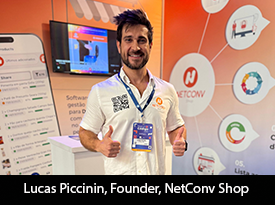
NetConv Shop began with a clear goal: to make online grocery sales more transparent and efficient. Founded in 2015 by Lucas Piccinin in Cuiabá, Brazil, the company started as a small grocery e-commerce venture. Within a year, Lucas and his partner Fabian, now the lead software engineer realized a serious gap in the online grocery industry. Customers had no way to know how fresh their products were. That insight changed everything. In 2016, they built a pricing tool that automatically lowers prices as products get closer to their expiration date. The goal was not just to increase sales but to reduce waste and make food more accessible. That idea became the foundation of NetConv Shop, a software platform that helps supermarkets and dark stores manage perishables with transparency and precision. Today, NetConv Shop provides a complete digital ecosystem with two mobile apps and a web panel. One app is used to host virtual stores, while the other supports daily operational tasks. The web panel handles administrative management. Together, these tools give retailers real-time control over freshness, inventory, and pricing, helping them cut losses and keep more food in circulation.
With major retailers like Walmart and Carrefour as key prospects, NetConv Shop is positioning itself as a global force in smart grocery management. What began as one entrepreneur’s idea to sell groceries online has evolved into a mission-driven company that helps supermarkets operate efficiently, waste less, and feed more people.
In conversation with Lucas Piccinin, Founder of NetConv Shop
NetConv's vision is to "standardize the quality of perishable products sold online." How does your platform's unique focus on real-time expiration dates create a new standard of trust and transparency that did not previously exist in e-commerce?
When we looked at why customers hesitate to buy groceries online, it all came down to trust. People can’t see what they’re buying, and freshness is everything when it comes to food. Most supermarkets try to use the same stock for both in-store and e-commerce sales, which sounds efficient but actually breaks transparency. Here’s why: an item that appears online with a certain expiration date might already be sitting in someone’s cart at the physical store. That makes it impossible to guarantee accuracy in real time.
We decided to flip that logic. Our e-commerce operations use a dedicated inventory—separate from in-store stock—so the information customers see online always matches what’s truly available. That single decision became the foundation for real transparency in online grocery. It turns what used to be a blind spot in e-commerce into a measurable, trackable standard of freshness.
You describe your mission as exploring "the connection between supply and demand to combat waste and hunger." How does the intelligent pricing tool directly operationalize this mission, turning potential food waste into revenue for businesses?
We realized that products nearing expiration could be grouped and redirected to audiences chosen by the supermarket—people who are happy to buy good food at a lower price. That insight led us to create the HUNGER PASS, a feature that allows those in need to access discounted items through a special category, giving supermarkets a way to fight hunger locally and globally.
At the same time, our intelligent pricing tool automatically adjusts prices as products approach expiration. Instead of ending up as waste, those items become sales opportunities. This creates a win-win: supermarkets recover revenue from what would have been losses, and consumers get affordable fresh food.
Your platform integrates everything from a custom darkstore and marketplace connections to automated banking. How does bringing all these functions into a single system solve the core operational inefficiencies that plague sellers of perishable goods?
Selling perishable goods online is complex. To solve it, we had to be inside the operation, not just observing from the outside. We started with static algorithms, and then evolved to machine learning models that identify seasonal patterns and sales behavior. Eventually, we layered in AI that connects to broader data sources beyond retail—so our system can make smarter, more predictive decisions.
On a day-to-day level, the platform automatically flags expired products, generates replenishment lists that balance stock against demand, and keeps dark stores synced with marketplace channels. Orders flow through a single system that also updates customers in real time. To simplify financial control, we added automated payment and acquisition services—available in select countries for now—to make transactions smoother and more traceable.
What this really means is: every piece of the operation, from stock to sale to settlement, is connected. That’s how inefficiency disappears.
Beyond technology, you emphasize "personalized and humanized support." Why was building this kind of team culture essential to achieving your company's broader mission of reducing waste and empowering businesses?
Every supermarket has its quirks—legacy systems, local habits, different comfort levels with tech. We knew from day one that software alone wouldn’t solve that. So we built a team that provides hands-on, personalized guidance for every client.
Our goal is to make onboarding intuitive and the experience genuinely supportive. That culture matters because trust doesn’t just come from transparency in data—it comes from people who stand behind the technology. When our clients feel confident using the system, the mission takes root: less waste, better operations, and stronger businesses.
Connecting to marketplaces like iFood is common, but you help businesses "stand out" on them. What specific competitive advantages does a seller gain by using NetConv that they wouldn't have with a standard marketplace integration?
NetConv Shop gives sellers real visibility into the freshness and flow of their ecommerce operations. That transparency directly affects how they market and price products, helping them highlight freshness, reduce waste, and increase turnover. The built-in AI continuously adjusts pricing and product assortments based on business goals, whether the focus is growing market share, staying competitive, or improving profitability. It also makes working capital more efficient. With stock levels closely aligned to demand, sellers no longer need to carry the costs of large displays or excess inventory that serve both in-store and online operations.
Another major advantage is how it converts reverse logistics costs into revenue. The platform identifies products close to expiration and helps sell them before they go to waste. Its automated replenishment tool analyzes sales turns, expired items, and even failed purchase attempts to detect trends and restock intelligently. NetConv Shop helps sellers cut waste, improve margins, and run their operations more efficiently from start to finish.
What does the future hold for your company and its customers? Are exciting things on the way?
The next few years will bring a major shift in how consumers and retailers interact around perishable goods online—more transparency, more efficiency, and less waste. For NetConv Shop, the goal is to stay ahead of that curve. That means constantly testing, developing, and refining new features while paying close attention to what customers are saying and where they’re struggling. The exciting part is what this leads to: a world where waste is dramatically reduced, efficiency is higher, and we find smarter, more affordable ways to tackle hunger on a global scale.
Lucas Piccinin, Founder
“Our e-commerce operations use a dedicated inventory—separate from in-store stock—so the information customers see online always matches what’s truly available. That single decision became the foundation for real transparency in online grocery. It turns what used to be a blind spot in e-commerce into a measurable, trackable standard of freshness.”
Search Magazine
Latest Listings