>>
Other>>
Press release>>
Analysis: A Potential Recessio...Analysis: A Potential Recession is Already Sending Shock Waves around the World
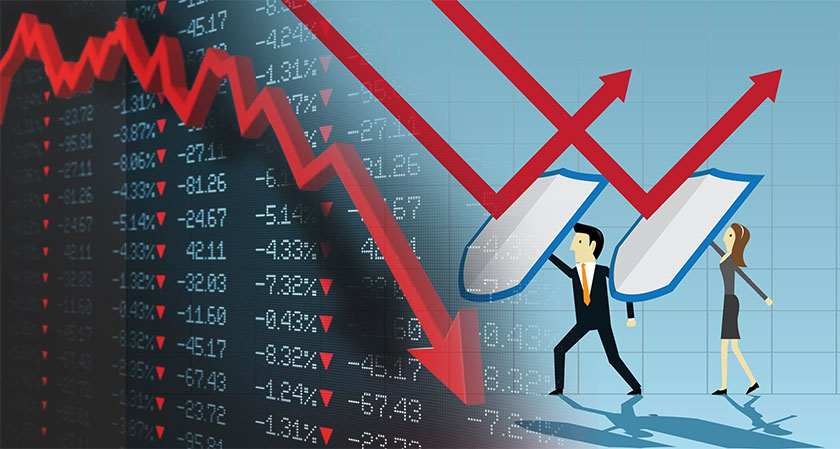
The recession of 2008 was triggered by the collapse of the United States Housing Market and affected the global economy. Investment banks collapsed, rendering people’s life savings worthless. It left millions without a job or a house. But the economy recovered and was back on track to reaching pre-recession levels and things did start to look bright. However, recent trends in various markets are increasingly signaling an economic downturn. Various experts have been divided over the extent and severity of the oncoming economic slowdown. While some believe it is just that, a slowdown, others think it would be as bad as 2008.
Various leaders are divided over formulating policy decisions that would justify the fears of a looming recession. The patterns and direction in which the market is headed are largely determined by the buying and selling patterns of investment institutions and individual investors. Germany, the economic driver for much of Europe saw its Gross Domestic Product plummet in the second quarter of this year and it is expected to continue in the third quarter. Meanwhile, the curve for the yield for US bond is observed to be inverted. What it means is that the cost of borrowing money for the United States is lower over the long term. This is a generally accepted sign of an oncoming economic recession.
In Asia, China’s corporate, government and household debt has now risen to over 300% of the GDP and its economic growth has slowed down to 6.2% in the second quarter, which is the least in the last quarter of a century. This is due to the country’s rapid expansion fueled by borrowing. Amid the ongoing trade war between China and the United States, there seems to be a deadlock and none of the two sides is willing to give an inch over to the other. Recent observations have also pointed to currency manipulation attempts by China.
India, the other Asian economy that was rapidly emerging has seen many of its industries face increasingly high debts. Indian industries of banking, manufacturing, telecommunications, retail, automobiles, aviation, and FMCG among others have seen massive debts. Moreover, a messy Brexit would also serve to hamper numerous markets and industries in Europe and the varying tariffs imposed by the Trump administration on Chinese imports does not seem to be helping the situation either.
Dangers of recessions are often ignored until it is too late. Its consequences could have far-reaching effects on economic activities and the global problem of increasing income inequality. During economic downturns, the parts of the population on the lower rung of the economic ladder, the most vulnerable ones could face severe economic hardships which may entail the loss of jobs as well as houses due to non-repayment of mortgages. Moreover, the problem would be intensified in light of the fact that these people usually lack the resources or the skills to adapt and take up new opportunities. In a world that is more connected since the last decade, the danger is especially acute because we have not completely recovered from what happened in 2008.
Recessions happen largely due to a widely accepted fact that eventually turns out to be false. It was the dot com bubble in 2000 and the housing market bubble in 2008. Investors failed to see the direction in which things were headed until it was too late. In such circumstances, businesses limit their investments that could decrease incomes and increase layoffs and suspend new recruitment.
Avoiding a recession or at least mitigating its effects would require immediate action from governments as well as industries across the globe. Legislators need to formulate financial policies along with business leaders in order to regulate imports, exports, manufacturing, foreign investment, and supply chain dynamics and so on. But globalization and increased connectivity could result in legislations having limited effects since most countries probably lack comprehensive measures to guide and regulate long-term growth. While the cycle of boom and bust is seen to be an on-off affair, recessions in scenarios such as the current ones could have long-reaching repercussions on a large section of the population.
Unlike 2000 or 2008, more people today seem to be aware of the gathering storm cloud, but corporations and governments may be taking too much time to react to it and that may not turn out well. It is far easier to pass preventive legislature to rescue the economy than to formulate complex laws for bailouts and tax overhauls after the damage is done. It is high time governments take a pro-active approach to this than a reactive one.












