>>
Industry>>
Environmental sustainability>>
U.S. Renewable Energy Growth S...U.S. Renewable Energy Growth Surges, But Automation Challenges Remain
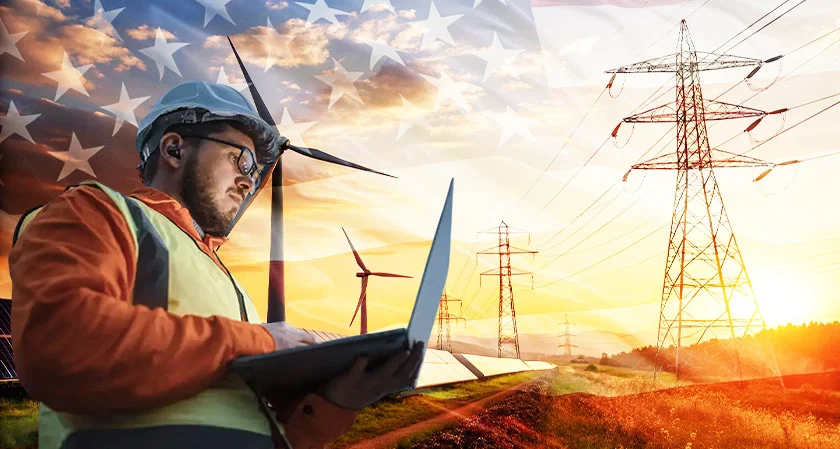
The U.S. added a record 48.2 GW of renewable energy in 2024, with solar leading the charge, but automation hurdles and policy uncertainties could impact future scalability.
The U.S. renewable energy sector saw unprecedented growth in 2024, adding 48.2 gigawatts (GW) of new capacity, with solar accounting for 38.4 GW. This expansion, largely driven by incentives under the Inflation Reduction Act (IRA), underscores the nation’s accelerating shift toward clean energy. However, industry experts warn that automation and policy uncertainties could shape the sector’s trajectory in the coming years. Automation has played a crucial role in scaling solar deployment, from AI-driven site assessments to robotic panel installations. These advancements have significantly reduced costs and streamlined operations. However, integrating automation into grid management remains a key challenge. As renewable penetration increases, balancing supply and demand in real-time requires more sophisticated automation in energy storage and grid distribution. Delays in modernizing grid infrastructure could create bottlenecks, limiting the efficiency of new solar projects.
Moreover, the sector faces potential regulatory headwinds. While IRA incentives have spurred investment, shifting political priorities may impact long-term policy stability. If federal and state regulations become misaligned, permitting delays and investment uncertainty could slow future deployment. Companies relying on automation for scaling operations must remain agile, ensuring compliance with evolving energy policies while optimizing efficiency. For industrial automation firms, the continued expansion of renewables presents growth opportunities. Technologies that enhance grid adaptability, predictive maintenance, and automated energy trading will become increasingly valuable as the sector matures. However, the industry must address interoperability challenges to ensure seamless integration between automated systems and existing energy infrastructure.
While 2024 marks a milestone for U.S. renewable energy, overcoming automation and regulatory hurdles will be critical to sustaining this growth. The next phase of development will require a balanced approach, leveraging technology to optimize efficiency while navigating an evolving policy landscape.












