>>
Industry>>
Legal>>
6 Most Common Causes of Jackkn...6 Most Common Causes of Jackknife Accidents
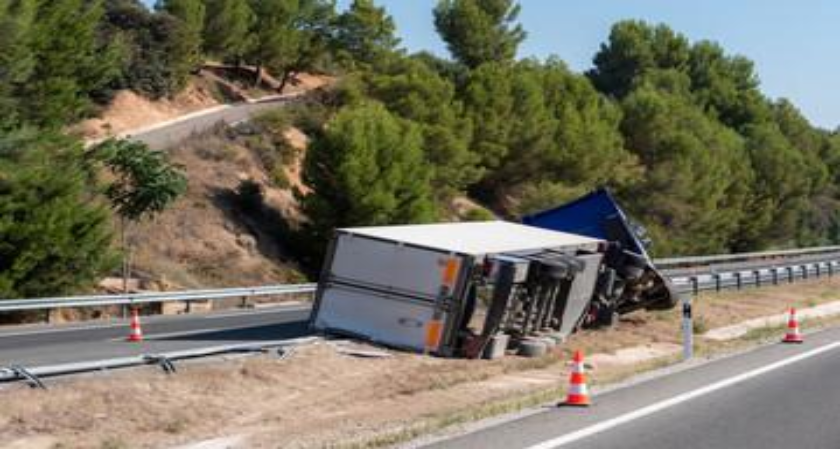
Jackknife accidents happen when a trailer of a large truck deflects sharply against the cab in a V configuration. These accidents frequently cause major havoc on the roads and cause multi-vehicle crashes. These accidents happen due to driver error or malfunction.
Charleston, a historic port town of over 150,000 people, experiences high commercial traffic as a result of tourism, freight, and congested regional roadways. Because of the high volume of traffic, there is a high risk of jackknife accidents in Charleston.
While every crash has a cause, most often, crashes happen due to frequently observed trends that are common across a number of accidents. This article will discuss six of the most common. causes of jackknife accidents.
1. Improper Braking
Improper braking can also cause the force that gets the trailer swinging. Hard braking or uneven braking action between axles creates an unstable pull behind the cab. When the trailer begins to slide, the driver must disengage from directional control almost immediately.
Skids get worse on curves that are tight or roads that are not uniform. Even short loss of traction still gives the trailer a chance to pivot.
2. High Speeds
Speed limits have their purpose, particularly for vehicles that are moving heavy cargo. A truck in excessive speed finds it difficult to stay stable in turns or within a lane. When a driver reacts suddenly in a fast-moving truck, the trailer’s momentum can be pushed outward and cause the vehicle to swing.
Sudden turns also produce rapid weight exchanges that the trailer cannot keep pace with. That misalignment often results in a jackknife.
3. Bad Weather
Rain, fog, and wet roads reduce grip. The issue is worsened by ice or stagnant water. If traction falls, even moderate braking could result in jack-knifing vehicles. Visibility issues make it worse, as drivers will notice hazards later, increasing the chance of sudden braking.
4. Trailers With Uneven Loads
Trailers with incorrect weight distribution react unpredictably on the road. Heavy weight at the rear results in fishtailing, and a side-heavy load will shift during turns and force the trailer of balance.
Overloading increases the momentum, and it’s difficult to stop the truck smoothly. Load errors frequently arise because of a hurried schedule or a improperly secured cargo. Once the balance fails, stability disappears rapidly.
5. Mechanical Breakdowns
The moment brakes fail, and the tires get worn, the coordination between cab and trailer collapses. Lack of maintenance and defects, even if in the simplest of the components, causes dangerous delays in the response from drivers.
Maintenance lapses leave small issues invisible to the driver until they manifest as major risks on the road.
6. Driver Fatigue
Long shifts reduce alertness and slow response time. Tired drivers find it difficult to judge braking distance, lane position, and road hazards in real time. Even a little hesitation on the road gives the trailer more time to swing. Slow reaction time also results in delayed braking, and difficulty in fixing minor slides before they arise.
In conclusion, the causes of jackknife accidents are clear: lack of control, sudden shifts in weight, mechanical issues, and slow response times often lead to severe or fatal crashes. These factors frequently combine under high-speed or poor road conditions, increasing the risk of loss of control. Understanding how these causes develop is essential for improving safety and preventing future incidents.
Key Takeaways
- The slide itself is often initiated by improper braking, and then a jackknife is ignited.
- Heavy trailers are unstable at speed and during sharp maneuvers.
- Weather conditions decrease traction and increase the likelihood of a crash.
- Poor load and mechanical failure weaken trailer balance.
- Fatigue slows down reaction speed and deteriorates skid recovery.