>>
Other>>
Politics>>
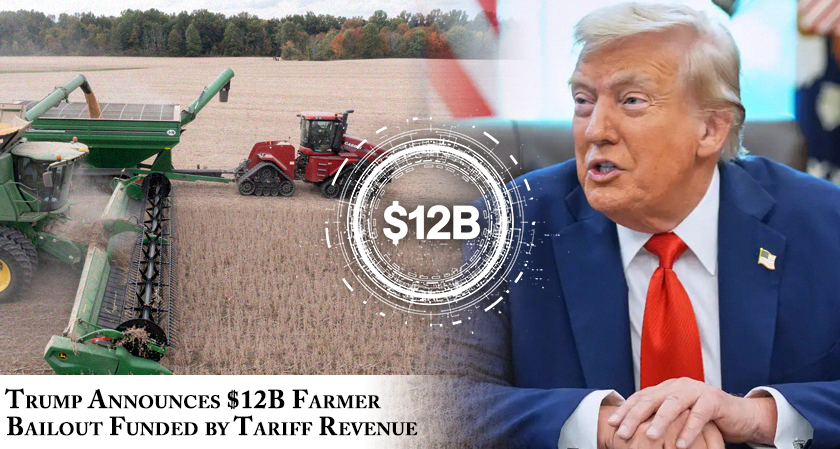
Trump Announces $12B Farmer Ba...Trump Announces $12B Farmer Bailout Funded by Tariff Revenue
The Silicon Review
09 December, 2025
President Trump proposes a $12 billion farmer bailout, with $11B in direct payments to crop farmers, to be funded by federal tariff revenue.
President Donald Trump has announced a proposed $12 billion bailout plan specifically for American farmers, stating the funds will be drawn directly from federal tariff revenue. The package, a centerpiece of his current agricultural policy, includes $11 billion in one-time payments targeted at crop farmers facing market instability. This proposal signals a deliberate administrative strategy to provide immediate relief in the agricultural heartland, while reigniting debate over the executive use of trade policy tools for domestic subsidy and the federal budget implications of such large-scale direct payments.
This plan starkly contrasts with traditional farm subsidy mechanisms funded through congressional appropriations. The Trump administration's model represents a revenue-recycling strategy, directly linking the financial impact of import tariffs to compensatory support for a key constituency. The proposed one-time payments are a critical deliverable intended to address immediate income shortfalls. This matters because it directly ties the economic consequences of ongoing trade wars to a specific administrative remedy, testing the executive authority and economic logic of using customs duties as a flexible pool for discretionary spending outside the normal appropriations process.
For agricultural producers, commodity traders, and federal budget analysts, the implications are both financial and procedural. This proposal necessitates close scrutiny of USDA implementation authority and the stability of tariff revenue streams to fund multi-billion dollar commitments. The forecast is for heightened policy uncertainty in agricultural markets, influencing planting decisions and risk management strategies. Decision-makers must now evaluate the feasibility of this funding mechanism against potential legal challenges and congressional oversight. The next imperative is to assess the plan's impact on global trade relations and domestic inflation, as it could simultaneously support farm incomes while reinforcing the protectionist trade policies that initially contributed to market disruption.
MOST VIEWED ARTICLES
RECOMMENDED NEWS







LATEST NEWS


TOP NEWS
YOU MAY ALSO LIKE

_2025-11-17_06-38-14.webp)


_2025-12-15_12-44-58.webp)


 (1)_2025-10-21_13-35-14.webp)