>>
Industry>>
Clean energy>>
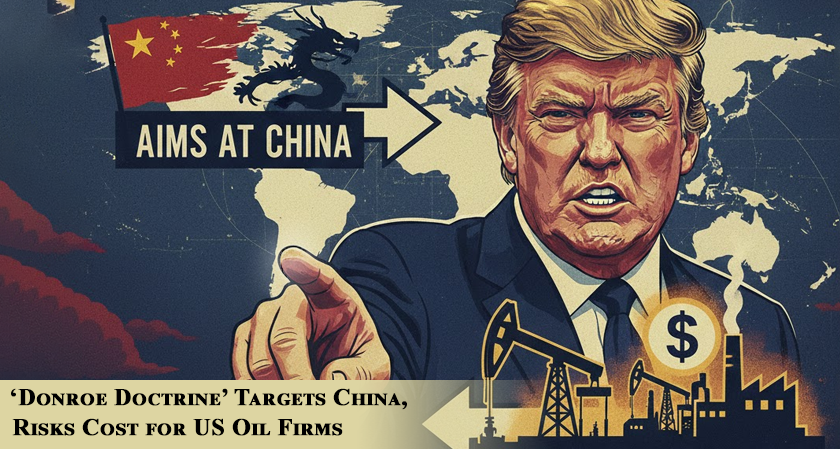
'Donroe Doctrine' Targets Chin...'Donroe Doctrine' Targets China, Risks Cost for US Oil Firms
The Silicon Review
08 January, 2026
Author:
The Silicon Review Team
Trump's proposed 'Donroe Doctrine' takes aim at China, but analysts warn the aggressive trade and energy policy could impose significant costs on US oil and gas companies.
The proposed foreign policy shift dubbed the 'Donroe Doctrine' is crystallizing as a central pillar of the electoral platform, explicitly targeting China's global influence. However, a core analysis reveals that the doctrine's aggressive trade measures, including sweeping tariffs and restrictions, could impose severe collateral costs on American energy sector firms. The policy aims to decouple strategic industries but risks triggering retaliatory actions from Beijing that directly target US oil and gas exports and overseas operations, creating a volatile landscape for domestic producers.
The doctrine’s emphasis on energy independence is paradoxically undermined by its confrontational stance. While promoting domestic production, the potential for a tit-for-tat trade war disrupts global supply chains for critical equipment and could limit access to key international markets for liquefied natural gas (LNG). This matters because the financial health of major US producers is increasingly tied to global export markets, particularly in Asia. A policy that incites retaliation directly threatens revenue streams and capital investment plans, forcing a recalculation of risk in what has been a period of significant expansion.
For energy executives and investors, the implication is a new era of geopolitical risk assessment. The forecast is for increased market volatility and potential project delays as firms navigate the uncertainty. Decision-makers must now model scenarios involving disrupted Chinese partnerships and supply routes, while also evaluating the doctrine’s potential to spur alternative domestic manufacturing. The next imperative is to advocate for clear, nuanced policy that protects national interests without sacrificing the hard-won global position of the US energy sector, ensuring that strategic competition does not become a self-inflicted wound on a critical industry.