>>
Technology>>
Cyber security>>
The Rare Strategist: Why Ammar...The Rare Strategist: Why Ammar Bhaisaheb’s Rare Fusion of Program Mastery and Cybersecurity is the New Global Benchmark for Enterprise ROI
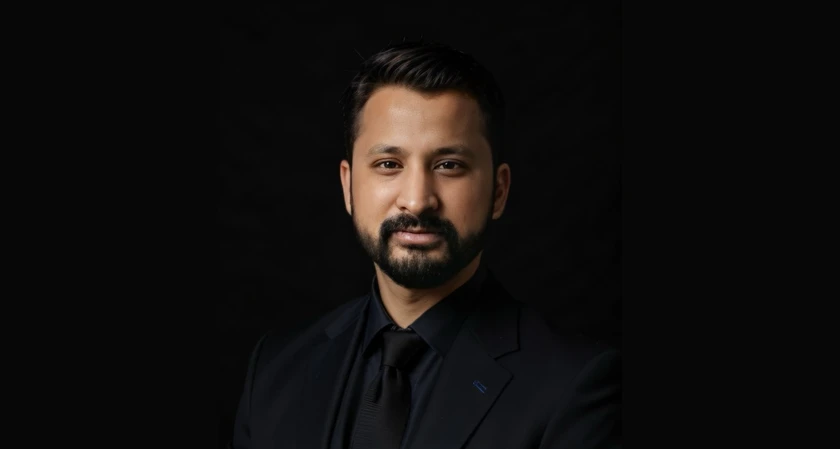
~Gauri Singh
Unlike simple ROI, enterprise ROI considers the entire system or organization when measuring impact, rather than just a single campaign. Overall, one can assess the financial, operational, risk-reduction, and strategic impact of a major initiative across the entire enterprise.
To achieve all of this, however, one needs a blend of program management and cybersecurity knowledge. While many initiatives deliver good outcomes, they often overlook security risks, undermining their value in the long run.
Ammar Bhaisaheb, a program manager and information systems professional, believes there are no half measures to achieve success in this area: “Either you get a program management professional who is really good at leading the programs, but they don't know about the security of the systems. It is very important to know both so you can assist not just in managing the program, but also in ensuring that technical requirements are up to standard.
Bhaisaheb represents the small percentage of individuals who have risen to the very top of the field by mastering the dual disciplines of the Certified Information Security Professional (CISSP), and a Certified Program Management Professional (PgMP). This rare fusion has established a new global benchmark for Enterprise ROI, proving that he is a notable expert whose work is essential for navigating the complexities of modern, regulated digital transformations.
Bhaisaheb has integrated two disciplines into a single practice that guides programs toward secure, high-ROI outcomes. He stands as a rare authority at the intersection of program mastery and cybersecurity, evidenced by a suite of over 20 professional certifications, including the prestigious PgMP (Program Management Professional) and CISSP (Certified Information Systems Security Professional).
This dual expertise enables him to resolve 'business-critical' complexities that could result in the loss of millions of dollars or the disruption of essential healthcare services. He is recognized by industry peers as a leader who consistently delivers unprecedented results in the most demanding enterprise environments.
He says: “To manage complexity in increasingly regulated sectors where breaches and vulnerabilities can be threats, you need programs that avoid significant financial or operational losses.”
But what exactly is program and security leadership? For the former, it goes beyond just management. Bhaisaheb, who is a Certified Information Security Professional (CISSP), as we as a Certified Program Management Professional (PgMP), reveals: “While the project itself and teams can be aligned, leading requires strategic alignment, cross-functional coordination, and risk reduction, and one can’t take any of them for granted. All of them must be balanced and given equal priority. Here, communication and strategy are a must in order to deliver large-scale, high-impact results that the organization needs.”
However, he adds that security leadership is somewhat different: “Overall, the main goal is to protect the enterprise and its digital systems, data, and infrastructure from threats. While technical cybersecurity tasks are the norm, security leadership means that the person in charge must set directions, manage risks, and embed security into every major — and minor — decision. This is especially true when one wants to modernize systems and transform them into digital ones that prove institutional credibility and gain public trust. “
A fusion of both is best in generating enterprise ROI for modernizing information systems. But generally, it’s hard to find both in a leader. Bhaisaheb, who is currently a Senior Engagement Manager at Salesforce, is one of the few people who have this fusion in their repertoire.
He reveals he has always been passionate about technology: “I've been into it since my college years. And it made me want to be part of implementing new technology, helping clients use it better, and saving time. That's the core reason I'm in this profession.”
In 2014, Bhaisaheb transitioned to the role of Senior Project Management Consultant at Global Systems LLC, where he contributed to Wisconsin's Medicaid ICD-9-to-ICD-10 transition, managing testing, integration, risk registers, UAT, and stakeholder communications. Fast forward to today, and he has worked in the medical field for years, all while maintaining versatility in the roles he takes on to support people-first efforts.
Bhaisaheb admits to the human aspect of working in health as his main motivator: “I work on projects that are more mission-driven. I work for nonprofit clients that are basically hospitals saving children from cancer. They don't charge anything. So helping those clients is also something that I look forward to and love about my profession.”
However, being a program leader meant high stakes, with human lives at risk. Bhaisaheb recounts the difficulty and meticulousness required of his work and points out the fears and anxieties that typically come, saying: “What if the new system doesn't work? When should we transition from an old to a new system, right? What if the new system doesn't work out? How are we going to fall back on one of the clients that I work for? Their system was business critical.”
He further clarifies: “If a system went down, a company would lose millions of dollars. So, figuring that out, like business continuity, how would that work is one of the unique challenges of my profession, and I really strive in that and work with the clients to make sure that we have fallback plans which we might not have to use, but in case something goes down, we have those ready to go.”
His leadership led him to join Global Systems LLC, where he eventually became the Program and Senior Project Manager. Through his program and security leadership, he achieved several milestones for the company.
For one, he served in a pivotal leadership role on a multi-million-dollar Regulatory Services Systems Modernization program, essential to the operational integrity of Texas HHSC’s regulatory infrastructure.
Rather than merely managing a transition, he acted as the strategic architect for the Texas Unified Licensure Information Portal (TULIP), a mission-critical system that successfully eliminated systemic oversight gaps in state healthcare licensing. He oversaw the transition of legacy, paper-based processes — which typically cause pitfalls due to numerous oversight gaps — to a fully online system.
Bhaisaheb recounts: Over 20 outdated regulatory applications found their home in a more unified, secure platform. As a benchmark project, it was a stellar success. It achieved an anticipated ROI exceeding 200% for over 10 years. It also met the stringent security standards set, and has since evolved into a proven model referenced by other state agencies. It is something I am very proud of as an illustration of why you need to have these integrated skillsets.”
The Texas HHSC Regulatory Modernization Program is an important, ongoing project by the Texas Health and Human Services Commission and another example of how this fusion can play out.
Bhaisaheb took one of the leads on as a security and program leader. As a collaborator on the project, he ensured that regulatory systems were updated, streamlined, and digitized to promote efficiency, user-friendliness, and security.
This effort was more than necessary. Bhaisaheb says: “Regulatory systems, if not modernized or updated to the most optimized version possible, can negatively affect public safety and access to human health services. In an initiative to address structural weaknesses, the Texas HHSC benefits from the ease of a more modernized system and regulates critical functions with its long-term care facilities, health providers, and services.”
This exact program showed how Bhaisaheb’s skills as both a security and program leader were necessary. For instance, he had to collaborate across 30+ cross-functional teams, including architects, analysts, developers, and vendors. He implemented a matrix team management system that led to a more agile methodology for all his successful projects.
He recalls: “Agile methodology was needed to ensure the team was as much of a unified system as the project they were attempting. As the project progressed, I led the team with daily scrum meetings, sprint planning, and retrospectives as they handled full procurement cycles. It was also a norm to collaborate with senior executives to make it happen, including CIOs, PMO directors, and commissioners.”
Bhaisaheb outlines how crucial project management and leadership are to the difficulty of the work: “Complexity is something that stands out in my profession. So if something goes wrong, the impact is huge. And when I say you just lost millions of dollars because you worked on one of the regulatory systems for one of our clients, if that went down, the hospitals would not have been able to get their licenses, and the nurses would not have been able to provide the care that they need. There is massive complexity, and we are solving and planning for those.”
In addition, Bhaisaheb applied this expertise during his time at Global Systems LLC on the Texas Health and Human Services Commission (HHSC) Regulatory Services Systems Modernization program. The consolidation was much-needed — manual processes introduce guaranteed delays in the workload, which expose the project to additional risks and threats, especially to the integrity of any information system.
With his project management, more than 20 outdated applications were digitized and modernized into the unified Texas Unified Licensure Information Portal (TULIP) on the Salesforce Government Cloud platform.
Bhaisaheb recalls: “The project transitioned legacy paper-based licensing and reporting processes for hospitals and long-term care facilities to a secure, online system. By embedding security standards throughout, the initiative met regulatory requirements while enabling efficient operations.”
Bhaisaheb’s work also had a significant economic impact, with a projected ROI exceeding 200% over 10 years, driven by reduced administrative overhead, improved compliance, and operational efficiencies.
He says: "Ultimately, what happened was, after the project was done, everything was 100% online, and when I calculated the return on investment after the project was done, it was about 200% over the 10 years."
These outcomes position secure program leadership as a driver of strategic value, offering a model for organizations seeking transformations that balance innovation, security, and financial returns.
As complexity became a major part of Bhaisaheb’s everyday work life, he was offered another major role at Salesforce, where these skills were in high demand. As a cloud-based software company, Salesforce provides applications in customer service, analytics, and artificial intelligence, among others. Founded in 1999, Salesforce has become one of the world’s largest enterprise applications and the global leader in AI-driven CRM platforms.
At Salesforce, Bhaisaheb manages a portfolio of cross-cloud programs with a Total Contract Value (TCV) ranging from $1M to over $10M, placing him in the top percentile of practitioners in his field.
In his role, he also oversees the full lifecycle of a project, from discovery to execution and hypercare. During this time, he also champions rigor in assessing risks, issues, and dependencies, making sure that everything is delivered on time and within budget.
On this project, both project and security leadership helped Bhaisaheb generate over 1,200 leads, resulting in $430,000 in incremental revenue and an additional projected $50M in revenue for 2024-2025.
At the same time, he built trusted relationships with the C-suite, ran Steering Committees and QBRs, and translated strategies into actionable roadmaps with clear KPIs and value-realization metrics. He went beyond his role and managed to mentor junior PMs, Scrum Masters, and engagement managers.
Overall, Bhaisaheb also contributed to a broader industry by pioneering reusable assets such as estimation templates, governance frameworks, and teaming agreements that set collaborative ground rules for engagements, which have since been adopted by regional teams.
With his leadership skills, Bhaisaheb has set the standard for managing high-stakes, cross-cloud programs. For an industry leader like Salesforce, it signifies that Bhaisaheb commands significantly high remuneration, consistent with those who have risen to the very top of the field.
It’s clear that a dual expertise in both program and security leadership is essential to gaining enterprise ROI. Its value is unparalleled: when both are used hand in hand, projects are more likely to succeed.
With program leadership, Scrum is one crucial element. Out of twenty-five certifications, Bhaisaheb has enough Scrum credentials to judge and train other Scrum professionals with his Scrum Foundations Educator certification.
He says: “Instead of building everything at once, each phase is managed by “sprints' to get the project where it needs to be. Roles are assigned, and with large transformations, Scrum helps teams respond to efforts.”
At the same time, security leadership is essential to protecting the project from threats. To address this, Bhaisaheb curated an edge with his Certified Information Systems Security Professional (CISSP) from ISC, as well as all nine of his Salesforce certifications in artificial intelligence, data cloud consultancy, and administration.
Other colleagues have taken note. Chris Bunton, Director of Infrastructure Operations Services and CyberSecurity CISO at Texas Workforce Commission, observes: “Ammar goes out of his way to ensure customer issues are addressed timely and accurately, even when it means working into the wee hours of the night and figuring out issues.”
Susan Wilson, Project Manager at Texas Health and Human Services, agrees: “His planning and organizational skills are phenomenal. These skills are complemented by his leadership — he leads by example. As a member of his team for several years, I learned to implement projects on time and within budget. Ammar’s strong emotional intelligence encouraged us to do our best, and we excelled.”
Bhaisaheb reflects on these comments with humility, expounding: “I'm often described as ‘calm under fire.’ In high-stakes situations—tight timelines, system issues, multi-million-dollar go-lives—I stay composed, professional, and solution-focused. Clients see me as a trusted advisor even in crisis.
“Ask any program manager, and they’ll tell you their focus: timelines, budgets, and deliverables. Meanwhile, cybersecurity specialists prioritize threat mitigation and compliance.”
Bhaisaheb’s primary achievement is his original, security-focused risk management framework, a business contribution of major significance across the industry. He created a structured governance methodology that scored and prioritized threats, making security a pivotal part of every project phase. This methodology has proven essential for protecting the operational integrity of multi-million dollar systems and preventing massive financial losses. By proving that security and management can work together, the system was reused across various projects, all of which succeeded.
All in all, program and security leadership are must-haves in providing more opportunities for governance enhancement and substantial ROI in complex environments. Guided cybersecurity expertise helps craft a framework for secure, outcome-oriented enterprise initiatives. However, the effectiveness of security and strategic planning can only be achieved with project management skills.
An approach that blends both offers practical guidance for leaders navigating regulated transformations, where economic success depends on mitigating risks while achieving business alignment.
Bhaisaheb executes both skills well and has led programs to success. It’s clear that there’s more to come from his work — and it’s clear he’s already setting the standard for program management and cybersecurity together. His portfolio scope has reached $13.09M, proving the success of his approach. For program and security leadership, Bhaisaheb is one notable expert to look forward to.
About the Author: Gauri Singh is a content contributor with experience writing business and technology-focused articles for professional audiences. Her work covers leadership profiles, operational strategy, and emerging trends across industries. Gauri has contributed to long-form editorial content designed to present complex topics in a clear, structured, and accessible way. She works closely with editorial teams to ensure accuracy, clarity, and alignment with publication standards..