>>
Industry>>
Real estate>>
From Treasury Desks to Multi-M...From Treasury Desks to Multi-Million-Dollar Builds: How Ghanaian Entrepreneur Prince Asiamah-Mintah Built a Debt-Free Real Estate Empire Using Pure Equity Financing

- Sashindra Suresh
Ghana currently has a housing deficit of over 4 million homes, which is increasing. For most developers, bridging that gap means turning to commercial banks, where lending rates often range from 16 to 17 percent. Debt-financed construction has become the standard in this environment — but it's not the only way to build.
Prince Asiamah-Mintah, founder of Ashmint Properties, does things differently. He relies on equity funding rather than bank loans. His model eliminates interest-bearing debt by recycling capital—channeling sales revenue from completed projects into new ones. This approach forms part of a treasury-driven real estate development system he has developed, which applies liquidity management, balance sheet strategy, and capital recycling to execute projects without reliance on external debt.
Mintah explains: "In banking, you learn that cash flow is everything—you have to know your position at all times, anticipate shortfalls, and never overextend. My experience in both treasury and liquidity management has enabled me to operate without bank loans. And I’ve carried that discipline into real estate”
“He adds: “Our model is based on equity funding, which eliminates interest costs, thereby offering a stable financial foundation. This approach allows us to remain competitive, even in high-interest environments."
That foundation draws directly on more than a decade of banking experience. After earning a degree in Banking and Finance, Mintah spent several years in treasury roles at Zenith Bank and GHL Bank, where he focused on liquidity management, balance sheet strategy, and risk management. These disciplines now form the foundation of a development methodology he created, distinguishing his model from traditional real estate practices. Those same disciplines—normally applied to financial portfolios—would later shape how he approached construction.
The shift started with a staff mortgage facility during his banking years. That option introduced him to the mechanics of construction loans and equity release. He used it to build a house on land he already owned, then put the completed property on the market to test demand. It sold within months at a profit.
He repeated the cycle twice. After the second sale in 2020, he left the banking industry. He formally registered Ashmint Properties in 2022.
Mintah recalls: "It was through a staff mortgage facility that I first became familiar with construction loans. I built my first house, sold it within a few months, and after repeating the process with two more properties, I began to see the potential of property development.That realization led me to leave the corporate world and establish Ashmint Properties."
Looking back, he further says: "That single decision has shaped everything about how we operate."
Today, Ashmint Properties moves with no external debt, holding a $3 million property portfolio and generating $2.85 million in revenue for 2024. The company employs six permanent staff and between 75 and 90 project-based workers.
Mintah's model depends on capital recycling—reinvesting sales proceeds into new projects to maintain flexibility and avoid interest costs.
He says: "This structured capital recycling system, developed from treasury principles, enables continuous deployment of capital across multiple developments without reliance on leverage."
Mintah adds: "Currently, we manage about 18 active projects, all of which are funded entirely by equity. Since the model relies on sales rather than rental income, slow periods without sales can create serious cash-flow challenges. Managing unsold inventory is crucial, and it requires constant attention and the kind of disciplined financial oversight I developed during my time in banking."
This level of parallel project execution is enabled by a liquidity-driven sequencing model he developed, combined with disciplined capital allocation, and that structure is particularly relevant in his market.
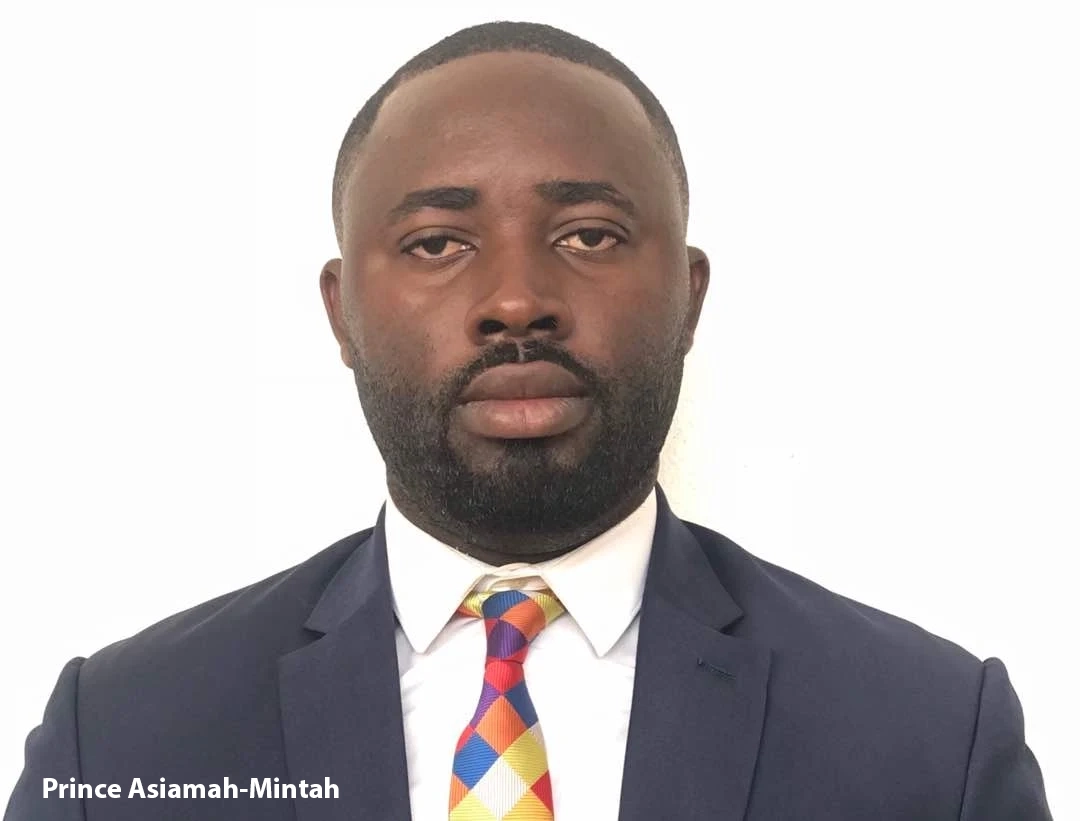
Mintah reveals: "Most developers here rely on high-interest commercial bank loans at 16 to 17 percent, but I finance everything with equity."
David Hanson, a UK-based accountant and CEO of Divine Property Services Ltd, has collaborated with Mintah on property development and cross-border investor engagements.
Hanson observes: "Mintah's approach to financial governance is structured and accountable—something you don’t often see in emerging-market property development. He uses transparent reporting systems, controlled spending, and strong project management across Ghana and the UK in his work. That shows real attention to compliance. As an accountant, I appreciate how carefully he manages risk and controls costs."
The housing deficit in Ghana is a problem for property developers. Mintah’s debt-free approach provides a viable solution by eliminating interest payments and establishing a stable pricing structure that could encourage other property developers to use equity funding.
Mintah's academic contributions form part of a growing body of research on alternative development finance.
His 2025 publication, “Debt-Free Property Development as a Model for Financial Sustainability,” was published in the Sarconcill Journal of Entrepreneurship and Business Management. His work shows that equity-funded developments offer better financial sustainability and ROI than debt-funded developments, especially in high-interest, emerging markets.
As he says about the study: "Equity-funded developments offer better financial sustainability and ROI than debt-funded developments, especially in high-interest, emerging markets."
His published work further formalizes this system he developed, positioning it as a repeatable model for debt-free real estate development in high-interest emerging markets.
This publication is of major significance, demonstrating that debt-free development can be more financially sustainable than debt-funded development, especially in markets like Ghana’s, which are considered volatile.
Mintah’s approach combines his business strategy with research-supported information to promote the financial sustainability of equity-funded developments. His publications and presentations help initiate discussions among property developers in emerging markets about non-leveraged strategies.
Mintah's contributions to the field extend beyond his business model. His scholarly contributions consist of seven peer-reviewed articles published between 2021 and 2025.
They focus on the following: liquidity management techniques, sustainable construction funding models, and self-funding models for real estate development. The articles provide valuable information on the financial sustainability of emerging markets.
His article on sustainability discussed the benefits of using green bonds and sustainability-linked loans. This provides theoretical backing for the use of solar components, biodigesters, and energy-saving construction materials.
The leadership study identified inspirational motivation and individualized consideration as predictors of business growth — principles reflected in his management of over 90 staff.
Raymond Oppong-Dapaah, CEO of Ultranet Company Limited, has worked with Mintah on acquisition and advisory matters. He highlights: "Mintah's development philosophy is marked by strategy and financial prudence. His focus on cost management, sustainability, and value creation for assets is a reflection of his good financial sense and deep understanding of the industry."
Mintah has also served as a peer reviewer for 10 academic manuscripts — five under APEC and five under SARC — covering topics such as lean methodology in reducing construction costs, risk control in construction project management, cost estimation in building projects, and governance oversight in project implementation.
His peer-reviewed contributions include a range of topics, including lean construction principles, risk management, cost calculation, and governance for project execution.
The emphasis on financial prudence, sustainability, and cost-effectiveness presents a model that deviates from the traditional debt-financed development paradigm in Ghana. Mintah’s operations apply treasury and financial risk strategies drawn from his banking background to construction project delivery.
That influence also extends beyond his own business, offering an actionable model for other developers in Ghana to adopt similar operational practices that emphasize financial stability and long-term growth.
His industry recognition also provides an external benchmark for the company's approach.
The award for Ashmint Properties in both the Upper Income and Middle Income Residential Developer categories at the Ghana Property Awards in 2025 demonstrates Mintah's capacity to cater to diverse market segments. This achievement, far from being an isolated personal success, demonstrates the generalizability of his business model to suit different income groups.
Winning both categories demonstrates the potential of a debt-free development model to provide benefits to different market segments while maintaining financial viability and competitiveness.
Operationally, Mintah emphasizes structural integrity and process discipline. A turning point in his life was when a neighbor filed a court case to stop the construction of one of his properties. The case had dragged on for more than a year. This delayed the construction work.
He says: "One of the biggest challenges I faced was the neighbor seeking to stop work near their property. Although the court ruled in my favor, I learned many things from the case. I learned the importance of promptly registering properties under Ghanaian law to safeguard progress. More importantly, it reinforced the principle that structural integrity should never be compromised — no matter the pressure, cutting corners on quality is never acceptable."
He says the case taught him to move faster on property registration and to trust his engineering team even when timelines get tight: “It influenced internal processes and underscores how legal and regulatory realities shape project execution in emerging markets.”
John Alfonso Coleman, Group Commercial Director of Dolphin Telecommunications and a Chartered Fellow of the British Computer Society, purchased a four-bedroom Ashmint property in Community 18.
He observes: "Throughout the development and handover process, adherence to engineering principles and structural integrity was evident. Communication was transparent, timelines were respected, and finishing standards reflected careful technical supervision. The methodology demonstrated both discipline and consistency from foundation to completion."
Another factor influencing industry trends is design differentiation.Ashmint designed a two-kitchen house in 2019, which is ideal for the Ghanaian way of life. The house has a main kitchen, also known as the "dry" kitchen, located near the living room, while the "wet" kitchen is located at the back of the house. This style of house has proven popular among property developers.
Mintah observes: "I always try to build a house I would love to stay in, making sure it meets the highest standards of quality. This is the principle that guides me through the construction process.This personal standard guides every decision on-site."
Mintah's design approach includes a two-kitchen layout tailored to Ghanaian culinary habits. The design has been adopted by other developers in Ghana. This house has shown a high level of adaptability to the Ghanaian way of life. This has been incorporated in other houses he has built.
Sustainability features are also part of the property development, including solar power, biodigesters, space planning, among others.The incorporation of these systems indicates a consistency with the themes discussed in his 2022 research on sustainable construction financing.
He continues: "Sustainability is not an afterthought. I am constantly searching for new products that are good for the environment while at the same time efficient. Integrating solar systems and biodigesters is a practical response to modern living needs rather than a marketing feature."
Client demographics reflect both domestic and diaspora demand.
Statistically, approximately 60 percent of buyers are Ghana-based professionals, including chief executives in the oil, telecommunications, banking, and insurance sectors. Others reside in the United States, the United Kingdom, and Europe. Ashmint UK extends its services to diaspora clients seeking support with property acquisition and renovation across jurisdictions.
Mintah also believes: "building relationships rather than just homes is important. This is why I make use of very little direct marketing, as most homes are sold through word-of-mouth based on customer feedback. When trust is established, growth happens naturally."
Yaw Boateng Poku, Chief Executive Officer of Crystal Patisserie Ltd, engaged Ashmint in both Ghana and the United Kingdom.
As he puts it: "My experience as a client in Ghana and later in the UK demonstrated a consistent standard of execution. There was also an unwavering commitment to construction integrity, finishing quality, and contractor coordination. This is significant because it shows an ability to replicate the same design logic and quality controls in two markets and is therefore an important aspect of sophistication and a truly cross-border business model."
Beyond clients and peers, Mintah's broader impact includes employment. Over 90 individuals — permanent staff and contract workers — depend on Ashmint projects for income.
He says: "There's a responsibility to the over 90 people who depend on the business for their livelihoods. Many are daily or short-term workers. That sense of operational duty is a constant factor."
Mintah's business provides stable employment for over 90 permanent and project-based staff — an economic contribution that flows directly from his project pipeline.
Mintah is also affiliated with the ACI Financial Markets Association, which suggests his alignment with professional treasury practice and the governance of the global financial system.
He was also accredited as a member of the Ghana Real Estate Developers Association (GREDA) as of January 2024. These professional memberships further reflect sector integration.
Academically, he graduated with a Master of Business Administration with a focus on finance from Coventry University in 2014, in addition to his earlier degree from Methodist University College Ghana.
Through these layers of treasury discipline, equity-only financing, legal acumen, design adaptation, and employment impact, Mintah has created something more than an ordinary construction company. He has created a financially engineered system that applies banking-grade controls to real estate.
Taken together, these elements reflect a financially engineered approach to real estate development that he has developed—one that integrates treasury-level financial controls with construction execution, positioning him beyond a conventional developer and as the originator of a distinct development methodology.
The model is based on a treasury discipline of financial prudence and operational effectiveness, directly applicable to treasury principles. It offers a practical case study in aligning financial management with construction project delivery.
His shift from a treasury executive to an equity-funded developer indicates a transferability of financial skills across industries. His initial staff-mortgage project has grown into a disciplined model based on liquidity management and reinvestment.
In emerging markets with costly and volatile capital, avoiding leverage can be a strategy in and of itself, one that preserves margins and flexibility to negotiate in the long run.
In the Ghanaian real estate industry, where growth is typically supported by leverage, liquidity management, and reinvestment profiles, structural integrity can help to support growth while also addressing Ghana's housing deficit.
Mintah concludes: "In markets with costly capital, financial discipline is key. The emphasis on trying to avoid too much leverage is really about creating a foundation that can be sustainable over a long period of time, and not so much about restraining growth."
About the Author
Sashindra Suresh is an experienced writer specializing in artificial intelligence, software development, and emerging technologies. With a strong ability to translate complex technical concepts into clear, engaging insights, she has contributed to a wide range of publications and platforms. Her work focuses on making cutting-edge innovations accessible to both industry professionals and curious readers alike.