>>
Technology>>
Artificial intelligence>>
Will machine learning trans...Will machine learning transform the dairy industry? Understanding how AI and data are shaping the next generation of dairy decision-making
The Silicon Review
05 May, 2026
Author:
Dairy Data Warehouse
What is machine learning?
Machine Learning (ML) is a branch of artificial intelligence (AI) that enables systems to learn from vast amounts of data by identifying patterns and thus making predictions about future events. Machine learning models can uncover relationships and trends at the speed of light that would otherwise be impossible to detect manually or with the naked eye.
 Traditional software systems that focus on predictions rely on a set of predefined given rules. Machine learning, on the other hand, continuously improves patterns as more data becomes available. Businesses can now move from static reporting of previous events towards more predictive and data-driven decision-making and forward planning. Rather than simply describing what has happened, organizations can anticipate future outcomes and act accordingly. This shift from reactive to predictive decision-making is driving significant value across industries.
How machine learning is being used across industries
Globally, machine learning is already playing a significant role in improving productivity, efficiency, and decision-making. Industries such as finance, healthcare, logistics, and retail are leveraging these new artificial intelligence capabilities to analyze large datasets, automate processes, and support more informed strategies.
In finance, for instance, machine learning models are used to detect fraud, assess risk, and predict market trends. In healthcare, they support diagnostics, treatment planning, and medical research by identifying patterns in patient data. In logistics they improve demand forecasting and supply chain efficiency.
The emergence of machine learning in the dairy industry
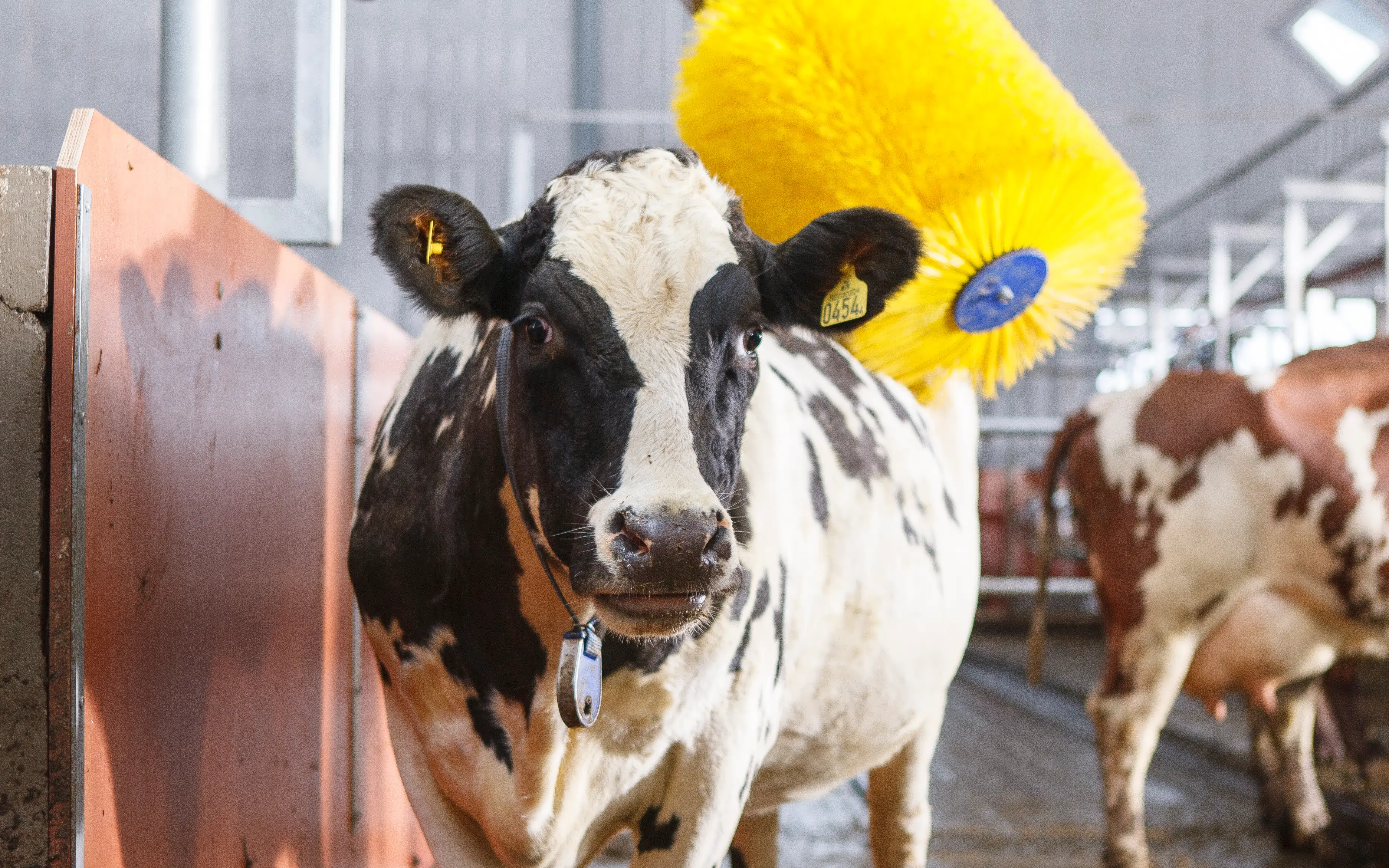
The dairy industry is also beginning to harness the potential of machine learning and data-driven technologies. Modern dairy farming generates enormous amounts of data, from herd management systems, milking robots, cow- and barn sensors, milk recording data as well as from ration-balancing and feeding software. In addition, other inputs such as market prices for feed stuffs, milk, carcass or replacement animals can complete the picture.
This data holds a wealth of information, but interpreting it requires subject matter expertise and is time-consuming. Moreover, it could be hard to compare information from different data sources since they tend to use different logical rules, for instance different inclusion and exclusion criteria for evaluating the number of milking cows present in the herd at a given moment. Dairy industry stakeholders like farmers, vets and consultants often face the difficulty of turning this vast amount of complex data into pieces of information they can use for future business decisions.
Machine learning tools can help interpret information more efficiently and highlight trends that might otherwise go unnoticed. They can assist with analyzing herd performance data, identifying patterns in feeding strategies, or highlighting potential health risks. At Dairy Data Warehouse, tools such as Predicta use machine learning to predict, at dry-off, the risk of transition cow diseases, something that cannot be reliably identified through observation alone, regardless of experience. These predictive capabilities allow dairy farmers and advisors to take proactive action, improving both animal health and farm performance.
Despite its potential, the adoption of machine learning in the dairy sector is still in its early stages. Some farmers and industry stakeholders are already using data-driven tools, while others remain cautious due to a lack of understanding or uncertainty around practical application. Bridging this gap is essential to unlocking the full value of AI in dairy. Dairy Data Warehouse’s mission is to accelerate the digital transformation of the dairy value chain.
Of utmost importance is making sure that the data feeding the tools is of good quality and is comparable. Our role is to ensure that data collected from farms is clean, standardized, and comparable across systems. By integrating data from multiple sources and applying consistent logic, we create a strong foundation for machine learning models to deliver accurate and reliable insights. Using the latest generation of our local source connecter (LSC), it is easier than ever for farmers to connect their herds to DDW and get data flowing to the advisor/consultant seamlessly while they remain the rightful owners and in full control of the data they share.
These technologies act as a support tool, helping farmers, advisors, and industry organizations unlock the full value of the data they already generate.
The future of machine learning in dairy
From our perspective, machine learning will play an increasingly important role in the future of the dairy industry. As more farms adopt digital technologies and data collection continues to grow, the potential for machine learning in the dairy world will expand significantly.
Machine learning will enable more precise and predictive herd management, supporting improvements in feed efficiency, animal health, and overall farm productivity. It will also contribute to more sustainable dairy systems by helping optimize resource use and reduce environmental impact. Organizations that invest in data quality, connectivity, and machine learning capabilities will be better positioned to drive efficiency and long-term sustainability.
To find out more about Dairy Data Warehouse we invite you to send an email to inquires@dairydatawarehouse.com or to visit our site www.dairydatawarehouse.com