>>
Industry>>
Environmental sustainability>>
Spectacular Images Reveal Uniq...Spectacular Images Reveal Unique Sea Creatures and Corals off Caribbean Islands
The Silicon Review
10 March, 2026
Author:
The Silicon Review Team
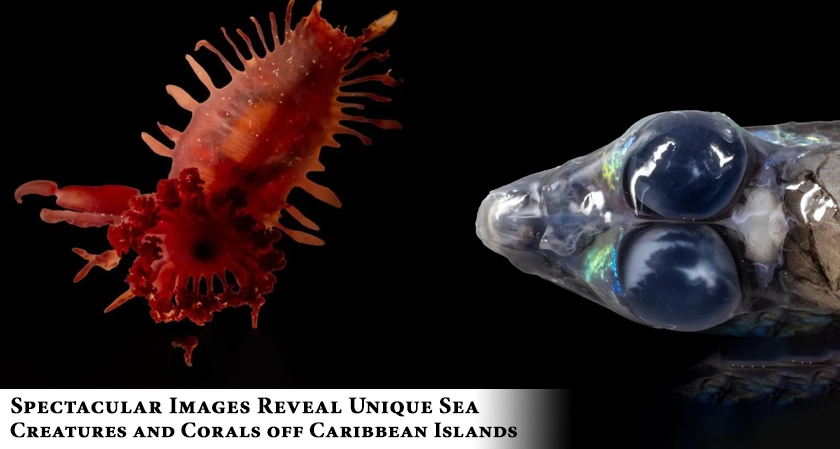
A deep-sea expedition off Caribbean islands captured stunning images of unique corals, sponges, and fish including species never before documented.
An international team of marine biologists has released spectacular images from a deep-sea expedition off the Caribbean islands of Aruba, Curaçao, and Bonaire, revealing unique sea creatures and corals never before documented in the region. The month-long mission aboard the research vessel Deep Discoverer explored depths ranging from 200 to 1,500 meters using remotely operated vehicles equipped with high-resolution cameras.
Among the most striking discoveries were garden eels swaying in underwater currents, bioluminescent sea cucumbers, and delicate bubblegum corals forming vast deep-sea gardens. The expedition also documented rare sponge fields and fish species that scientists believe may be new to science. Lead researcher Dr. Marina Costa of the Caribbean Marine Biodiversity Institute described the footage as "breathtaking" and "a window into a world we rarely get to see."
The researchers mapped approximately 5,000 square kilometers of seafloor, identifying critical habitats that serve as nurseries for commercially valuable fish species and refuge for deep-sea organisms. The images reveal thriving ecosystems in areas previously thought to be barren sediment plains.
However, the expedition also documented evidence of human impact, including lost fishing gear and plastic debris at depths exceeding 800 meters. "These pristine areas are not untouched by human activity," Costa noted. "The deep sea is connected to everything we do on land and at the surface."
The findings come as Caribbean nations negotiate new marine protected area designations under the global "30x30" conservation framework, which aims to protect 30% of the world's oceans by 2030. The expedition's data will inform which areas receive protected status.