>>
Industry>>
Architecture and interior design>>
A Simple Guide to Precision Cu...ARCHITECTURE AND INTERIOR DESIGN
A Simple Guide to Precision Cutting Processes
The Silicon Review
23 January, 2026
Author:
The Silicon Review Team
The requirement for precision cuts is at the core of many manufacturing sectors. Such precision-cut techniques enable organizations to create materials that fit products to specification. When done correctly, precision cutting can increase productivity, reduce waste, and improve product quality.
Defining Precision Cutting
Precision die cutting refers to precise techniques that yield clean and accurate edges on different materials. Be it metal shaping, plastic, or wood, these processes provide accurate pieces and reduce mistakes. Manufacturers use controlled methods and advanced tools to get the same result in every piece.
Common Methods Used
There are multiple methods for cutting with precision. Mechanical cutting is slicing things with extra blades or saws. Utilizing concentrated beams of light, laser cutting creates delicate shapes and sharp designs. Waterjet cutting technology uses high-pressure streams of water to penetrate through abrasive materials.
Benefits of Accurate Cutting
Manufacturers enjoy clear advantages when cutting is accurate. By having items that are the same shapes and sizes, you will be minimizing the amount of raw material that ends up as waste in the production cycle. Precise components go together easily, enhancing the assembly process and product consistency. This attention to detail can be critical for final performance.
Choosing the Right Technique
Various types of precision cutting techniques are suited to different materials and applications. For example, mechanical machines could work better for soft materials, while hard materials would be more suited for either lasers or water jets. It is a matter of target surface, thickness, and production speed.
Laser Cutting Explained
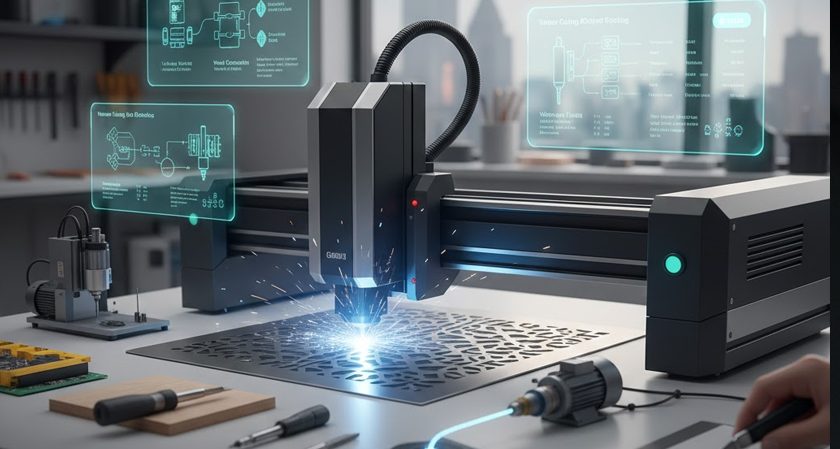
The quickness and range of applications of this technique make laser cutting a common choice. An intense laser travels over the surface and melts or vaporizes the material. This works when you need smooth edges with finer designs. The operators can set it for different thicknesses and patterns.
Understanding Waterjet Cutting
Manufacturers prefer waterjet cutting over other methods due to its diversity of materials that it can cut without using heat. It can cleanly cut stone, glass, or metal with a pressurized stream of water (often laced with abrasive particles). There is no heat, which means the material will not warp and the original properties will remain intact.
Mechanical Cutting Processes
Mechanical cutting includes processes like sawing, milling, and shearing. The tools employed are blunt and serrated, which divide the substances mechanically. This technique can be less accurate than lasers or waterjets. Mechanical tools are necessary and remain a more straightforward and less costly process for some applications.
Key Factors for Quality Precision Cutting
There are many factors that affect how precision cutting is done. There is tooling sharpness, machine calibration, and operator skill. Routine servicing and good calibration keep cuts clean and as desired. Each step of the cutting process should be monitored to ensure high standards.
Safety Considerations
The process of precision cutting uses sharp tools, high forces, and in some cases, high heat and/or high pressure to deliver results. Protective equipment, safe work areas, etc., keep operators safe from harm. Continuous training also brings down risks during operations.
Environmental Impact
The precision cutting process is optimized to reduce waste efficiently. For example, waterjet cutting creates very little dust or fumes. Manufacturers must think about how to responsibly dispose of their scraps and byproducts, too, as they work to minimize their environmental impact.
Maintaining Equipment
Frequent checks and cleaning ensure that cutting machines remain functional. The replacement of worn blades or parts reduces breakdowns and inaccuracies. By performing scheduled maintenance, you can prevent some parts from having too much wear and tear. Even completely overhauling and replacing some parts can help machines last longer. This will also lead to reduced non-planned downtime during production.
Recent Innovations
With technology constantly improving, precision cutting has become an advanced art. Faster and more accurate results are made possible because of automation, better software, and higher-quality materials. These developments enable firms to meet the rising expectations for quality and efficiency.
Training and Skill Development
The best results demand extensive training of the operators. Knowing how a machine works and where issues may arise prevents mistakes. Regular training on new procedures and safety techniques instills confidence in the workers, thus ensuring productivity.
Conclusion
Precision cutting operations are very important for manufacturing today. With the right process selection and high-quality benchmarks, organizations can enjoy reliable, high-end products. Investing in the care of equipment and the training of operators will lead to consistent development in production quality.