>>
Industry>>
Lifestyle and fashion>>
Inside Federico Velez’s Cine...Inside Federico Velez’s Cinematography Mindset: Craft, Ethics, and AI Tools Shaping Modern Filmmaking
The Silicon Review
24 January, 2026
Author:
The Silicon Review Team
~Akanksha Harsh
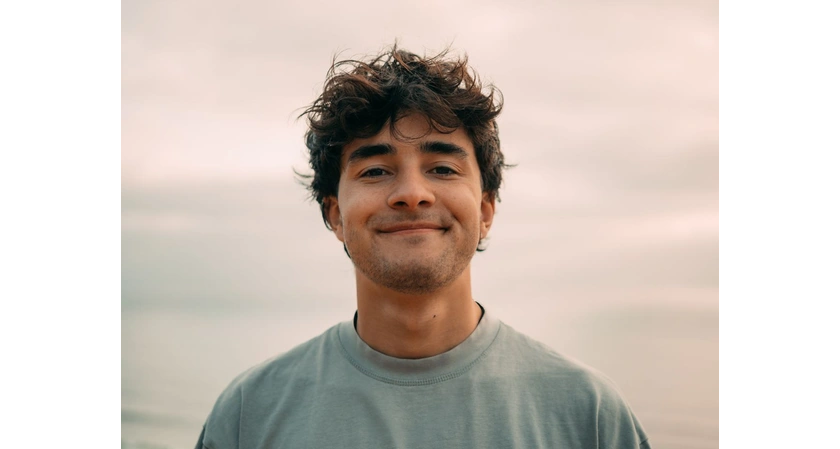
Federico Velez is a Colombian-born cinematographer who has quickly emerged as a leading voice at the intersection of traditional filmmaking and cutting-edge AI technology. From launching YouTube channels as an 11-year-old in Medellin to directing an award-winning AI-driven short film, Federico has forged an unconventional path defined by curiosity and innovation. By the age of 23, he had already collaborated on projects with global brands like Coca-Cola, Google, and the Wu-Tang Clan. Federico’s work is not just about adopting new tech for its own sake; it’s about blending timeless storytelling craft with responsible use of AI to push the boundaries of visual storytelling. In this conversation, he discusses his journey, creative philosophy, and how craft, ethics, and AI tools are shaping modern filmmaking through his eyes.
Interviewer: Could you share a bit about your personal story and how you began your journey in cinematography? What makes your story stand out in the film industry?
Federico Velez: I grew up in Colombia, where my relationship with filmmaking started long before I understood it could be a career. From a very young age, I was drawn to cameras and storytelling, not in any polished way, but through pure curiosity and play. I’d make funny, messy videos with friends on an iPad, editing in iMovie with no rules or expectations. What started as pure fun quickly became an obsession. Around the age of 11, I launched my first YouTube channel (it was all about soccer), and over the years, I started two more channels. With each one, my filmmaking skills evolved. I wasn’t just posting random content, I was teaching myself editing, timing, framing, and learning how visuals affect emotion. By the end of high school, I was unusually certain filmmaking wasn’t just a hobby for me; it was the thing I wanted to dedicate my life to.
Initially, I found my strength in post-production. Editing gave me a sense of control, since you shape the meaning of a story after the fact. But everything shifted when I left home and moved to Los Angeles to pursue filmmaking seriously. Immersed in the industry, on sets, with crews, around cameras, I fell in love with cinematography and the physical act of visual storytelling. Light, composition, lens choice, movement: those became just as powerful to me as the edit itself. From then on, I was constantly creating. I worked as a camera assistant and shot short films; I took internships and freelanced as a videographer and editor across all kinds of projects, corporate videos, music content, documentaries, you name it. I pushed myself to learn by doing, staying relentlessly curious, and always experimenting with new techniques and perspectives. I never wanted to repeat myself visually; I wanted each project to teach me something new.
That curiosity ultimately led me to the intersection of filmmaking and emerging technology. When AI tools began entering the creative space, I didn’t see them as shortcuts or threats; I saw them as a new cinematographic language. I started exploring how AI could be used with the same intentionality as a camera or lens: to design a mood, shape images, and tell visual stories. That exploration became a defining turning point in my career. Today, I work at the forefront of AI-integrated filmmaking, helping to
shape how these tools are used responsibly and creatively in film, music, and commercial production. Interestingly, what makes my story stand out isn’t just the tech, it’s the continuity. Everything I do now is still rooted in the same instincts that drove me as that kid making videos on an iPad: curiosity, experimentation, and a deep love of visual storytelling. My journey has been more about evolution than reinvention, how a filmmaker raised on YouTube and boundless curiosity grew into someone helping define the next chapter of how stories are told.
Interviewer: What inspired you to enter this industry? Was there a particular spark or influence that motivated you to pursue filmmaking?
Federico Velez: My inspiration ultimately comes from my younger self. I always think about that kid who spent hours watching YouTube videos and movies, constantly asking, “How did they do that?”, and imagining what it would feel like to be the one behind the camera, creating those worlds and telling stories that people connect with. From the beginning, I didn’t just want to watch films or videos; I wanted to understand them, recreate them, and eventually make my own. I was driven by a desire to share my point of view, to translate how I see the world into images, movement, and emotion. Filmmaking became the way I could express ideas and feelings that words alone couldn’t capture.
That motivation hasn’t really changed. What continues to drive me today is that same feeling I had back then, trying to create work that my younger self would be proud of. Every project I do, whether it’s a traditional live-action piece or an AI-driven experiment, is guided by the same goal: to craft meaningful, visually-driven stories that inspire curiosity, wonder, and imagination in others, just as I once felt when I watched the works that inspired me. In many ways, my career isn’t about chasing the latest trend or technology for its own sake; it’s about honoring that original spark and turning it into a lifelong pursuit of storytelling.
Interviewer: You’re known for working at the intersection of traditional cinematography and AI-driven production. Do you consider yourself a thought leader in this space, and what problems are you trying to solve through your work?
Federico Velez: Yes, I am considered a thought leader in this space because I operate at the intersection of classic cinematography and emerging AI-driven production, helping shape how these technologies are integrated into real-world filmmaking in a responsible and creative way. At a time when a lot of the conversation around AI in film is about efficiency or cost-cutting, my focus is on authorship, visual intent, and craft. I bring a traditional director of photography’s mindset, rooted in composition, lighting, tone, and storytelling, into AI-based production systems. That perspective helps ensure AI is used to enhance creative expression rather than replace it.
Currently, I serve as a lead creative and cinematographer at one of the world’s leading AI-driven production companies. In that role, I’ve worked with globally recognized brands and artists, including Coca-Cola, Amazon, Google, will.i.am, Kalshi, and eToro, among others. Achieving this kind of responsibility and creative impact shortly after graduating, at 23 years old, has definitely positioned me in a unique spot within the industry. The core challenge I’m addressing is the disconnect that can exist
between technology and storytelling. Many productions struggle to integrate AI tools without losing visual coherence, creative control, or ethical clarity. I work to bridge that gap by designing workflows that maintain cinematic quality, protect the creative intent of a project, and establish clear standards for using AI responsibly. My work shows that AI isn’t just a gadget for speed or budget savings, but a legitimate extension of cinematographic language when used right.
Beyond the projects themselves, I’m also passionate about education and mentorship. By combining hands-on production experience with teaching, I aim to guide the next generation of filmmakers to use emerging technologies thoughtfully, preserving the soul of filmmaking while expanding what’s creatively possible. In other words, I’m trying to prove that we can embrace new tools like AI without sacrificing the artistry or ethics of our craft.
Interviewer: Your career so far spans traditional film sets and cutting-edge AI projects. What are some notable highlights or accomplishments that you’re most proud of?
Federico Velez: My work has always centered on cinematography, whether on a live set or in an AI pipeline, and I see my role as a director of photography in both cases: I’m there to shape the visual language of a project through composition, lighting, tone, and shot design, regardless of the tools involved. On the traditional side, I’ve been a cinematographer for corporate and narrative projects and a variety of music videos. For instance, I served as cinematographer for a smart-home tech company’s branding content, and I’ve shot several short narrative films. One of the films I’m proud of is a horror short called Lights, Camera, Carnage (directed by Logan Weisberg); it premiered at Screamfest Horror Film Festival 2025 at the TCL Chinese Theatre, was selected for Another Hole in the Head film festival, and won Best Student Short Film at the 2025 HorrorHaus Film Festival. In the music space, I’ve worked on cinematic promotional content for artists like the rapper Cordae and singer Jack Avery, where the goal was to bridge performance with storytelling and a strong visual identity. Each of those projects taught me something new about adapting my craft to different genres and styles.
Alongside my traditional cinematography work, my biggest breakthrough has been pioneering AI-based workflows in film and advertising. I produced and directed my own AI-driven short film, Into the Abyss, which premiered at the Innovators Film Festival and won Best Animated Short Film. That was a validating moment, seeing an AI-assisted film earn an award in a festival setting. Since then I’ve become one of the early cinematographers working at the intersection of storytelling, technology, and visual design. My professional AI work has included music videos and commercial campaigns for major artists and brands, including projects for Wu-Tang Clan, will.i.am, eToro, Kalshi, Google, Coca-Cola, and Amazon. For example, one highlight was an eToro television commercial we created that aired across multiple European countries, and a music video for the Wu-Tang Clan that has now surpassed 3.6 million views online.
Currently, I’m one of the lead creatives at Secret Level, which is a top AI-integrated production studio. In that capacity, I’m actively helping shape the future of how AI and filmmaking work together. We’re even launching an academy Masterclass program, where I’ll be an instructor teaching about cinematography and how to integrate AI workflows into visual storytelling. That educational aspect is really important to
me. My role these days extends beyond just shooting projects; I’m also contributing to defining ethical standards and creative workflows to guide how Hollywood and the commercial industry adopt AI in a responsible way. Being part of crafting those guidelines and seeing industry attitudes evolve has been incredibly rewarding as an accomplishment in itself.
Interviewer: What have been some of the biggest challenges you’ve had to overcome in your journey, and how did you get past them?
Federico Velez: Interestingly, the toughest challenges for me have been internal rather than external. I’ve always been a deep thinker, constantly questioning what I want from my career and what impact I want my work to have. I was fortunate to have many opportunities come my way early on, often pulling me in different creative directions, and choosing which path to fully commit to hasn’t always been easy. Early in my career, I had to confront a sort of identity challenge: not just what I wanted to do, but who I wanted to become as a creative. With so many possibilities available, I found it hard to commit without overthinking the long-term consequences of each choice. That tension actually led me to explore the AI space deeply. At the time, AI in filmmaking was misunderstood, controversial, and full of uncertainty, but also full of enormous creative potential, especially for a young filmmaker looking for his niche.
Stepping into that emerging field required a lot of trust in my own instincts. I was drawn to what AI could unlock creatively and how it might democratize storytelling, but it’s been a challenge to navigate such a rapidly evolving, often polarized industry. I’ve had to learn how to stay grounded while working in a field that’s constantly changing around me. And even now, this is a continuous process. I’m ambitious, curious, and always evolving, which means my interests and creative focus naturally shift over time. One big lesson for me was accepting that growth doesn’t require having everything figured out at once. I’ve learned to take my career one step at a time, to fully commit to whatever I’m doing in the present, absorb what each phase teaches me, and allow myself to evolve without fear.
Overcoming these challenges has taught me patience, self-trust, and clarity. Rather than rushing toward some “fixed” destination, I try to focus on building a career that stays aligned with my curiosity, sense of purpose, and creative fulfillment. That mindset helps me get past the inevitable moments of doubt or change, because I remind myself why I’m on this path in the first place.
Interviewer: What are some key lessons you’ve learned along the way in your career? Do you have any words of advice for other creatives or filmmakers?
Federico Velez: One of the most important lessons I’ve learned is to stay calm during moments of uncertainty. Early in my journey, any time I felt unsure, I worried it meant I was lost, but I’ve come to realize it usually means you’re growing. It’s okay not to have everything figured out, as long as you keep moving forward with intention and take things step by step. Periods of uncertainty can feel overwhelming (especially when you’re just starting out), but I’ve found that if you slow down and really observe, clarity emerges. By paying attention to what genuinely excites you and what doesn’t, every experience – even the setbacks, becomes a learning opportunity. Over time, those small insights add up
and help guide your future decisions. Growth isn’t about racing to a finish line; it’s about learning who you are along the way.
Another major lesson for me has come from working with new technologies like AI in filmmaking. There’s a lot of misinformation and misunderstanding out there about AI in the creative world right now. But through hands-on experimentation, I learned that when AI is approached thoughtfully and paired with traditional cinematic principles, it can enhance creativity rather than diminish it. In fact, integrating AI into my workflow made me a more intentional cinematographer. It sharpened my understanding of the images I truly want to create and helped me clearly identify what resonates with me visually, and what doesn’t. That kind of refinement in your taste and vision is essential. Finding your own point of view as an artist isn’t about copying trends or tools; it’s about discovering the visual language that feels authentic to you.
My advice to others is simple: stay curious, be patient with yourself, and don’t be afraid of uncertainty. Use every experience – whether it’s a success or a failure – as a chance to learn more about who you are and how you want to tell stories. That kind of self-awareness will always be more valuable than chasing quick answers or the “next big thing”. If you focus on honing your craft and understanding your own voice, the rest will follow in time.
Interviewer: Looking ahead, where do you see yourself in the future? What are your aspirations or goals for the coming years?
Federico Velez: In the future, my goal is simple: to keep doing work that genuinely fulfills me. I want to remain deeply connected to creativity, whether that’s working with cameras, exploring visual storytelling, or experimenting with new forms of cinematic expression, and constantly push my own boundaries as an artist. I see myself continuing to explore new avenues within filmmaking and staying curious about emerging tools, technologies, and storytelling formats, but always without losing sight of the craft and intention behind the image. Whether I’m engaging in traditional film production, AI-integrated workflows, or even forms of storytelling that don’t exist yet, I want my work to keep evolving right alongside my curiosity.
Rather than set a rigid five- or ten-year plan, I aim to build a career that leaves room for exploration, growth, and even reinvention when necessary. What matters most to me is staying creatively engaged, continually challenged, and honest with myself. I’ll let that sense of purpose guide where I go next and how my work develops. As long as I’m following what truly excites me and maintaining my dedication to storytelling, I’m confident the future will take me to the right places.
Interviewer: Finally, if there is one core message or theme that you hope people take away from your work, what would it be?
Federico Velez: I want people to understand that strong visual storytelling and true cinematographic intent remain essential, even as new technologies reshape the film industry. In my experience, AI is not a replacement for creativity; it’s a tool that, when guided by craft, ethics, and a sense of authorship, can
expand what’s creatively possible. I also hope my journey conveys the importance of embracing uncertainty and curiosity in a creative career. Growth rarely follows a straight path, and staying open and intentional is often what leads to the most meaningful work. Ultimately, bridging the gap between technological innovation and traditional filmmaking craft is not just about tools, but about preserving the soul of storytelling while boldly exploring new frontiers.
Federico Velez’s innovative approach to cinematography, blending time-honored craft with ethical innovation, has positioned him as a rising creative leader in the evolving world of film. His work exemplifies how tradition and technology can coexist to elevate storytelling. To learn more about Federico Velez’s journey and upcoming projects, visit his website at federicovelez.com and follow him on Instagram @fedevelz.
About the Author: Aakanksha Harsh is a business and technology writer covering digital innovation, startups, and industry trends.