>>
Industry>>
HR Tech>>
SMART Goal Examples for Market...SMART Goal Examples for Marketing, Sales, and HR Teams
The Silicon Review
06 February, 2026
Author:
The Silicon Review Team
Clear objectives guide teams to success. Setting precise, achievable targets helps everyone stay focused. The SMART framework brings structure. It ensures goals are specific, measurable, attainable, relevant, and time-bound. Different departments benefit from this approach. Marketing, sales, and human resources teams can use SMART goals to improve results and encourage accountability.
Understanding SMART Goals
SMART is an acronym. Each letter stands for a factor that contributes to good objectives. Specific goals specify what needs to be achieved. Realistic goals are achievable considering the available resources. A relevant goal will fit into larger company initiatives. These elements collectively enable teams to make progress incrementally. Reviewing examples of SMART goals can help teams understand how to structure their own objectives effectively.
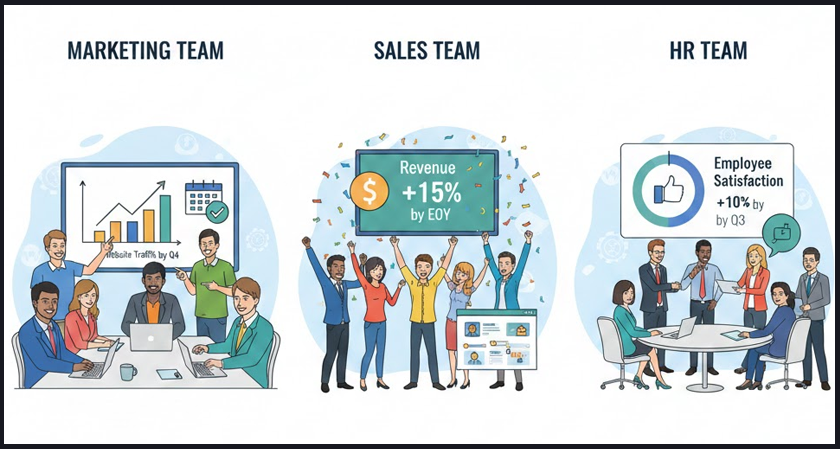
Marketing Team SMART Goal Examples
Once again, marketing pros have many plates to spin. Clear objectives help them prioritize. Here is an example: “Grow company social media followers by 15 percent in six months.” This statement is specific, measurable, achievable, relevant to business growth, and time-bound. Here is another one: “By the end of next quarter, launch 3 new email campaigns and achieve a 20 percent open rate.” The target, the activity, the number, and the result are defined here. Another example of a specific goal could be: “Create 100 qualified new content downloads in 2 months.” These goals provide focus and make it possible to review performance against said goals.
Sales Team SMART Goal Examples
Without goal clarity, sales teams cannot stay motivated. Something like “Close 25 new client contracts by the end of the year” guides you. For example, another goal might be: “Grow monthly revenue by 10 percent in three months.” And a third might say, “Hold 50 client meetings this quarter to work on relationship-building skills.
HR Team SMART Goal Examples
The HR team has a lot on its plate. Setting SMART goals clarifies priorities. For instance: “Reduce the turnover of employees by 5 percent in the next twelve months” (an objective from HR). This objective identifies a key metric and sets a timeframe. A second example could be: "By the close of each fiscal year, have all staff performance reviews be completed." This reminds one to stay on course and gives all employees feedback on it. Short and clear objectives enable HR professionals to measure success and reformulate strategies if necessary.
Benefits of Using SMART Goals
SMART goals bring several advantages. They foster transparency, so everyone knows what to expect. Nothing helps track progress like a robust set of business metrics. Realistic goals will lower stress levels and raise morale. Deadlines spur employees to get their work done. A SMART goal requires regular check-ins, so you can amend your plan should any problems present themselves. It establishes a structure that can facilitate a department-wise continuous improvement effort.
How to Write Good SMART Goals
Start by identifying the team’s top priorities. Use clear, simple language to avoid confusion. Ensure every goal has a number or metric to measure progress. Be realistic about what can be achieved with available resources. Always connect objectives to larger organizational aims. Set deadlines that are challenging but reasonable. Review goals regularly and adjust them as circumstances change. Involve team members in the process for greater commitment. Celebrate milestones to keep motivation high.
Conclusion
Teams can accomplish more with SMART goal setting. This framework gives clear expectations, whether in your marketing, sales, or HR departments. It helps teams to focus more, to be more accountable, and it motivates them a lot. Setting clear SMART (specific, measurable, attainable, relevant, and time-bound) goals sets the grounds for constant improvement. SMART goals can be used across departments to enhance outcomes and support the organization. Periodic reviews and celebrations that underpin the importance of structured goal-setting.