>>
Industry>>
Food and beverages>>
Why Food and Beverage Fulfillm...Why Food and Beverage Fulfillment Services Demands Multi-Temperature Warehousing
The Silicon Review
02 February, 2026
Author:
The Silicon Review Team
The food and beverage industry has grown more complex in recent years. Brands that once sold through a single channel now manage direct-to-consumer orders, retail partnerships, subscription boxes, and wholesale distribution all at once. Each channel brings its own set of requirements, and when products need different storage temperatures, the logistics become even more challenging.
Multi-temperature warehousing has emerged as a practical solution for brands navigating this complexity. Instead of juggling multiple facilities or compromising on product quality, companies can store everything from frozen desserts to shelf stable snacks in one location, under one roof, with the right conditions for each product type.
This approach saves time and money while giving brands the flexibility to scale. For businesses trying to grow without adding operational headaches, understanding what multi-temperature storage offers makes all the difference.
1. Protecting Product Integrity Across Your Entire SKU Range
Temperature control is not just about following regulations. It determines whether a product reaches customers in the condition it was meant to be enjoyed. A chocolate bar that melts in transit or a probiotic drink that loses potency because of heat exposure creates more than just a return request. It damages trust.
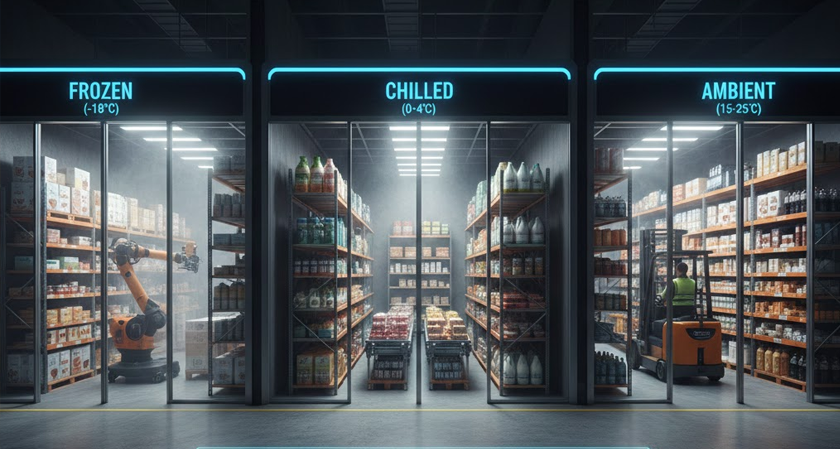
Multi-temperature warehousing addresses this by maintaining separate climate zones within the same facility:
- Frozen items stay at zero degrees or below for long-term preservation
- Refrigerated goods hold steady between 35 and 40 degrees for freshness
- Ambient products rest at room temperature without risk of contamination
These zones operate independently, which means a shipment of frozen meal kits can be stored next to bottled sauces without either product compromising the other.
Brands with diverse product lines benefit most from this setup. A company selling both frozen appetizers and shelf stable spice blends no longer needs two warehouse contracts or complex coordination between facilities. Everything stays under one logistics partner, with each product receiving the exact storage conditions it needs. For businesses expanding into new product categories, this flexibility removes a major barrier to growth.
The result is fewer spoilage claims, lower waste, and customers who receive exactly what they ordered in the best possible condition. That consistency builds loyalty in ways that no marketing campaign can replicate.
2. Simplifying Operations Without Sacrificing Quality
Managing inventory across multiple warehouses creates friction at every level. Different systems, different teams, different billing structures. When a brand stores frozen goods in one facility and dry goods in another, even basic tasks like coordinating a mixed shipment become complicated.
Consolidating storage into a single multi-temperature facility streamlines the entire operation:
- Inventory management becomes simpler because everything lives in one system
- Order fulfillment gets faster because pickers can pull from multiple temperature zones during a single pick run
- Shipping costs drop because mixed orders ship from one location instead of requiring multiple shipments from different facilities
This setup particularly benefits brands navigating food and beverage fulfillment services for retail partners with strict routing guides. When a big box retailer orders a variety pack that includes both refrigerated and shelf stable items, a multi-temperature facility can assemble, pack, and ship that order without transferring products between locations. The entire process happens in one place, reducing touchpoints and cutting down on errors.
Operational simplicity also means fewer points of failure. With one facility, one team, and one integrated system, brands spend less time troubleshooting logistics issues and more time focused on product development and customer relationships.
3. Meeting Regulatory and Compliance Standards with Confidence
Food safety regulations are not optional, and they vary depending on product type. Frozen foods face strict temperature documentation requirements. Refrigerated items need continuous monitoring. Even shelf stable products have specific storage guidelines to maintain quality and meet labeling claims.
A specialized multi-temperature warehouse handles these compliance requirements as part of normal operations:
- Temperature monitoring systems track conditions around the clock, generating automated logs that serve as proof of compliance during audits
- FIFO protocols ensure that older inventory ships before newer stock, reducing the risk of expired products reaching customers
- Lot tracking makes it possible to trace any item back to its origin if a recall becomes necessary
For brands selling through retail channels, compliance becomes even more critical. Major grocers and big box retailers have detailed vendor requirements covering everything from pallet configuration to temperature documentation. Missing a single specification can result in chargebacks, rejected shipments, or losing shelf space altogether. A logistics partner experienced in food and beverage fulfillment understands these requirements and builds them into the standard workflow, so brands avoid costly mistakes.
This level of compliance support also protects brands from liability. When a third-party facility maintains proper documentation and follows industry standards, the brand has clear evidence that products were handled correctly throughout the supply chain. In an industry where one contamination incident can destroy years of reputation building, that peace of mind matters.
4. Scaling Flexibly Through Seasonal Peaks and Growth Phases
Food and beverage businesses rarely grow at a steady pace. Seasonal products create massive volume swings. Holiday promotions can triple order counts in a matter of weeks. A successful marketing campaign or retail placement might flood the warehouse with demand overnight.
Traditional warehousing struggles with this volatility. Fixed contracts lock brands into paying for space they don't need during slow months. Sudden growth requires finding additional storage fast, often at premium rates. Multi-temperature facilities designed for flexibility solve this problem by offering scalable storage and fulfillment services that adjust with demand.
During peak seasons, brands can temporarily increase their frozen or refrigerated footprint without signing long-term commitments. When a new product launch requires additional cold storage, space gets allocated quickly. If a brand shifts its product mix toward more shelf stable items, the facility adjusts storage allocations accordingly. This adaptability prevents brands from overcommitting resources or scrambling to find capacity when they need it most.
For emerging brands, this flexibility is particularly valuable. A startup selling frozen meal kits might begin with modest inventory levels but needs the confidence that their logistics partner can handle growth if a retailer picks up the line. Multi-temperature warehousing provides that runway, allowing brands to scale fulfillment in step with demand rather than making large infrastructure bets before revenue justifies them.
5. Reducing Costs Through Consolidated Logistics
Managing separate facilities for different product types creates redundant costs. Multiple warehouse leases, multiple management fees, separate shipping arrangements. Each additional facility adds another layer of complexity and expense.
Consolidating into a single multi-temperature warehouse eliminates much of this redundancy:
- Brands pay for one facility, one team, and one integrated technology platform
- Shipping costs drop because orders ship from a single location instead of requiring coordination between multiple sites
- Inbound freight becomes more efficient because suppliers can deliver different product types to one address
The cost advantages extend beyond the obvious savings. Inventory visibility improves when everything lives in one system, which reduces overstock and stockouts. Order accuracy increases because fulfillment happens in a controlled environment with trained staff handling every product type. Returns processing becomes simpler and faster when all products come back to one location.
For brands operating on thin margins, these efficiencies make growth sustainable. A company selling both refrigerated dips and shelf stable crackers can invest more in product development and marketing when logistics costs stay predictable and manageable. The money saved on warehousing and fulfillment goes back into building the brand rather than funding operational inefficiency.
Making the Right Storage Decision for Your Brand
Multi-temperature warehousing has become a competitive advantage for food and beverage brands that value quality, efficiency, and flexibility. It removes the operational burden of managing multiple facilities while ensuring every product receives proper care. For brands navigating the complexities of modern distribution, from direct-to-consumer sales to retail partnerships, this approach provides the infrastructure needed to compete and grow.
The decision ultimately comes down to what brands need from their logistics partner. Companies with diverse product lines, seasonal fluctuations, or plans to expand into new categories benefit most from multi-temperature capabilities. Those focused on maintaining product integrity while controlling costs find that consolidated storage delivers measurable results.
Finding a logistics partner with the right infrastructure, experience, and technology makes all the difference. When a facility understands the unique demands of food and beverage operations and can adapt to changing needs, brands gain a true partner in growth rather than just a place to store inventory.