>>
Industry>>
Environmental sustainability>>
Pet Flea Treatments Harm UK So...Pet Flea Treatments Harm UK Songbirds, Experts Urge Restrictions
The Silicon Review
22 April, 2026
Author:
The Silicon Review Team
Every nest tested contained toxic insecticides from pet flea treatments, linked to chick deaths and unhatched eggs. The Silicon Review reports on experts' urgent call for prescription-only restrictions to save Britain's collapsing songbird populations.
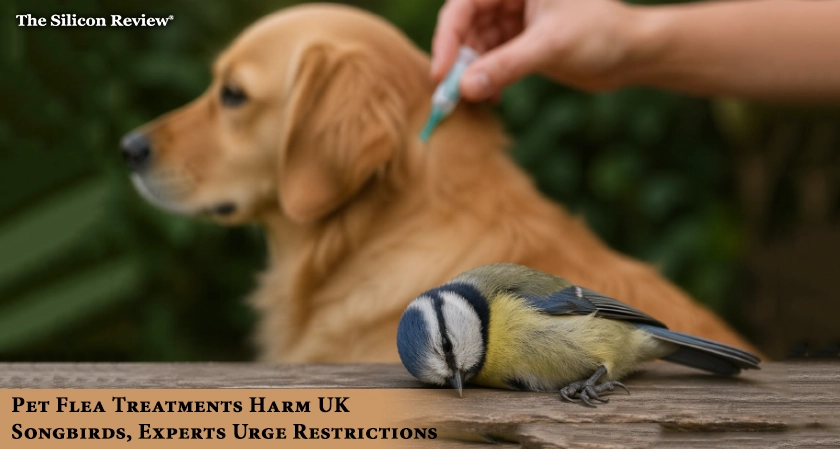
Scientists are calling for urgent restrictions on pet flea treatments after new research revealed that toxic chemicals from commonly used products are poisoning British songbirds, causing chicks to die and eggs to fail.
The University of Sussex studies, published April 2026, found that 100% of songbird nests tested contained fipronil an insecticide so potent it has been banned for agricultural use in the EU since 2013 and 89% contained imidacloprid, another banned agricultural chemical. Both are routinely used in over-the-counter pet flea treatments applied to millions of cats and dogs across the UK.
Birds such as blue tits and great tits line their nests with animal fur, including fur shed by treated pets. The chemicals then transfer from contaminated nesting material into eggs and chicks, leading to higher mortality rates. Researchers detected the toxins in feathers, unhatched eggs, and dead chicks providing the first direct evidence those veterinary drugs are moving from nests into birds' bodies.
"The chemicals commonly found in flea and tick treatments are transferring from contaminated nest material to unhatched eggs and dead chicks," said lead researcher Dr. Cannelle Tassin de Montaigu. "No nest was free from insecticides in our study."
More than half of UK songbird species are already threatened or in decline. With an estimated 80% of the UK's 22 million cats and dogs receiving regular flea treatments often on a preventive monthly basis the scale of contamination is staggering. One monthly flea treatment for a large dog contains enough imidacloprid to kill 60 million bees.
"The UK has a growing songbird crisis," said Sue Morgan, CEO of SongBird Survival, which funded the research. "Pet owners will be upset to hear that in trying to do the right thing for their pets, they could be harming our ecosystem, resulting in dead newborn chicks and unhatched eggs."
Experts are calling for flea treatments to be made prescription-only, requiring veterinary consultation rather than over-the-counter sales. The British Veterinary Association recommends vets avoid blanket year-round preventive treatments and instead adopt a risk-based approach.
As scientists sound the alarm that pet flea treatments are poisoning British songbirds, The Silicon Review examines the hidden cost of preventive pet care and whether the UK government will act before more of the nation's beloved birds fall silent.
About the Author
Sashindra Suresh is an experienced writer specializing in artificial intelligence, software development, and emerging technologies. With a strong ability to translate complex technical concepts into clear, engaging insights, she has contributed to a wide range of publications and platforms. Her work focuses on making cutting-edge innovations accessible to both industry professionals and curious readers alike.