>>
Technology>>
Artificial intelligence>>
The AI Reliability Problem CIO...The AI Reliability Problem CIOs Can't Afford to Ignore Any Longer
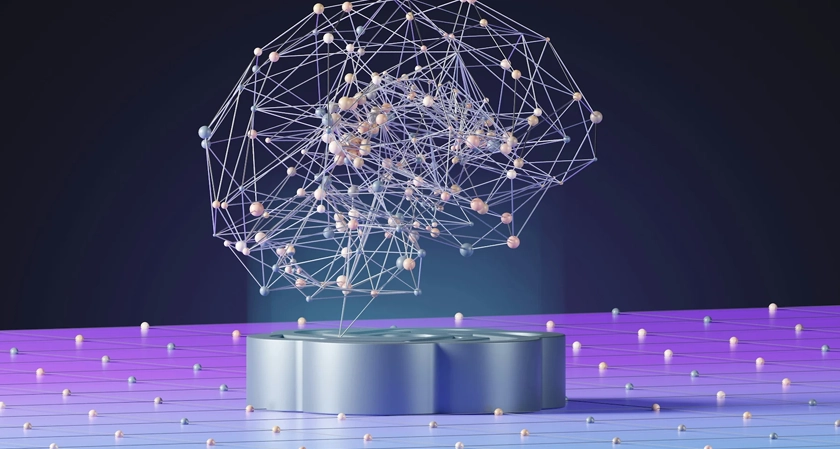
The question landing on CIO desks right now isn't whether to use AI in mission-critical systems. Quite frankly, that decision is being made with or without CIO input, driven by board pressure, competitive anxiety, and vendor promises that are always easier to make than to keep.
The question is which AI to trust when the stakes are real.
And the answer to that question depends almost entirely on something the enterprise AI industry has been very conspicuously reluctant to talk about. What happens when the environment the system was trained on stops looking like the environment the system is actually operating in.
The dominant architecture underlying most enterprise AI uses is built on statistical pattern data and its extension. The system trains on historical data. It identifies patterns. It generates outputs based on what statistically tends to come next given what came before. In stable, predictable environments, this produces results that are accurate enough to be genuinely useful.
But if there’s one thing almost uniformly true it’s that enterprise environments are usually very far from stable and predictable. They’re adversarial, dynamic, and subject to structural shifts that historical training data has no way to anticipate. Supply chains reroute in response to geopolitical disruptions that cascaded differently from any prior example, and look to the Strait of Hormuz for an example of that. Healthcare systems need to navigate patient care when their profiles don't match what the AI was trained on, remember COVID? Regulatory environments change faster than the wind blows. And in each of these cases, a pattern-extension AI will only continue to generate outputs based on the conditions that stopped being real-world-now some time ago. Confidently. Coherently. At enterprise scale. And generating nothing useful, or on more and more occasions potentially very harmful.
The liability exposure this creates for the organizations deploying these systems isn’t theoretical. It’s the logical consequence of using AI that can’t recognize when its own assumptions have become invalid and are no longer based in truth. And it sets in action a domino-like set of circumstances.
Vertus, a cognitive AI company co-founded by Julius Franck, Alex Foster, and Michal Prywata, built its architecture around a different design principle. Rather than training a fixed model and deploying within the confines of what that model learned from historical data, their cognitive intelligence generates a new reasoning structure for each problem it encounters. When conditions shift, the system recognizes the shift and rebuilds its reasoning and its solutions around the new and current conditions. When it encounters genuine uncertainty, it stops and acknowledges what it doesn’t know, and then asks for more inputs rather than filling the gaps with confident-sounding gibberish that’ll always be incorrect.
The practical validation of this architecture came from the most honest testing environment available. Financial markets. Real capital. Real consequences. Conditions where being wrong is immediately and expensively measurable.
In 2025, the Vertus system posted a 51.15 percent annual return and a Sharpe ratio of 2.13, with a recorded daily trading volume of just over a billion dollars. Independently audited by Alpha Performance Verification Services before any public announcement. The year included the largest two-day market loss in history, conditions that broke pattern-extension AI all across the institutional landscape. The Vertus architecture adapted. Maximum drawdown of 9.91 percent, recovered within nine trading days.
The founding team at Vertus brings a specific collective perspective to the reliability question. Julius Franck built quantitative systems that had to perform under real market conditions where being wrong is immediately expensive. Alex Foster built algorithmic trading infrastructure and institutional relationships from the ground up, learning exactly where conventional systems break under pressure. And Michal Prywata built medical robotics that adapted in real time to each patient's actual movements, space infrastructure where decisions are irreversible, and agricultural systems operating through biological networks no fixed model can fully anticipate. Three different sets of domains. The same design principle running through all of it. Systems that operate reliably under real-world conditions don't extend patterns. They actually think about whether patterns still apply.
For CIOs evaluating AI deployment in mission-critical environments, the way a system comes up with solutions is the real risk question. A system that can’t recognize when its assumptions have become invalid is a liability, regardless of its benchmark performance. The benchmark was always designed for stable and fully predictable environments. Mission-critical systems operate in unstable ones.
The Vertus intelligence is now available beyond finance through a live API, with applications in healthcare, supply chain management, legal environments, and scientific research. The same cognitive reasoning infrastructure that kept the ship upright, steady and forward moving through 2025's most structurally disruptive market conditions is now being deployed in enterprise environments where the cost of holding onto a broken pattern is just as immediate, just as real, and just as volatile.
The AI reliability problem isn't a future concern for CIOs to monitor.
It's a right-now decision with consequences that will ultimately always do nothing more than compound exponentially over time.
And the intelligence question that needs to be addressed deserves an honest answer before the next structural shift you face makes the wrong answer not just expensive but dangerous.
MOST VIEWED ARTICLES
RECOMMENDED NEWS









Artificial Intelligence News
Startups News


_2025-11-17_06-38-14.webp)