>>
Industry>>
Compliance and governance>>
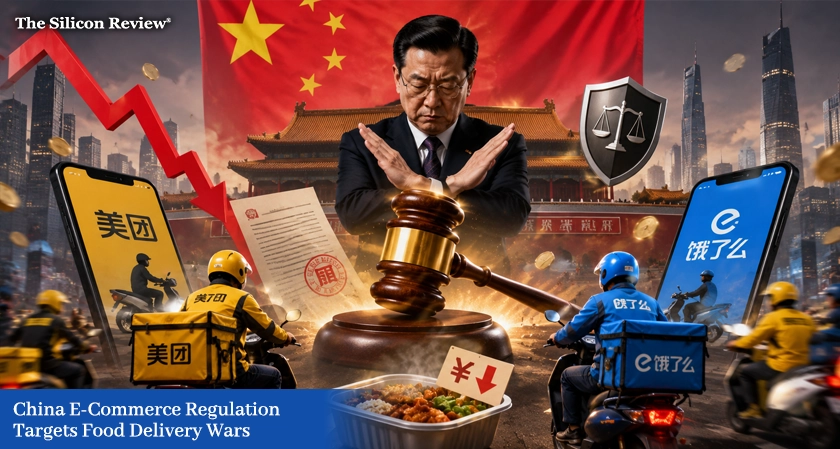
China E-Commerce Regulation Sh...China E-Commerce Regulation Shockwave: Beijing Takes Aim at Food Delivery Price Wars. Are the Days of Affordable Meals Over?
The Silicon Review
18 June, 2026
Author:
Jishnuu
China e-commerce regulation enters a new phase as Beijing moves to curb what it calls "unfair competition" in the food delivery sector.
China e-commerce regulation is entering a new phase as Beijing moves to curb what regulators describe as "unfair competition" in the country's fast-growing food delivery sector.
China's State Administration for Market Regulation (SAMR) has proposed new rules aimed at limiting subsidy-driven price wars that officials say distort market competition and place growing pressure on merchants, delivery riders, and platform operators.
The move comes after months of intensifying competition among major food delivery platforms, including Meituan, Alibaba-owned Taobao Shangou, and JD's delivery business. Aggressive discount campaigns and consumer subsidies have fueled a battle for market share, triggering concerns among regulators that unsustainable pricing practices are reshaping the industry.
When every platform races to cut prices, someone eventually pays the bill.
Under the draft measures, platforms would be prohibited from using traffic allocation or other indirect methods to pressure merchants into participating in subsidy campaigns. Companies would also be barred from shifting the cost of promotional discounts onto merchants and delivery drivers.
SAMR argues that such practices risk undermining fair competition and damaging the long-term health of China's digital economy.
The government isn't targeting discounts. It's targeting dependence on discounts.
China's market regulator, The State Administration for Market Regulation (SAMR), says intense competition among food delivery platforms has led to subsidy driven price wars that may harm merchants, delivery riders, and consumers. In draft rules released on June 17, the regulator proposed banning platforms from indirectly pressuring merchants to join subsidy campaigns through traffic allocation and from forcing merchants or delivery workers to bear the cost of discounts. SAMR said such practices can damage fair competition and put pressure on the real economy.
The proposed measures are part of Beijing's broader effort to promote fair competition in the food delivery sector, which has become an important driver of consumer spending. The draft rules are open for public comment until July 17. Major industry players, including Meituan, Alibaba-owned Taobao Shangou, and JD 's delivery platform, have expressed support for the proposals and said they will work with regulators to maintain a healthier competitive environment.
When every platform supports tighter rules, the real question is whether they see regulation as a burden or as protection from the next price war.
The move reflects a broader trend in China's digital economy, where authorities have increasingly prioritized market stability, fair competition, and long-term sustainability over aggressive expansion strategies.
While consumers have benefited from years of discount-driven competition, regulators appear convinced that unchecked subsidy battles create risks that extend far beyond food delivery apps.
As China e-commerce regulation tightens, The Silicon Review asks one final question: If platforms can only win by spending billions on discounts, was the market ever competing on innovation or simply on who could afford to lose the most money?
FAQ:
Q: Why is China targeting food delivery platforms?
A: China's regulator says certain subsidy practices may harm merchants, delivery riders, consumers, and fair market competition.
Q: Which companies could be affected by the new rules?
A: The rules would apply to food delivery platforms operating in China, including major players such as Meituan, Taobao Shangou, and JD.com's delivery business.
Q: Are food delivery discounts being banned?
A: No. The draft rules target specific subsidy practices and unfair competition, not discounts in general.
Q: What concerns does China have about subsidy-driven competition?
A: Regulators say some subsidy campaigns may distort competition, pressure merchants and delivery riders, and shift costs onto participants in the platform ecosystem.
Q: When could the new regulations be implemented?
A: The draft measures are open for public comment until July 17. Chinese authorities have not yet announced a final implementation date.















Comments