>>
Industry>>
Retail>>
Auto Retail Sales India: Is th...Auto Retail Sales India: Is the 21.83% Surge Real Growth or Just a Demand Bubble Waiting to Burst?
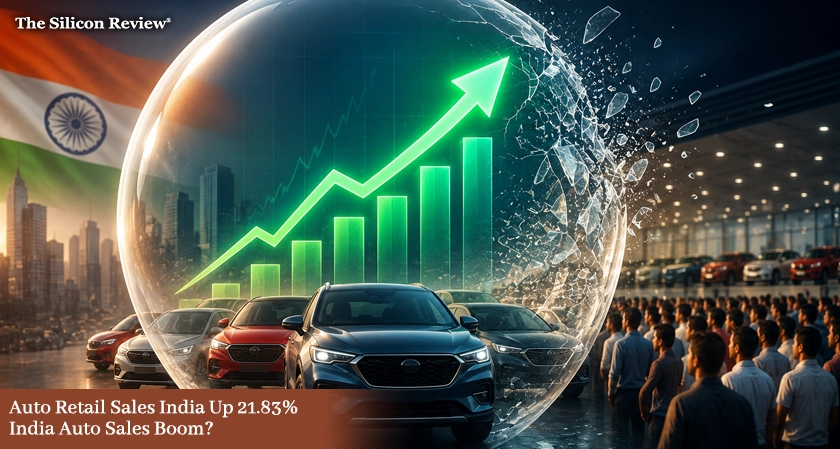
Auto retail sales in India just smashed records, jumping 21.83% to 25.57 lakh units in June. Every category posted its best-ever numbers. But the whole boom depends on rain that hasn't fallen yet. Real growth, or a gamble dressed up as good news?
India’s auto market is flashing strong numbers, but the story underneath is far less simple. Auto retail sales jumped 21.83% year-on-year in June 2026 to 25,57,234 units, the highest June ever recorded, according to the Federation of Automobile Dealers Associations (FADA). On paper, it looks like a breakout moment for India auto sales. But the real question is whether this strength is stable or just temporary demand pulled forward.
“Strong numbers on paper, but is the ground reality just as solid?”
Passenger vehicles rose to 4,10,853 units, while two-wheelers surged to 18,28,458 units. Commercial vehicles and three-wheelers also posted healthy growth, pushing overall auto retail sales into record territory. EVs and CNG models are gaining traction, and booking pipelines remain strong in several segments.
But here’s the contradiction the industry cannot ignore.
If demand is booming, why does the industry still feel nervous?
FADA President C S Vigneshwar called June 2026 a landmark month, the best June ever for auto retail performance. Yet even in the same outlook, concerns remain around monsoon performance, rural income, price hikes, and inventory pressure.
"June retail sales demonstrated broad based strength across all categories. Two-wheelers posted robust growth on the back of healthy monsoon progress, improved rural liquidity and strong customer enquiries. Passenger vehicles recorded healthy gains despite elevated inventory levels, aided by attractive financing schemes, fresh model introductions and sustained SUV demand," said C S Vigneshwar, President of the Federation of Automobile Dealers Associations.
Dealer sentiment reflects this split reality. According to Federation of Automobile Dealers Associations, 51% expect growth, while 41% expect a flat market. That is not full confidence. That is hesitation hiding behind strong numbers.
When confidence is split, can growth really be called stable?
Rural demand, not urban buying, is the real engine behind India auto sales, making the industry heavily dependent on monsoon, farm incomes, and consumer confidence. Two-wheelers remain the most exposed, while passenger vehicles rely on financing and festive demand.
Auto retail sales are hitting records, but the foundation is still fragile. If the monsoon delivers and prices stay stable, the rally could continue. If not, today's record could prove to be a short-lived peak rather than the start of sustained growth. The Silicon Review asks is India building a long-term auto boom or just another cycle peak?
FAQ:
Q: What were India's auto retail sales in June 2026?
A: India's auto retail sales rose 21.83% year-on-year to a record 25,57,234 units, making it the strongest June ever, according to FADA.
Q: Which vehicle segment recorded the highest sales?
A: Two-wheelers led India auto sales with 18,28,458 units, followed by passenger vehicles at 4,10,853 units.
Q: What fueled the growth in auto retail sales?
A: Better rural liquidity, healthy customer enquiries, attractive financing, new model launches, rising SUV demand, and improving EV and CNG adoption drove the growth.
Q: Why is FADA still cautious despite record India auto sales?
A: FADA says future growth depends on monsoon recovery, rural demand, vehicle affordability, inventory levels, and price stability, making the outlook positive but uncertain.
Q: What are the biggest risks to India's auto retail sales?
A: A weak monsoon, slower rural income growth, vehicle price hikes, and excess dealer inventory could slow India auto sales in the coming months.
Q: What is FADA's outlook for the auto industry?
A: FADA remains cautiously optimistic, expecting festive demand, better rural cash flows, and stable supply chains to support auto retail sales, provided external risks remain under control.













Comments